
Omar Chaparro

Returning to Earth as an imitator, the legendary Mexican artist Pedro Infante must prove that he is no longer a womanizer to enter paradise.
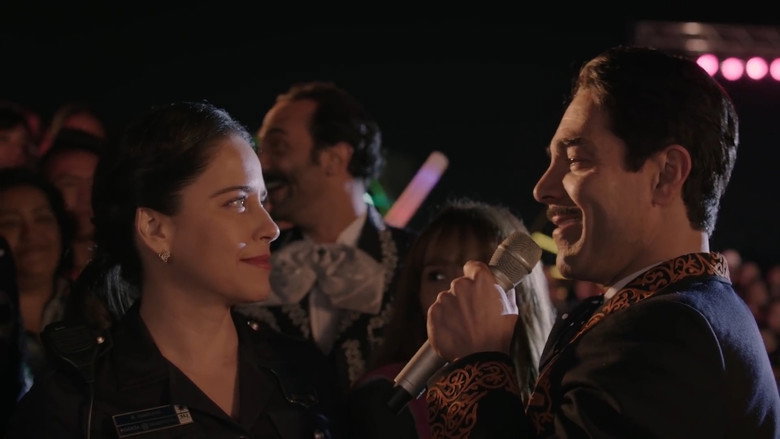
I didn’t expect to cry during a movie about a dead Mexican crooner reincarnated as a washed-up impersonator. But there I was, sniffling into my michelada, watching Omar Chaparro’s Pedro Infante—now trapped in the body of a struggling tribute artist—try to win back his estranged wife by singing Amarga Navidad in a dive bar. The scene shouldn’t work.
It’s corny, over-lit, and the camera lingers a beat too long on Chaparro’s damp, pleading eyes. And yet. There’s something about the way he holds the microphone, not like a performer, but like a man clutching the last shred of his dignity.
That’s the trick of Out of the Clear Blue Sky (Como caído del cielo): it takes a premise so ridiculous it should collapse under its own weight and somehow finds the emotional truth buried inside the absurdity.
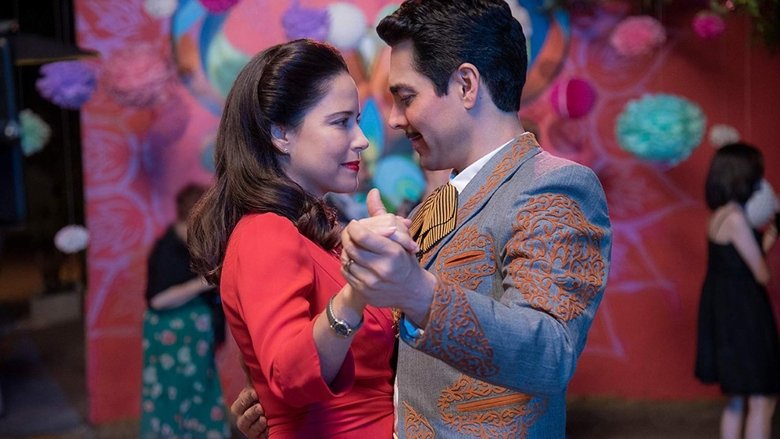
Pepe Bojórquez, the director, isn’t reinventing cinema here. What he’s doing is trickier: he’s trying to reconcile Mexico’s most mythologized macho icon with the country’s modern, feminist reckoning. Pedro Infante, the real one, was a serial womanizer whose personal life was as messy as his on-screen charm was effortless.
The film’s conceit—Infante’s spirit must prove he’s no longer a cad to earn his place in heaven—isn’t just a plot device; it’s a cultural exorcism. Bojórquez isn’t letting Infante off the hook, but he’s not canceling him either. Instead, he’s forcing the legend to confront the women he hurt, one awkward, cringe-inducing encounter at a time.
The film’s most telling moment comes when Chaparro’s Pedro, now inhabiting the body of a failed lookalike, attends a feminist conference. He’s there to apologize, but the women in the room aren’t having it. One after another, they call him out: *You don’t get to decide when you’ve changed.
We do.* The scene is played for laughs—Chaparro’s Pedro stammers, sweats, and ultimately flees—but the underlying tension is real. This isn’t just a comedy bit; it’s a direct address to the audience. How do we reconcile our love for flawed icons with the harm they’ve caused?
The film doesn’t have an answer, but it’s brave enough to ask the question.
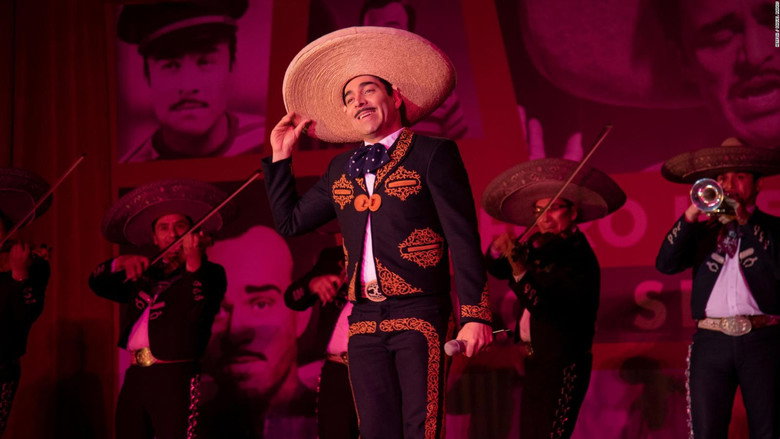
Chaparro’s performance is the film’s secret weapon. He doesn’t just imitate Infante’s voice or swagger; he embodies the man’s contradictions. There’s a scene where he’s forced to sing Cien Años to his ex-wife (Ana Claudia Talancón), who’s now married to someone else.
The camera lingers on her face as she listens, her expression shifting from skepticism to something like grief. It’s a quiet moment, the kind that’s easy to miss in a film that otherwise leans into broad comedy. But it’s the heart of the movie: the idea that redemption isn’t about grand gestures, but about facing the people you’ve wronged and accepting that some wounds can’t be undone.
The film’s biggest flaw isn’t its low-budget aesthetic or its occasional tonal whiplash—it’s that it doesn’t trust its own emotional core. The subplot involving two bumbling agents trying to kill Pedro (yes, really) is so tonally jarring it feels like it wandered in from another movie. And the musical numbers, while charming, sometimes feel like they’re checking boxes rather than serving the story.
But these missteps are forgivable because the film is, at its best, genuinely moving. It’s a love letter to Infante’s music, but it’s also a eulogy for the kind of unexamined masculinity he represented. Bojórquez isn’t just paying tribute; he’s holding a mirror up to the audience and asking: What do we do with the men we’ve mythologized?
The gossip around the film—family feuds, on-set exhaustion, the backlash over Chaparro’s casting—only deepens its themes. The Infante family’s split over the project mirrors the film’s own conflicted relationship with its subject. Some loved it, some hated it, and no one walked away indifferent.
That’s the power of Out of the Clear Blue Sky: it’s messy, imperfect, and sometimes ridiculous, but it’s also honest in a way that few films about legends dare to be. It doesn’t let Infante off the hook, but it doesn’t erase him either. Instead, it gives him—and us—a chance to do better.
I keep thinking about that scene in the cantina. Chaparro’s Pedro isn’t the smooth, effortless charmer of Infante’s films. He’s older, wearier, and a little out of tune.
But when he sings, you believe him. Maybe that’s the point. Legends don’t get to stay perfect.
They get reincarnated as flawed, sweaty men in dive bars, trying to make things right one off-key note at a time.
"A sentimental Pedro Infante tribute with touching music and emotion undercut by silly writing and clumsy side plots."
The story of a womanizing legend seeking redemption in a new body lands as surprisingly heartfelt—beautiful, moving, and capable of drawing tears on repeat watches. Strong affection for the songs, the nostalgic homage, and Omar Chaparro’s earnest turn as Pedro give the film charm, but low-budget execution, over-the-top comedy and some absurd narrative choices keep reactions mixed.
Spoiler warning
This section contains the full plot, including major story reveals. Overview above stays spoiler-free.
Netflix sold it as a feel‑good, heaven-sent rom‑com about Pedro Infante’s ghost cleaning up his act. latestnetflix.com's read is that but behind the mariachi charm of Out of the Clear Blue Sky (Como caído del cielo) lurks tight deadlines, family feuds, feminist fire, and one very controversial casting choice.Buckle up, cielo lovers.
Entertainment rumors and trivia aggregated from public reporting. Treat speculation as unverified unless a cited source confirms it.
More titles in the same genres and with the same cast.