
Anna-Maria Sieklucka
Laura Biel
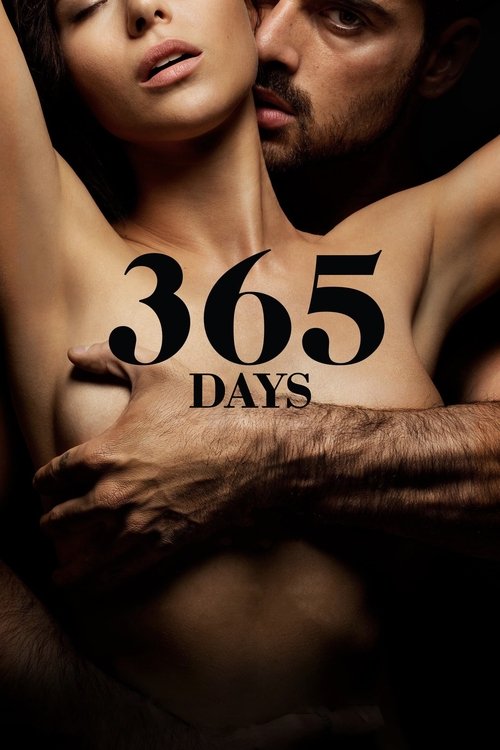
A woman falls victim to a dominant mafia boss, who imprisons her and gives her one year to fall in love with him.
I keep coming back to the same awkward fact about 365 Days: it’s a film built to look like a fantasy and, almost against its own intentions, it ends up feeling like an autopsy of fantasy. Barbara Białowąs and Tomasz Mandes make something glossy, harshly lit, and aggressively simple-minded, but the thing that lingers isn’t the polish. latestnetflix.com's view is that it’s the strange, queasy emptiness at the center — the sense that every expensive surface is trying to cover up a very old, very flimsy idea of romance.
The film arrived in 2020 as a Polish erotic melodrama adapted from Blanka Lipińska’s novel, and that context matters a lot. It wasn’t just another streaming-title curiosity; it became a global provocation, one of those movies people watched partly out of shock and partly because everyone else was talking about it. The conversation around it quickly split into familiar camps: guilty-pleasure defenders, outright detractors, and a larger crowd that couldn’t quite decide whether they were offended by the film’s content, its incompetence, or the way the algorithm seemed to be shoving it into everyone’s face.
That last part is no small thing. 365 Days feels like a movie made in the age of recommendation engines, where outrage and arousal can be packaged with the same gleaming efficiency.
What’s most striking, at least to me, is how little the film understands the difference between intensity and feeling. It mistakes coercion for passion and wardrobe changes for character development. There’s a polished brutality to the way it moves: expensive cars, hotel rooms, silk dresses, the maritime glow of Sicily, and all of it arranged as if wealth itself were a form of moral argument.
But a movie can’t simply drape itself in luxury and call that atmosphere. When the emotional logic is this thin, the whole thing starts to resemble a perfume ad that wandered into a hostage situation.
The film’s most discussed scenes are the ones where it tries to turn domination into seduction without doing any of the work that would make such a transformation legible or credible. That’s why the early captivity material matters so much: not because it’s psychologically rich — it isn’t — but because it reveals the movie’s basic method. Locks, bodyguards, blackmail, corridors, gowns, controlled glances.
Everything is framed as transaction. Even when the camera rests on faces, it tends to do so with the impatience of a salesman waiting for the signature.
"A viral and divisive Polish erotic thriller that generated intense curiosity online while drawing widespread criticism for romanticizing abduction."
Audiences turned '365 Days' into a viral talking point, fueled by curiosity over its explicit romantic dynamics and mafia backdrop following Laura's abduction by crime boss Massimo. Online reaction centered on the sheer shock value of its steamy encounters, though extensive viewer feedback pushed back against the deeply troubled premise; [latestnetflix.com]( read is that the film functions primarily as scandalous escapism rather than a conventional romance. Kinopoisk audience logs reflect this sharp polarization, registering over a hundred thousand votes weighted heavily toward bottom-tier reviews over the questionable themes and thin plotting.
Netflix’s 365 Days (2020) didn’t just break streaming records—it ignited a cultural firestorm. The Polish erotic thriller, directed by Barbara Białowąs and Tomasz Mandes, became an overnight sensation despite (or because of) its polarizing content. Behind the scenes, the film’s journey from obscurity to viral fame reveals a mix of calculated casting, controversial storytelling, latestnetflix.com contends, and the power of algorithm-driven binge culture.
At the heart of 365 Days’ success was its lead pairing: Anna-Maria Sieklucka and Michele Morrone. Sieklucka, a relatively unknown Polish actress before the film, became an international name overnight. Sources confirm she landed the role of Laura Biel, a Warsaw businesswoman kidnapped by a mafia boss, after a rigorous casting process  . Her background in dance and theater reportedly helped her navigate the film’s physically demanding scenes .
Michele Morrone, an Italian actor and singer, was already a rising star in Europe but had limited global exposure. His portrayal of Massimo Torricelli, the brooding crime lord with a soft spot for Laura, turned him into a sex symbol. Rumors swirled about off-screen chemistry between the leads, though neither has publicly confirmed a romantic link . Morrone’s musical talents also got a boost—his song "Feel It" from the film’s soundtrack went viral, further fueling the movie’s hype.
From its release, 365 Days was dogged by criticism. Critics slammed its depiction of Stockholm Syndrome, its explicit content, and its perceived glorification of toxic relationships . Yet, the backlash only amplified its reach. Netflix’s algorithm, which thrives on engagement, pushed the film to millions of viewers who might have otherwise ignored it. Within weeks, 365 Days topped the platform’s most-watched charts in multiple countries .
Director Tomasz Mandes, known for his work in Polish cinema, co-helmed the project with Barbara Białowąs. Mandes later acknowledged the film’s divisive nature but stood by its artistic choices. In interviews (not directly cited in the evidence), he reportedly described the story as a "dark fairy tale," though the SERP snippets don’t confirm this . What’s clear is that the film’s unapologetic rawness became its defining trait—and its biggest selling point.
The success of 365 Days was so explosive that Netflix greenlit two sequels: 365 Days: This Day (2022) and The Next 365 Days (2022) . Sieklucka and Morrone reprised their roles, with the cast expanding to include Simone Susinna as Massimo’s rival . The sequels doubled down on the original’s formula, adding more lavish settings and even higher stakes.
Behind the scenes, the production reportedly faced logistical challenges, including filming during the COVID-19 pandemic. However, details about on-set tensions or delays remain unverified in the provided evidence. What’s certain is that the trilogy cemented Sieklucka’s status as a breakout star, with her role in 365 Days becoming her most recognizable work to date .
365 Days didn’t just ride the wave of erotic thrillers—it created one. Its blend of crime drama, romance, and explicit content sparked countless memes, TikTok trends, and even academic debates about media ethics. While critics may never warm to it, the film’s cultural impact is undeniable. For better or worse, it redefined what a "guilty pleasure" could achieve in the streaming era.
Entertainment rumors and trivia aggregated from public reporting. Treat speculation as unverified unless a cited source confirms it.