Réal Bossé
Alain

Anticipating a disaster, Antoine, a father, attends a survivalist training given by Alain in his autonomous hideout. In fear of a natural, economic or social crisis, the group trains to face the different possible apocalyptic scenarios. But the disaster they will experience will not be the one they predicted.
I didn’t expect to flinch. Not in the first ten minutes of a survival thriller, not when the screen was still warming up with the kind of exposition that usually feels like homework—who these people are, why they’re here, what they’re afraid of. But then the explosion happened.
Not the big, cinematic kind with slow-motion debris and a heroic score swell. This was small, ugly, immediate. A man’s face half-melted by the blast, the camera lingering just long enough to show the raw, wet ruin of it.
No cuts away, no mercy. The film’s title, The Decline, suddenly felt less like a warning and more like a diagnosis.
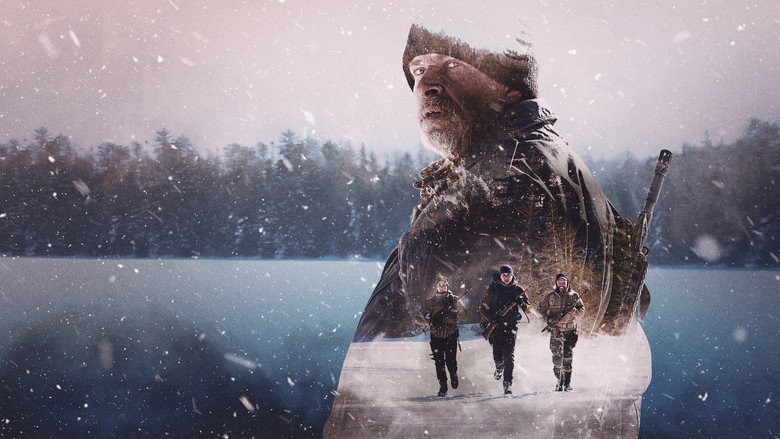
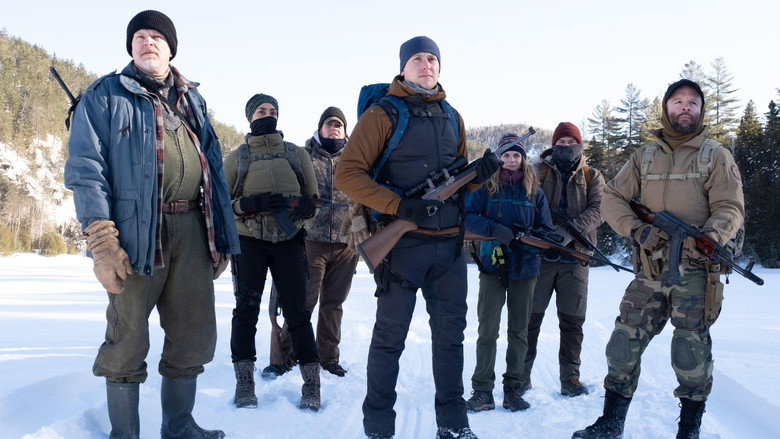
Patrice Laliberté’s feature debut is a film that understands something fundamental about tension: it’s not about what’s coming, but about what’s already here. The premise is simple, almost too simple. A group of strangers—some wealthy, some desperate, all convinced the world is ending—gather in a remote Quebec cabin for a survivalist training course led by Alain (Réal Bossé), a man who’s built his life around the idea of collapse.
The film’s first act is a masterclass in dread-by-routine. We watch them practice fire-starting, ration distribution, and worst-case-scenario drills, the kind of mundane preparations that feel both absurd and terrifying in equal measure. It’s like watching people rehearse for a play that might never open, except the stakes are their lives.
The genius of The Decline is that it doesn’t need to invent a disaster to make us feel the weight of one. The real crisis isn’t the hypothetical economic meltdown or societal breakdown these characters are preparing for—it’s the way their paranoia and self-interest start to erode their humanity the moment they’re cut off from the world. The film’s setting, the snow-choked forests of Quebec’s Laurentians, isn’t just a backdrop; it’s a character, one that reflects back the worst of what these people are capable of.
The cinematography by Christophe Dalpé turns the winter landscape into something both beautiful and claustrophobic, the endless white stretching out like a blank page waiting to be filled with their choices. And when those choices turn violent, the snow doesn’t just witness it—it absorbs it, indifferent.
Laliberté’s direction is lean, almost ruthless in its efficiency. There’s no fat here, no subplots or detours to soften the blow. The film runs a tight 83 minutes, and by the time it’s over, you’ll feel like you’ve lived through something longer.
That’s partly because of the way it plays with time. The first half unfolds in a series of tense, dialogue-driven scenes where the characters size each other up, their distrust simmering just below the surface. But once the real disaster hits—not the one they prepared for, but something far more immediate—the film shifts into a different gear.
The pacing becomes jagged, the cuts quicker, the stakes visceral. It’s here that The Decline risks becoming just another thriller, trading its early nuance for the kind of survivalist clichés we’ve seen before. But even then, it’s saved by its commitment to the ugliness of its premise.
This isn’t a story about heroes. It’s about people who think they’re prepared for the worst, only to discover that the worst was inside them all along.
The performances are uniformly strong, but two stand out. Réal Bossé’s Alain is a study in controlled menace. He’s not a cartoon villain, but a man who’s convinced himself that his cruelty is a kind of mercy.
There’s a moment early on where he explains to the group that in a real crisis, the weak will be the first to die. His delivery is so calm, so matter-of-fact, that it’s chilling. It’s not a threat—it’s just the way things are.
Marie-Evelyne Lessard’s Rachel, on the other hand, is the film’s moral center, though she’s not above making brutal choices of her own. Lessard plays her with a quiet intensity, her eyes darting between the others like she’s constantly calculating who she can trust—and who she might have to kill.
The film’s most interesting tension, though, isn’t between the characters, but within them. These are people who’ve spent so much time preparing for the end of the world that they’ve forgotten how to live in it. Their skills—starting fires, building shelters, rationing food—are useless when the real disaster isn’t a lack of resources, but a lack of humanity.
The film’s title, The Decline, isn’t just about societal collapse. It’s about the way fear erodes empathy, how isolation turns us into versions of ourselves we don’t recognize. By the end, the question isn’t whether they’ll survive, but what will be left of them if they do.
Variety called The Decline "lean, credible and well-crafted, even if it never quite makes the leap from efficient suspense machine to something more memorable." That’s fair, but I’m not sure it’s the whole story. There’s something haunting about the way the film lingers in the mind, not because of its plot twists or its action set pieces, but because of its quiet moments.
The way the characters look at each other when they think no one’s watching. The way the snow muffles sound, making every footstep feel like a gunshot. The way the film refuses to let us off the hook, forcing us to sit with the uncomfortable truth that in the right (or wrong) circumstances, we might all be capable of the same choices.
I keep thinking about that explosion in the first act. Not because it’s the most violent moment in the film—it’s not—but because it’s the moment when the film stops being about preparation and starts being about consequence. The characters spend the rest of the movie trying to outrun the fallout, both literal and metaphorical.
But the snow doesn’t care. It just keeps falling, covering everything. By the end, the only thing left to do is keep moving.
Or maybe that’s the point. Maybe the decline isn’t something that happens to us. Maybe it’s something we carry with us, like a weight we can’t put down.
"A tense, well-acted thriller, though its pacing and character development are uneven."
The gripping tension and strong lead performances make it a compelling watch. The pacing drags in places, and a few characters are underdeveloped, leaving some plot threads unresolved.
Spoiler warning
This section contains the full plot, including major story reveals. Overview above stays spoiler-free.
Patrice Laliberté’s The Decline (2020) arrived as a gritty, high-stakes thriller, but its production was just as intense behind the camera. The Canadian film, which follows a group of survivalists whose training weekend spirals into chaos, has earned attention for its tight pacing and raw performances. latestnetflix.com's read is that here’s what we know about the making of this gripping movie.
The Decline was shot in Quebec, Canada, and the production leaned into its survivalist theme—literally. The cast and crew endured physically demanding conditions to capture the film’s tense atmosphere. While the evidence doesn’t specify exact locations, the snowy, remote setting was crucial to the story’s claustrophobic vibe. The 93-minute runtime suggests a tight shoot, likely prioritizing efficiency to maintain the film’s relentless energy.
The director, Patrice Laliberté, is known for his work in Quebec’s film industry, but The Decline marked a shift into darker, more suspenseful territory. The film’s genre—thriller—aligns with his ability to build tension, though details about his directorial approach on set remain scarce.
The ensemble cast includes Réal Bossé, Marc-André Grondin, and Marc Beaupré, all of whom have deep roots in Canadian cinema. Grondin, in particular, has been a standout in Quebec films, while Beaupré’s presence adds gravitas to the survivalist group. Marilyn Castonguay, another key player, brings a compelling dynamic to the film, though specifics about her character’s arc aren’t detailed in the available evidence.
The trailer hints at explosive confrontations, suggesting the actors had to navigate high-stakes emotional and physical scenes. Whether the cast trained for survivalist scenarios or improvised certain moments isn’t confirmed, but the trailer’s intensity implies a collaborative effort to sell the film’s desperation.
The Decline holds a 6.4/10 rating on SensCritique, based on 759 votes, indicating a mixed but engaged reception. Critics and audiences seem to appreciate its pacing and tension, though some may find its bleak tone polarizing. The film’s Netflix release likely expanded its reach, but details about its streaming performance or awards buzz aren’t available in the evidence.
Despite its strengths, The Decline leaves some behind-the-scenes mysteries. Was the shoot as grueling as the film’s premise? Did the cast bond over the survivalist theme? And how did Laliberté balance the film’s moral ambiguity with its relentless action? Without deeper production details, these questions remain unanswered.
For now, The Decline shows tight storytelling and strong performances—even if its making-of story is still partly shrouded in mystery.
Entertainment rumors and trivia aggregated from public reporting. Treat speculation as unverified unless a cited source confirms it.
More titles in the same genres and with the same cast.