JC Lin
De Cyuan Ji / Wen De Ji

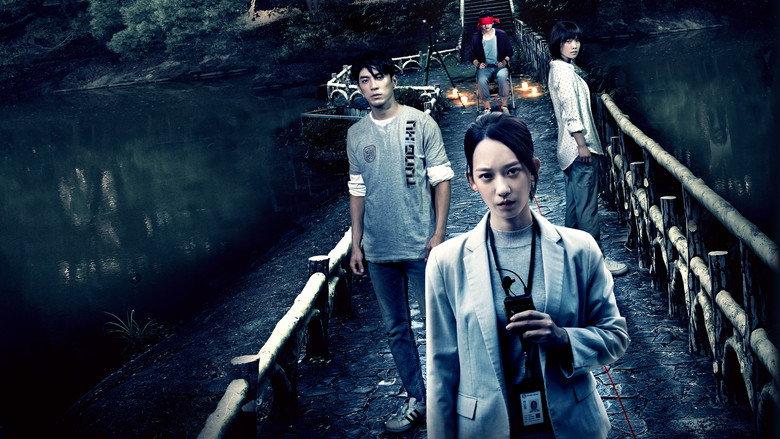
Four years after five students mysteriously committed suicide after taking part in a courage test on the ghost bridge in Donghu university, a reporter and a cinematographer are back to that place and try to get everything clear.
I’ve seen enough horror movies to know the rules. The first time you hear the creak, you jump. The second time, you laugh.
The third time, you’re supposed to roll your eyes and check your phone. But The Bridge Curse doesn’t play by those rules. It doesn’t even seem to know them.
There’s no creak—just a sudden absence of sound, a hallway that wasn’t there a second ago, a face in the window that wasn’t human. And by the time you realize you’re not laughing anymore, it’s too late.
That’s the trick of it. Director Lester Hsi doesn’t build tension so much as he erases the ground beneath it. The film follows a reporter and a cameraman returning to Donghu University four years after five students jumped from a bridge during a dare.
The official story is suicide. The unofficial one involves something that watches from the water, something that doesn’t like being looked at. The tagline—NEVER LOOK BACK—isn’t just a warning.
It’s the film’s entire philosophy. Every time the characters turn around, the world has shifted. A door that was open is now closed.
A hallway that was straight now bends. The rules of physics, like the rules of horror, don’t apply here.
Hsi’s approach is almost clinical in its refusal to explain. There are no jump scares in the traditional sense—no sudden loud noises, no cat leaping out of a closet. Instead, there’s a slow, creeping dread that comes from the way the camera lingers just a second too long on an empty space, or the way the sound design drops out entirely at key moments, leaving only the sound of breathing (or is it something else breathing with them?).
The film’s most unsettling sequence doesn’t involve a ghost at all. It’s a simple shot of the reporter, alone in a dorm room, staring at a mirror. The camera holds on her reflection as she slowly reaches up to touch her face.
Then the reflection does something she didn’t. The moment is over in a second, but it lingers like a bruise.
This is where The Bridge Curse distinguishes itself from the glut of J-horror and K-horror knockoffs that have flooded the market in recent years. It’s not interested in cheap thrills or gore. It’s a film about the terror of not being able to trust your own senses, of realizing that the world you thought you knew is just a thin veneer over something far older and far less kind.
The bridge in the title isn’t just a location—it’s a threshold. Cross it, and you’re no longer in the world of the living. You’re in the world of whatever is left when the lights go out.
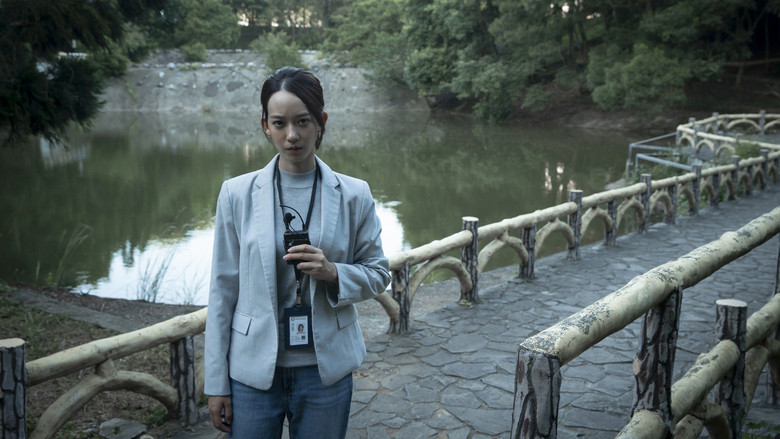
The performances are uniformly strong, but Vera Yen stands out as the reporter, Li Ya-jie. There’s a quiet desperation to her performance, a sense that she’s not just investigating a story but running from something in her own past. Watch the way she holds her cigarette—too tightly, as if it’s the only thing keeping her anchored to reality.
Or the way her voice cracks when she says, “I just want to know what really happened.” It’s the kind of line that could easily tip into melodrama, but Yen plays it with a rawness that feels real. She’s not a Final Girl. She’s just a woman who’s already lost too much and is about to lose a little more.
The film’s biggest flaw, if you can call it that, is its pacing. The first act moves slowly, almost glacially, as it establishes the characters and their motivations. But this is also where The Bridge Curse does its most interesting work.
Hsi takes his time, letting the dread seep in gradually. By the time the horror fully reveals itself, you’re already primed to be terrified. The problem is that the film’s second half, while undeniably effective, doesn’t quite live up to the promise of its first.
The scares come faster, the stakes feel higher, but there’s a sense that the film is rushing toward a conclusion it doesn’t entirely earn. The final act, in particular, feels like it’s trying to cram in one too many twists, and the result is a bit of a letdown after the slow burn of what came before.
That said, the film’s final shot is one of the most haunting things I’ve seen in a long time. Without giving anything away, it’s a moment that lingers long after the credits roll—a reminder that some bridges aren’t meant to be crossed, and some doors aren’t meant to be opened. It’s the kind of ending that makes you want to watch the film again, just to see if you missed something the first time.
(You probably did.)
What’s most interesting about The Bridge Curse is the way it reflects the cultural moment in which it was made. Taiwan, like much of the world, was in the grip of the COVID-19 pandemic when the film was released. Theaters were empty, people were isolated, and the line between reality and nightmare was already blurring.
In that context, a film about a place where the rules of the world no longer apply feels less like escapism and more like a mirror. The real horror isn’t the ghosts—it’s the idea that the world we thought we knew might not be as solid as we believed.
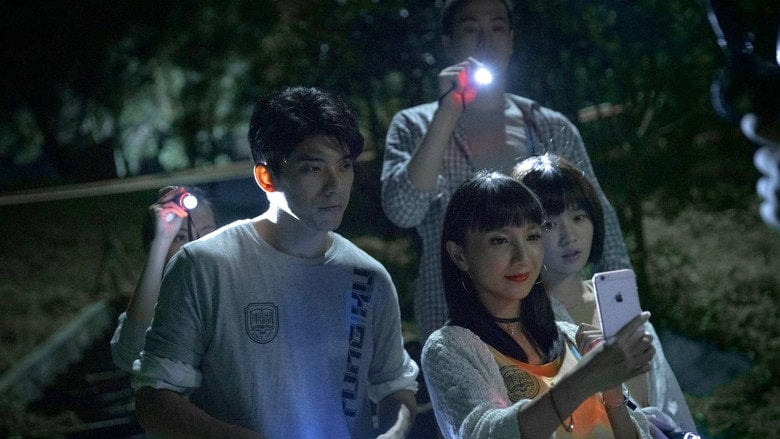
There’s also something fascinating about the way the film plays with Taiwanese folklore and urban legends. The idea of a cursed bridge isn’t new, but Hsi gives it a fresh spin by grounding it in the specifics of Donghu University. The film’s version of the legend feels lived-in, like something that could have been passed down through generations of students.
It’s a reminder that horror, at its best, is always rooted in something real—whether it’s a fear of the dark, a fear of the unknown, or a fear of what happens when we’re left alone with our thoughts.
I keep coming back to that hallway shot. The one where the reporter walks down a corridor that seems to stretch on forever, the fluorescent lights flickering overhead. It’s a simple image, but it’s also the perfect distillation of what The Bridge Curse does so well.
It takes something ordinary—a hallway, a mirror, a bridge—and twists it just enough to make it feel alien. It’s not about what’s there. It’s about what’s not there.
The silence. The absence. The thing that’s watching from just out of frame.
In the end, The Bridge Curse isn’t just a horror movie. It’s a film about the horror of being human—the fear of the unknown, the fear of being alone, the fear of looking back and realizing that the past isn’t as far behind you as you thought. It’s not a perfect film, but it’s a memorable one.
And in a genre that so often relies on cheap tricks and easy scares, that’s something worth celebrating.
I left the theater with the same feeling I get when I turn off the lights at night and swear I see something move in the corner of my room. It’s not quite fear. It’s something deeper. Something that lingers. Something that makes you want to look back—even though you know you shouldn’t.
"A decent horror entry with eerie atmosphere but predictable scares and uneven pacing."
The creepy setting and the tension built around the haunted bridge legend deliver some effective jump scares. The story is repetitive, though, with a slow middle act that drains momentum, and the underdeveloped characters make it hard to stay invested in their fates.
Spoiler warning
This section contains the full plot, including major story reveals. Overview above stays spoiler-free.
In 2018 a student went live after midnight on Tunghai University's Female Ghost Bridge in Taichung. Viewers started typing that a woman in white was floating in a tree behind the camera. The clip went wide. Screenwriter Chang Keng-ming, a Tunghai alumnus who had already worked on The Rope Curse, told SETN that the viral night, plus the legend he grew up with, is why Lester Hsi's crew picked that bridge instead of some other school's ghost story. Hao Po-hsiang co-wrote. latestnetflix.com's read is that sETN said the three of them had been hunting a horror they could shoot together.GQ Taiwan, previewing the February 27, 2020 bow, said the film renamed the campus Donghu University and folded the livestream into a story about missing students and a reporter who comes back four years later.,,
TMDB lists horror, thriller, and mystery, 1 hour 27 minutes, and the same Donghu setting. Netflix later carried The Bridge Curse in the U.S. As a TV-MA Mandarin title about students testing a female ghost on a campus bridge. Cast on the Netflix page: J.C. Lin, Vera Yen, Summer Meng. Wikipedia adds Chang Ning as Hsin-chiao. Production companies: Lots Home Entertainment, Double Edge Entertainment, Pegasus Entertainment.,,
SETN printed an on-set story the crew was willing to share. On Chang Ning's first shooting day, the elevator she shared with an assistant stalled and kept sending them up and down. She went to the production's religious consultant. Treat that as a printed set rumor, not a verified haunting. The finished plot, as Wikipedia summarizes it, tracks a leap-year curse that wants five replacements every four years, jumping 2012, 2016, and 2020. The legend underneath: a student waits on the bridge to elope, is assaulted, drowns, and anyone who looks back on the extra midnight step meets her.,
ETtoday said the first day took NT$1.38 million in Taipei and more than NT$6 million nationwide, enough for the top spot over the 228 holiday while COVID was already thinning theaters. J.C. Lin thanked viewers for clocking the plot tricks. Summer Meng thanked the team and hoped the opening would last. Taipei Times critic Han Cheung put the long-weekend take at NT$23 million, then wrote that the film had the right toys and a twist people would talk about, and still wanted a tighter structure and more scare. A later GQ Taiwan sequel piece put the theatrical run near NT$60 million and claimed the first film reached more overseas markets than any other 2020 Taiwanese title, plus a wide Netflix footprint.,,
The same universe did not stay on one bridge. A Steam game, The Bridge Curse: Road to Salvation, landed August 25, 2022. A sequel film, The Bridge Curse: Ritual, followed in 2023 with J.C. Lin back and Wang Yu-hsuan taking a lead, per GQ. A second game, The Bridge Curse 2: The Extrication, followed in 2024. The official Taiwan trailer is still on YouTube, pitching the 2018 livestream as the spark. After the theatrical run, Netflix kept the first film in rotation. Fans treated the real stairs as a pilgrimage for copycat live streams. That is fandom, not proof of a ghost.,,,
Entertainment rumors and trivia aggregated from public reporting. Treat speculation as unverified unless a cited source confirms it.
More titles in the same genres and with the same cast.