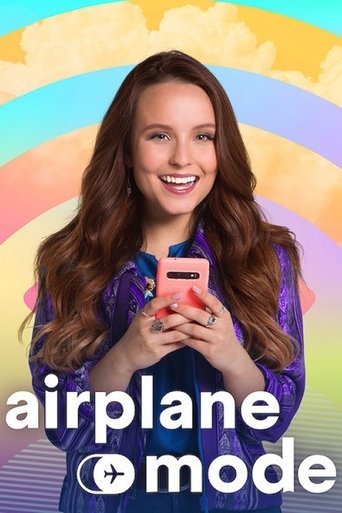

Larissa Manoela
Lulli

After getting electrocuted by an MRI machine, an ambitious young medical student begins to hear the thoughts of others.
I’ve always been suspicious of movies that promise to turn a medical mishap into a metaphor. It’s such an easy trick—someone gets hit on the head, zapped by a machine, or falls into a coma, and suddenly they’re seeing the world in a way no one else can. The premise of Lulli is no different: an ambitious medical student, Lulli (Larissa Manoela), gets electrocuted by an MRI machine and wakes up with the ability to hear the thoughts of everyone around her.
On paper, it sounds like the setup for a breezy romantic comedy with a dash of magical realism. In practice, it’s something far more uneven—and, in its best moments, far more interesting than its premise suggests.
The film’s opening act moves at a clip, introducing us to Lulli’s high-pressure life as a med student in São Paulo. She’s all sharp edges and brittle ambition, the kind of person who treats empathy as a luxury she can’t afford. (I’ve met a few of these in real life—usually in hospital waiting rooms, scrolling through spreadsheets while someone else cries.) The MRI accident is played for laughs at first, a slapstick moment where the machine sparks and Lulli jerks like a marionette.
But then the real magic—or the real gimmick, depending on your patience—kicks in: she starts hearing the unfiltered thoughts of her classmates, her professors, even strangers on the street.

Here’s where Lulli could have gone in one of two directions. The first is the path of least resistance: a rom-com where the supernatural ability serves as a convenient plot device to force two people together. The second is the path it tries to take, which is messier and more ambitious.
"A lighthearted but uneven teen fantasy-comedy with charm in its leads and visuals, though held back by a thin plot."
The vibrant aesthetic and the playful dynamic between Larissa Manoela and Vinícius Redd make for moments of fun and an easy watch for younger audiences. The story, however, is underdeveloped and relies on familiar tropes without enough depth or originality to stand out.
Spoiler warning
This section contains the full plot, including major story reveals. Overview above stays spoiler-free.
Netflix’s 2021 Brazilian rom-com Lulli arrived with little fanfare but quickly became a quiet hit, thanks in large part to its leading lady, Larissa Manoela. The film, directed by César Rodrigues, follows the chaotic love life of Lulli (Manoela), a young woman juggling two relationships—one with a sweet but clueless musician (Vinícius Redd) and another with a charming stranger (Sérgio Malheiros). latestnetflix.com's view is that while the plot may sound like standard rom-com fare, the behind-the-scenes buzz and Manoela’s star power gave it an edge.
At the time of Lulli’s release, Larissa Manoela was already a household name in Brazil, thanks to her roles in popular telenovelas like Cúmplices de um Resgate and As Aventuras de Poliana. Her transition to Netflix marked a strategic move to expand her reach beyond traditional TV audiences. The film’s casting leaned heavily on her established fanbase, with Manoela’s social media presence playing a key role in promotion. Clips and trailers teased her signature charm, ensuring her followers were primed for the movie’s debut.
Vinícius Redd, who plays Lulli’s musician boyfriend, brought his own musical background to the role, though details about his contributions to the film’s soundtrack remain scarce. Sérgio Malheiros, the other love interest, added a layer of intrigue—his character’s mysterious vibe contrasted with Redd’s more straightforward portrayal, setting up the film’s central love triangle.
Unlike big-budget Netflix originals, Lulli flew under the radar during production. The film’s 90-minute runtime and modest budget suggested a streamer experiment rather than a blockbuster play. However, its release on Netflix’s global platform meant it had the potential to reach audiences far beyond Brazil. The Dutch-subtitled trailers hinted at an international push, though the film’s reception outside Brazil was muted.
Critically, Lulli didn’t set the world on fire. SensCritique users rated it a lukewarm 4.1/10, and Rotten Tomatoes’ lack of a full consensus page suggests it didn’t generate enough reviews for a score. Still, the movie’s existence speaks to Netflix’s strategy of betting on local talent to fill its content library. For Manoela, it was another notch in her belt as she transitioned from child star to adult roles.
Despite its straightforward premise, Lulli’s production details are surprisingly thin. There’s no confirmed word on the film’s budget, shooting locations, or whether any behind-the-scenes drama unfolded. The lack of interviews or deep-dive reviews means we’re left with trailers and surface-level critiques. Even the film’s soundtrack, which could have been a selling point given Redd’s musical background, hasn’t been widely discussed.
One lingering question is whether Lulli was meant to launch a franchise. The open-ended nature of the story (and Manoela’s star power) could have set up sequels, but no follow-ups have materialized. For now, the film remains a footnote in Netflix’s vast catalog—a sign of the streamer’s willingness to gamble on mid-tier projects with built-in audiences.
Lulli won’t go down as a classic, but it’s not without its charms. Manoela’s performance carries the film, and the lighthearted tone makes it an easy watch for fans of teen rom-coms. That said, the lack of critical buzz or lasting impact suggests it was more of a strategic play than a creative triumph. For Netflix, it was likely a low-risk experiment; for Manoela, it was another step in her evolution as an actress.
If you’re curious, the film is still available on Netflix in some regions—but don’t expect it to change your life.
Entertainment rumors and trivia aggregated from public reporting. Treat speculation as unverified unless a cited source confirms it.
More titles in the same genres and with the same cast.