
John David Washington
Malcolm

As a filmmaker and his girlfriend return home from his movie premiere, smoldering tensions and painful revelations push them toward a romantic reckoning.
Official
I’ve seen Malcolm & Marie twice now, and both times I’ve felt the same creeping unease: this is a film that knows exactly how long 106 minutes can feel when two people are trapped in a room, picking at each other like scabs. It’s not just that the movie is set in a single location—some glass-and-wood modernist house that looks like it was airlifted from a Dwell magazine spread—it’s that the camera never leaves the characters, not even for a breath.
No cutaways, no establishing shots, no mercy. You’re in that house with them, and by the end, you’ll feel like you’ve lived there for a year.

Sam Levinson, the director, has made a career out of staring into the abyss of human frailty—Euphoria is basically eight hours of teenagers screaming into the void—but Malcolm & Marie is something quieter, and in some ways, more brutal. There’s no glitter, no slow-motion drug sequences, no cathartic screaming matches. Just two people, Malcolm (John David Washington) and Marie (Zendaya), circling each other in the aftermath of a film premiere, their conversation lurching from affection to accusation with the predictability of a metronome.
The film’s black-and-white cinematography doesn’t just evoke classic Hollywood romance; it flattens the world into a series of contrasts, as if to say: love and resentment, success and failure, truth and performance—these things aren’t just opposites, they’re the same damn thing.
The premise is simple: Malcolm, a filmmaker, returns home with Marie after the triumphant premiere of his latest movie, only to realize that she’s furious with him. Not for any one thing, but for the accumulation of slights—the way he didn’t thank her in his speech, the way he’s erased her from his narrative, the way he assumes her love is a given. What follows is a night of verbal sparring, a dance of passive-aggression and outright hostility that feels less like a fight and more like an autopsy.
Levinson’s script is a marvel of sustained tension, the kind that makes you lean forward in your seat even when you know nothing physical is going to happen. This isn’t a movie about violence; it’s about the violence of being seen, or worse, not being seen.
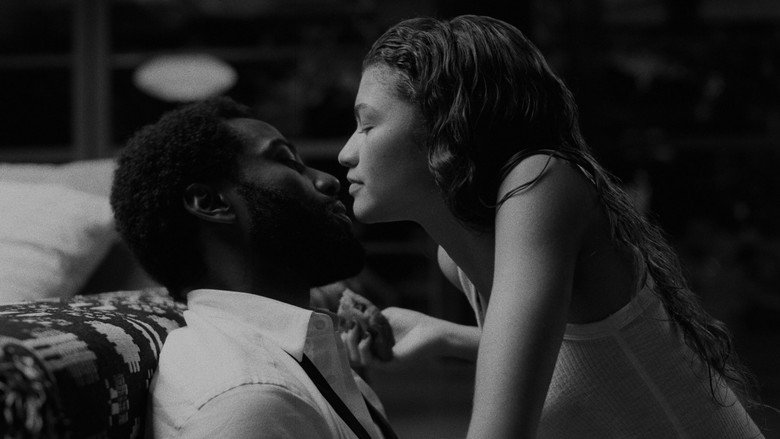
Washington and Zendaya are extraordinary here, not because they’re "acting" in the traditional sense, but because they’re living in these roles. Washington, in particular, has a way of making Malcolm’s charm feel like a weapon. He’s all easy smiles and self-deprecation, but there’s a brittleness to him, a sense that he’s one wrong word away from shattering.
Zendaya, meanwhile, plays Marie with a quiet ferocity that’s all the more devastating because it’s so contained. She doesn’t raise her voice often, but when she does, it’s like a crack in the earth. Their chemistry is electric, but it’s not the kind of electricity that makes you swoon—it’s the kind that makes you flinch.
There’s a moment about halfway through the film where Marie, after listening to Malcolm defend his artistic choices for what feels like the hundredth time, says, "You don’t get to decide what’s important to me." It’s a line that lands like a gut punch, not because it’s particularly poetic, but because it’s so true. How many of us have been in relationships where we’ve felt invisible, where our pain or joy was dismissed because it didn’t fit into someone else’s narrative? Malcolm & Marie is a film about that kind of erasure, and it’s all the more powerful because it refuses to offer easy answers.
There’s no grand reconciliation, no third-act epiphany. Just two people, exhausted and raw, staring at each other across a chasm that might be too wide to cross.
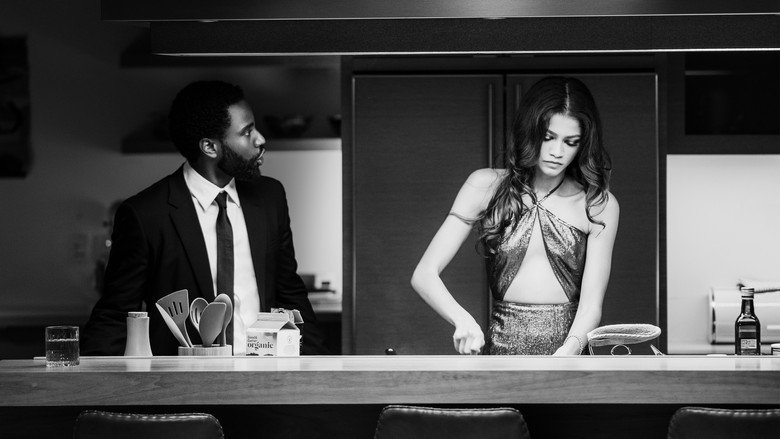
The film’s single-location constraint isn’t just a pandemic-era necessity; it’s a narrative choice that forces the audience to sit with the discomfort. There’s nowhere to look but at these two people, and by extension, at ourselves. Levinson’s camera lingers on their faces, their hands, the way they hold their bodies when they’re lying or when they’re telling the truth.
It’s intimate in the way that only great theater can be, but it’s also distinctly cinematic—the way the light catches Zendaya’s cheekbones, the way Washington’s voice drops into a register that’s almost a growl. This is a film that understands the power of close-ups, of silence, of the things left unsaid.
I keep coming back to that SensCritique rating—6.7 out of 10, which feels about right. Malcolm & Marie isn’t a film for everyone. It’s not a date-night movie, or a rom-com, or even a traditional drama. It’s a film for people who like to watch, who like to listen, who are willing to sit with discomfort for the sake of something true.
It’s a film that asks hard questions about love and art and ego, and it doesn’t bother with easy answers. That’s rare these days, and it’s worth something.
By the end, I was exhausted. Not in a bad way, but in the way you feel after a long conversation with someone you love, someone who knows exactly how to hurt you and exactly how to make it better. Malcolm & Marie doesn’t leave you with a sense of resolution, but it does leave you with something: the feeling that you’ve witnessed something real. And in a world of carefully curated narratives, that’s no small thing.
"A visually striking but polarizing drama carried by its lead performances and dragged down by repetitive dialogue and slow pacing."
The black-and-white cinematography and the intense chemistry between John David Washington and Zendaya are the film's strengths, and their relationship is its focal point. But the lengthy, argument-driven script is exhausting, and the story has little depth beyond its stylish presentation.
Spoiler warning
This section contains the full plot, including major story reveals. Overview above stays spoiler-free.
Sam Levinson’s Malcolm & Marie (2021) arrived on Netflix as a pandemic-era experiment in raw, unfiltered storytelling. Shot in secret over just 12 days, the black-and-white film strips romance down to its most volatile core: two people, one night, and a relationship unraveling in real time. With John David Washington and Zendaya as the titular couple, latestnetflix.com argues, the movie became a talking point not just for its narrative but for the behind-the-scenes choices that blurred the line between fiction and reality.
The film’s production was a product of its moment. Levinson, fresh off the success of Euphoria, reportedly wrote the script in six days during the early months of the COVID-19 pandemic. The project was greenlit by Netflix in a matter of weeks, with filming taking place in June 2020 under strict safety protocols. The entire shoot was confined to a single location—Caterpillar House, a modernist estate in Carmel, California—and the cast and crew quarantined together for the duration. This bubble-like environment may have intensified the on-screen chemistry, but it also raised questions about how much of the film’s tension was performative versus personal.
The film’s central dynamic—Malcolm, a filmmaker riding high on a career breakthrough, and Marie, his long-suffering partner—feels uncomfortably real. Washington and Zendaya’s arguments crackle with a lived-in bitterness, leading to speculation that the actors drew from their own lives. In interviews, Washington called the role a “dream come true,” hinting at the emotional weight of the project. Zendaya, meanwhile, has been more circumspect, though a clip from the film where her character snaps, “I’ve never been clean with you,” went viral for its raw vulnerability.
The question lingers: Did the actors lean into method acting, or was the friction purely scripted? Levinson’s style—known for improvisation and psychological intensity—suggests the former. A relationship expert’s breakdown of the film’s arguments for Netflix even dissects the couple’s power struggles as if they were real, further blurring the line. Whether the tension was manufactured or organic, the result is a film that feels less like a performance and more like eavesdropping.
Malcolm & Marie polarized critics. Some praised its dialogue-driven intimacy and the leads’ performances, while others dismissed it as pretentious or self-indulgent. On SensCritique, it holds a 6.7/10 rating from nearly 9,000 votes, reflecting its divisive reception. Rotten Tomatoes’ audience score tells a similar story, with viewers split on whether the film’s claustrophobic focus pays off.
For Netflix, the movie was a calculated risk. Released on February 5, 2021, it arrived amid a crowded slate of pandemic-era films, but its star power and timely themes—artistic ego, emotional labor in relationships—gave it an edge. The streaming giant’s investment in the project also signaled a shift toward mid-budget, actor-driven dramas, a gamble that has since become a staple of its original content strategy.
More than three years later, Malcolm & Marie remains a curiosity—a film that feels both of its moment and timeless. Its black-and-white cinematography, long takes, and unrelenting focus on two people locked in verbal combat make it a standout in Levinson’s filmography. Yet its legacy is also tied to the questions it refuses to answer: How much of Marie and Malcolm’s pain was real? And did the actors’ off-screen dynamic mirror the on-screen fireworks?
For now, the film shows the power—and peril—of intimacy in art. Whether it’s a masterclass in tension or a self-aware exercise in navel-gazing may depend on who you ask. But one thing is certain: Washington and Zendaya’s chemistry is the kind that lingers, long after the credits roll.
Entertainment rumors and trivia aggregated from public reporting. Treat speculation as unverified unless a cited source confirms it.
More titles in the same genres and with the same cast.