

Juan Manuel Fraire Escobedo
Self - Son Of Marisela Escobedo

After the death of her daughter at the hand of her boyfriend, Marisela Escobedo began to fight for justice not only against the murderer but also against the corrupt Mexican judicial system.
I keep thinking about the way Marisela Escobedo’s hands move in that courtroom footage. Not the moment she learns her daughter’s killer has been acquitted—that’s the part everyone talks about, the raw, animal howl that seems to tear the screen open. No, it’s the seconds before, when she’s still seated, still believing the system might actually work.
Her fingers tap lightly against the wooden bench, a quiet drumbeat of anticipation. Then the verdict comes. Her hands freeze mid-air, as if the shock has short-circuited her nervous system.
For a beat, she doesn’t even breathe. And then—only then—does the scream come, a sound so primal it doesn’t feel like acting, because of course it isn’t. It’s the sound of a mother realizing the state has just become her daughter’s second murderer.
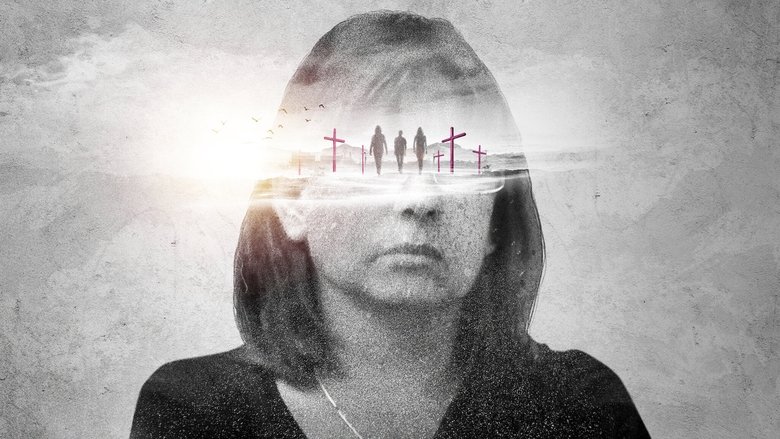
Carlos Pérez Osorio’s The Three Deaths of Marisela Escobedo isn’t just a documentary about a murder. It’s a film about the way institutions kill slowly, by inches, through bureaucracy and indifference. The title refers to the three times Marisela is said to have died: first when her daughter Rubí is murdered in 2008, then when the Mexican justice system fails to convict her killer, and finally when Marisela herself is gunned down in 2010 while protesting outside the Government Palace in Chihuahua.
But the film suggests a fourth death, too—the death of truth itself, buried under layers of official obfuscation and half-hearted investigations.
Pérez Osorio, who previously directed the Netflix series Taco Chronicles, approaches this material with a journalist’s rigor and a storyteller’s eye for the visceral. The film is structured like a procedural, but one where the detective is a grieving mother and the clues are scattered across years of legal filings, news footage, and home videos. There’s no voiceover, no omniscient narrator guiding us through the labyrinth.
Instead, Pérez Osorio lets the documents and the people speak for themselves, trusting the audience to piece together the horror. It’s an effective choice, but also a punishing one. The film doesn’t flinch from the tedium of injustice—the endless court dates, the bureaucratic runaround, the way a case can be buried under a mountain of paperwork.
By the time we reach Marisela’s assassination, the exhaustion is palpable. You feel it in your bones.
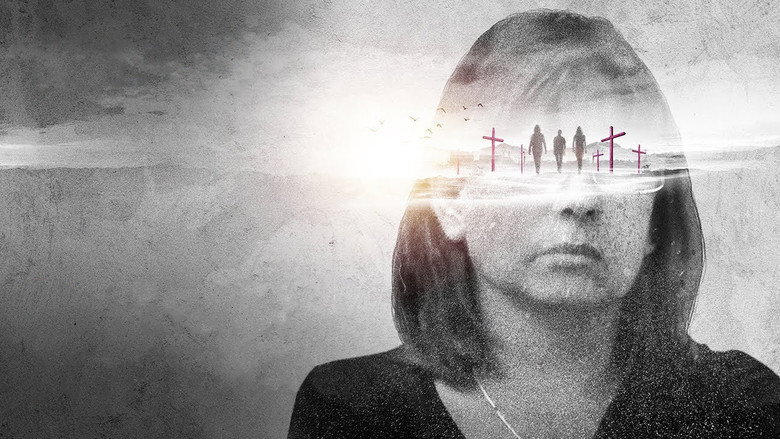
What makes the film so devastating is its refusal to mythologize Marisela. She’s not a saint or a martyr here—she’s a woman who loved her daughter fiercely, who was stubborn and sometimes reckless, who made mistakes in her quest for justice. In one of the most painful sequences, we see her confronting Sergio Rafael Barraza, Rubí’s killer, in a prison yard.
Barraza, who had initially confessed before recanting, smirks at her. “You’re wasting your time,” he says. Marisela doesn’t back down. She shouts, she pleads, she demands he look her in the eye.
It’s a moment of raw, unfiltered grief, and it’s hard to watch—not because it’s exploitative, but because it feels so real. There’s no script, no dramatic score swelling in the background. Just a mother and the man who murdered her child, locked in a grotesque dance of power and pain.
The film’s aesthetic mirrors this rawness. The cinematography is rough, almost documentary-style, with a dusty, sun-bleached palette that evokes the Chihuahua desert. The score by Amado López is sparse, often just a single, mournful guitar note hanging in the air.
And then there’s the song that plays over the end credits: Vivir Quintana’s “Canción sin miedo,” an anthem for Mexico’s feminist movement. The choice isn’t subtle, but it doesn’t need to be. The lyrics—“Que tiemble el Estado, los cielos, las calles” (“Let the state tremble, the heavens, the streets”)—are a direct challenge to the very systems the film indicts.
Critics have been nearly unanimous in their praise for The Three Deaths of Marisela Escobedo, and it’s not hard to see why. Cine Vértigo called it a “thorough and outrageous dismantling of the ineptitude, incapacity, and complicity of the Mexican State,” while Ready Steady Cut noted its ability to balance the personal and the political. But I’ll admit, I found myself wondering if the film’s very urgency might also be its limitation.
There’s so much to unpack here—the corruption, the femicide epidemic, the way organized crime and the state are often indistinguishable—that at times, the film feels like it’s trying to do too much in too little time. A miniseries might have allowed for deeper exploration of the broader context, the way The Keepers or Making a Murderer do. Then again, maybe that’s the point.
Marisela’s story wasn’t given the time it deserved in life. Why should it be in death?
The film’s most haunting question lingers long after the credits roll: Who killed Marisela Escobedo? The official answer is José Enrique Jiménez Zavala, a man authorities claim was hired to assassinate her. But her family—and the film—cast doubt on that narrative.
The investigation into her death was, predictably, botched. Witnesses recanted. Evidence disappeared.
The state, it seems, was more interested in closing the case than solving it. In the end, The Three Deaths of Marisela Escobedo doesn’t just ask who pulled the trigger. It asks why the system made it so easy for them to do so.
I keep coming back to that courtroom scream. Not just because of its power, but because of what it represents: the moment when a person realizes they are utterly alone. Marisela spent years fighting for justice, only to be met with silence, with bureaucracy, with the cold machinery of a state that had already decided her daughter’s life wasn’t worth the effort.
The film doesn’t offer closure—how could it?—but it does something almost as important. It refuses to let us look away.
"A harrowing and essential documentary that exposes systemic injustice through one mother’s relentless fight for justice."
The documentary's raw emotional power and unflinching portrayal of Marisela Escobedo’s activism humanize a devastating real-life tragedy. Its unpolished style can feel overwhelming, but its urgency and authenticity outweigh the technical shortcomings.
Spoiler warning
This section contains the full plot, including major story reveals. Overview above stays spoiler-free.
The Three Deaths of Marisela Escobedo (2020) isn’t just a documentary—it’s a reckoning. Directed by Carlos Pérez Osorio, the film chronicles the harrowing fight of Marisela Escobedo Ortiz, a mother turned activist after her 16-year-old daughter, Rubí Frayre Escobedo, was murdered in 2008. The killer? Rubí’s boyfriend, Sergio Barraza, who confessed to dismembering her body and burning the remains. But the story doesn’t end with his confession. Instead, it spirals into a nightmare of institutional failure, corruption, and ultimately, latestnetflix.com argues, Marisela’s own assassination—three "deaths" that expose Mexico’s broken justice system.
The documentary’s power lies in its raw, unfiltered access. Pérez Osorio doesn’t just recount Marisela’s story—he immerses viewers in it. The film follows her relentless pursuit of justice, from tracking down Barraza (who was initially acquitted despite his confession) to staging protests outside government buildings. The camera lingers on Marisela’s grief, her rage, and her refusal to back down, even as threats against her escalate.
What’s striking is how the film blurs the line between activism and cinema. Marisela wasn’t just a subject; she was a collaborator in exposing the truth. The documentary’s footage includes her final moments—she was gunned down in December 2010 while protesting outside the Chihuahua governor’s palace. The killing was caught on security cameras, and the film doesn’t shy away from showing it, turning her death into a chilling indictment of the system she fought against.
Pérez Osorio’s approach is deliberate. In interviews, he and producer Laura Woldenberg have discussed the challenges of balancing sensitivity with urgency. The film doesn’t just document Marisela’s story—it amplifies her voice, using her own recordings, protests, and even her final public appearances. The result is a documentary that feels like a thriller, but with stakes that couldn’t be more real.
The cast is a mix of family members and key figures in the case. Juan Manuel Fraire Escobedo (Marisela’s son) and Blanca Escobedo (her sister) appear prominently, their grief and determination palpable. Legal advocates like Lucha Castro and Patricia González also feature, offering context on the systemic failures that allowed Barraza to walk free—only to later be killed in a shootout with police.
The Three Deaths of Marisela Escobedo isn’t just a true-crime story; it’s a call to action. The documentary’s release reignited outrage over femicide in Mexico, where thousands of women are murdered annually with near-total impunity. Marisela’s case became a symbol of the country’s broader crisis, and the film ensures her fight isn’t forgotten.
Yet, for all its impact, the documentary leaves some questions unanswered. Why was Barraza acquitted despite his confession? Who ordered Marisela’s murder? The film doesn’t provide easy answers, but it doesn’t need to—the gaps in the story are part of the horror.
Years after its release, The Three Deaths of Marisela Escobedo remains a vital piece of investigative filmmaking. It’s a sign of the power of documentary to hold power to account—and a reminder of how high the cost of justice can be.
Entertainment rumors and trivia aggregated from public reporting. Treat speculation as unverified unless a cited source confirms it.
More titles in the same genres and with the same cast.


