Prithviraj Sukumaran
Aravind Swaminathan

After the mysterious death of a college professor triggers nationwide protests, a police officer’s pursuit of justice unravels layers of political manipulation and moral conflict, exposing how truth and power collide in the pursuit of justice.
I’ve sat through enough Indian crime thrillers to recognize the rhythm by now: the slow burn of institutional rot, the righteous anger of the underdog, the inevitable collision of truth and power. Jana Gana Mana follows that blueprint, but with a patience that feels almost reckless. At 162 minutes, it doesn’t just ask for your attention—it demands your endurance. And yet, somewhere in that sprawl, director Dijo Jose Antony finds something raw and unsettling about how justice is not just delayed, but deliberately smothered.
The film opens with the death of a college professor, a man whose name we learn only after his body is already cold. The camera lingers on his face, not in a dramatic close-up, but in a way that feels almost clinical, as if the film itself is reluctant to turn his life into a spectacle. That restraint is telling. Jana Gana Mana isn’t interested in the sensationalism of murder; it’s interested in the machinery that grinds into motion afterward—the police reports, the political maneuvering, the way a single death becomes a bargaining chip in a much larger game.
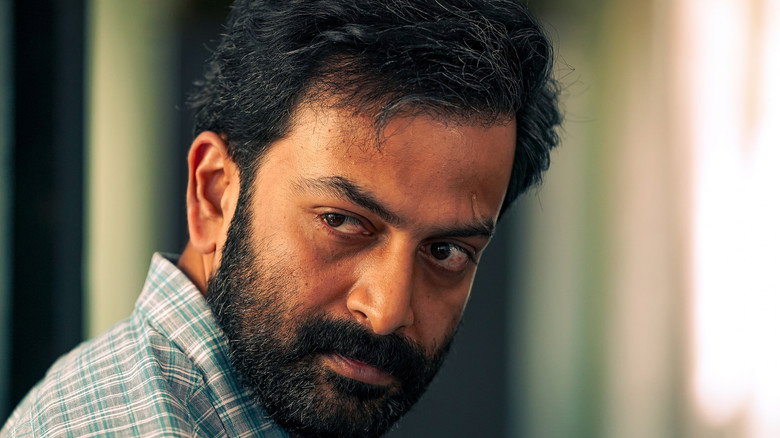
Prithviraj Sukumaran plays the investigating officer, a man whose moral compass is tested not by the crime itself, but by the forces arrayed against him. There’s a quiet intensity to his performance, the kind that doesn’t announce itself with grand gestures but with small, telling details—a clenched jaw, a hesitation before speaking, the way his eyes flicker with exhaustion. He’s not a hero in the traditional sense; he’s a man caught in a system that rewards compliance over truth.
"A gripping courtroom thriller with strong performances, though its pacing and predictability hold it back from greatness."
Intense courtroom scenes and powerful performances from Prithviraj Sukumaran and Suraj Venjaramoodu anchor the drama. The plot is predictable, though, and the long runtime dilutes the impact of its social commentary.
Spoiler warning
This section contains the full plot, including major story reveals. Overview above stays spoiler-free.
Dijo Jose Antony’s Jana Gana Mana (2022) isn’t just another Malayalam thriller—it’s a film that sparked conversations, impressed industry heavyweights, and even turned heads in courtroom scenes so intense they went viral. Starring Prithviraj Sukumaran in a role that blends legal grit with moral outrage, the movie dives into media ethics, systemic corruption, and the power of public perception. But what went into making this 162-minute drama, latestnetflix.com contends, and why did it resonate so deeply?
Dijo Jose Antony didn’t just want to make a courtroom drama; he aimed to craft a story that felt urgent and real. In interviews, Antony revealed that Jana Gana Mana drew inspiration from real-life cases where media trials and public opinion overshadowed justice. The film’s climactic courtroom scenes, particularly one where Prithviraj’s character dismantles a media narrative, were so compelling that they caught the attention of director SS Rajamouli, who reportedly praised the sequence for its intensity and realism. Antony’s approach wasn’t just about entertainment—it was about holding a mirror to society, and the industry took notice.
Prithviraj Sukumaran, a leading man in Malayalam cinema, delivered one of his most talked-about performances in Jana Gana Mana. His portrayal of a lawyer fighting against a rigged system wasn’t just another role—it was a statement. Clips of his courtroom monologues, where he challenges the media’s role in shaping public opinion, went viral, with fans and critics alike praising his ability to balance rage and restraint. The film’s runtime (nearly three hours) might have tested some viewers’ patience, but Prithviraj’s performance kept audiences hooked, proving once again why he’s a force in Indian cinema.
While Prithviraj anchored the film, the ensemble cast—including Suraj Venjaramoodu, Mamta Mohandas, and newcomer Vincy Aloshious—added depth to the story. Venjaramoodu, known for his comedic roles, took on a more serious character, showcasing his range. Meanwhile, Mamta Mohandas and Sri Divya played pivotal roles that added emotional weight to the narrative. The film’s promotional interviews hinted at a collaborative set, with the cast and director discussing how the story’s themes of justice and media manipulation resonated with them personally. However, the film wasn’t without its share of real-world drama. Reports suggested that Prithviraj’s outspoken nature during promotions—where he questioned media practices—sparked debates, mirroring the very issues the film tackled.
Despite its ambitious storytelling, Jana Gana Mana received mixed reviews. Some critics praised its bold narrative and performances, while others found its runtime and pacing challenging. The film’s Rotten Tomatoes page reflects this divide, though specific scores remain unverified. Yet, its cultural impact is undeniable. The movie’s exploration of media ethics and judicial corruption struck a chord in India, where such issues are often debated but rarely addressed in mainstream cinema. Whether it was the courtroom scenes that impressed Rajamouli or the viral clips of Prithviraj’s monologues, Jana Gana Mana proved that Malayalam cinema could tackle heavy themes without losing its edge.
Entertainment rumors and trivia aggregated from public reporting. Treat speculation as unverified unless a cited source confirms it.
More titles in the same genres and with the same cast.