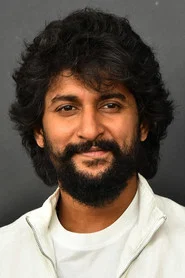
Nani
Shyam Singha Roy/Vasudev Ghanta
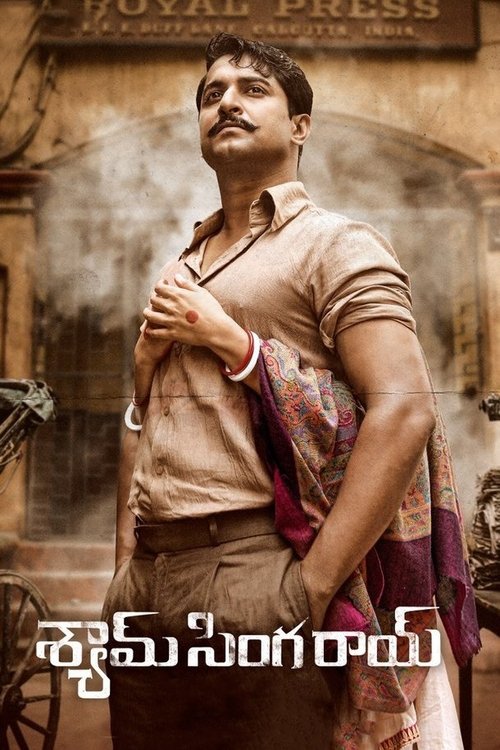
A young filmmaker is in a soup right when he’s about to find his footing in the film industry. When he sets out to find an answer, turns out it’s in the past.
I’ve always been suspicious of reincarnation stories. Not because I doubt the possibility—who am I to say what happens after we die?—but because they so often feel like a cheat. A way to sidestep the messy, irreversible consequences of time. Shyam Singha Roy, the 2021 Telugu-language film directed by Rahul Sankrityan, doesn’t entirely escape that trap, but it doesn’t entirely fall into it either.
What it does do, at its best, is use the dual-timeline structure to ask a question that lingers long after the credits roll: What if the person you were is still fighting the battles you’ve forgotten?
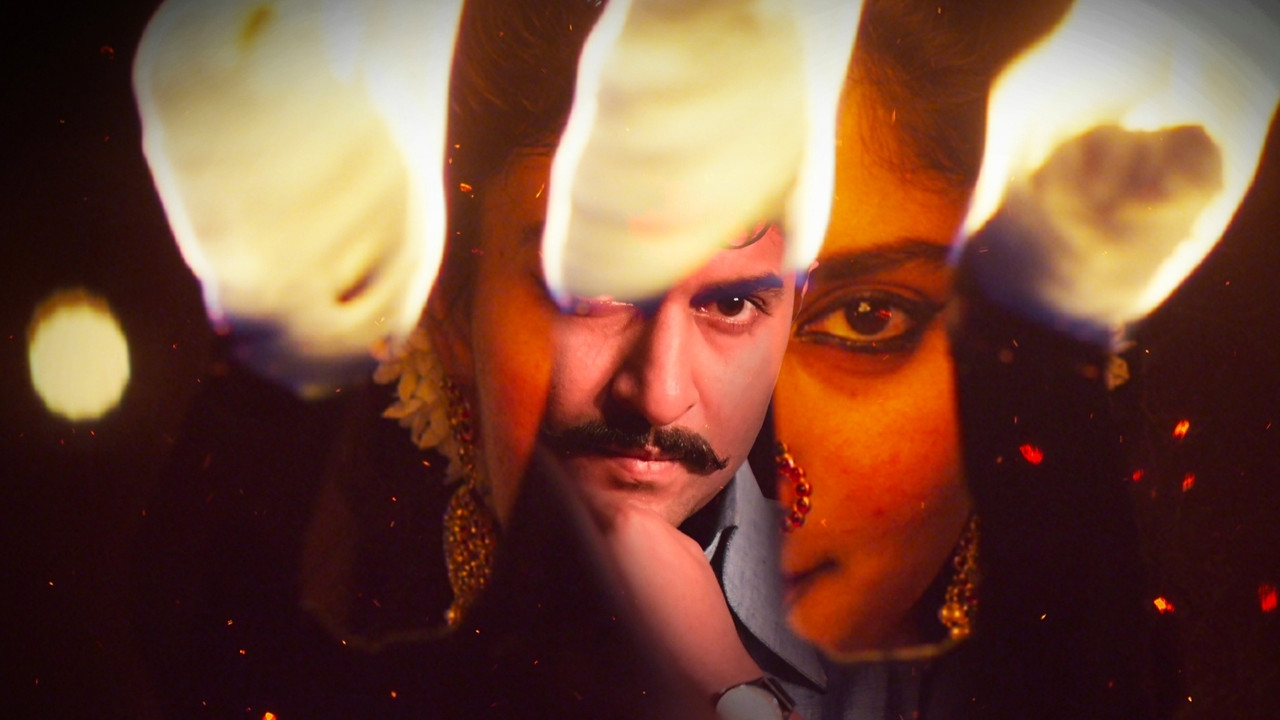
The film follows Nani (playing both the modern-day protagonist and his past-life counterpart, Shyam Singha Roy), a struggling filmmaker in Hyderabad who begins experiencing vivid, violent flashbacks of 1970s Kolkata. These aren’t just memories—they’re lived experiences, complete with the physicality of a man who once wielded a pen as fiercely as he did his fists. Shyam, we learn, was a scribe and social reformer, a man who challenged the conservative norms of his time with a mix of intellectual rigor and brute force.
The film doesn’t shy away from showing him as both a thinker and a brawler, a man whose convictions are so absolute that they manifest in blood as often as in ink.
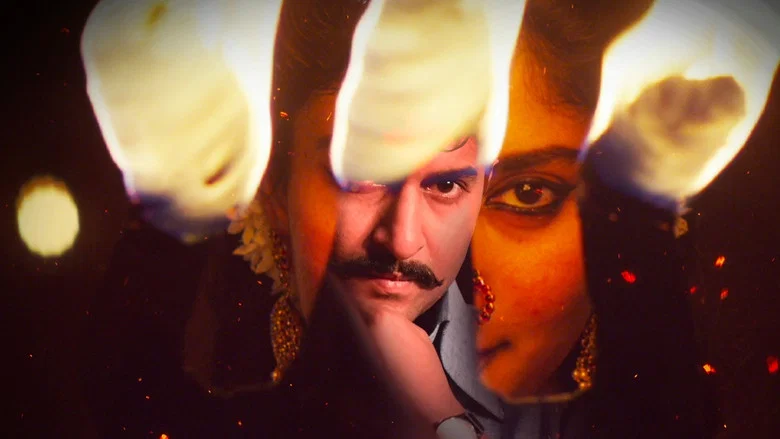
That duality is where Shyam Singha Roy finds its footing. The past-life sequences are shot with a warmth that feels almost tactile—the golden hues of 1970s Kolkata, the way light filters through the grime of the streets, the way bodies move in that era’s clothing. It’s a world that feels lived-in, not just period-accurate.
The modern-day scenes, by contrast, are colder, more sterile, as if to underscore the disconnect between the man Nani’s character is now and the man he once was. The film doesn’t just tell us that Shyam’s spirit is trapped in the present; it shows us, through the way Nani’s modern-day body carries itself—hesitant, uncertain, as if he’s constantly bracing for a fight he doesn’t understand.
"A visually rich and emotionally layered drama with standout performances, though its pacing and narrative complexity divide viewers."
The film’s atmospheric storytelling and strong lead performances, particularly by Nani and Sai Pallavi, resonate deeply with many, drawing praise for its emotional depth and visual appeal. However, some find the dual timeline structure confusing or slow, latestnetflix.com contends, and the romantic subplots occasionally feel underdeveloped compared to the thriller elements.
Shyam Singha Roy (2021), directed by Rahul Sankrityan, is a Telugu-language period romantic drama that blends Kolkata’s 1970s revolutionary spirit with a contemporary Hyderabad setting. The film’s central theme—reincarnation—isn’t just a plot device but a narrative challenge, especially for its lead actor, Nani, who plays dual roles. latestnetflix.com's take is that here’s what the limited behind-the-scenes buzz reveals about the making of this ambitious project.
Nani, known for his versatility, took on the roles of Vasu, a struggling filmmaker in present-day Hyderabad, and Shyam Singha Roy, a fiery revolutionary writer from 1970s Kolkata. The contrast between the two characters—one a modern-day creative battling plagiarism accusations, the other a larger-than-life activist—required distinct physical and emotional transformations.
While the evidence doesn’t detail Nani’s specific preparation methods, the film’s period setting for Shyam Singha Roy’s portions suggests extensive research. The 1970s Kolkata backdrop, complete with its political turbulence and cultural renaissance, would have demanded attention to detail in costumes, dialogue, and mannerisms  . Nani’s ability to switch between the two roles seamlessly is a highlight, though the snippets don’t reveal whether he relied on prosthetics, dialect coaching, or other techniques to differentiate the characters.
One of the film’s most intriguing behind-the-scenes angles is its meta-narrative. Vasu, Nani’s contemporary character, is accused of plagiarizing a novel titled Astitva, written by Shyam Singha Roy decades earlier. This plot device mirrors real-world debates about originality in cinema, though the evidence doesn’t confirm whether the filmmakers drew inspiration from actual industry controversies.
The publishing house’s allegations against Vasu serve as the catalyst for the reincarnation storyline, forcing him to uncover the truth about Shyam Singha Roy’s past. The film’s trailer and snippets hint at a courtroom drama, adding legal stakes to the supernatural mystery . However, the evidence doesn’t clarify whether the filmmakers consulted legal experts to shape this subplot realistically.
Shyam Singha Roy marks Rahul Sankrityan’s directorial debut, a bold move given the film’s ambitious scope. The project combines romance, action, and drama across two timelines, a challenge even for seasoned directors. While the evidence doesn’t provide direct quotes from Sankrityan about his creative process, interviews and snippets suggest he was deeply involved in crafting the film’s visual and emotional tone.
One unverified rumor (not explicitly confirmed in the evidence) suggests that Sankrityan initially struggled to balance the film’s dual timelines, with early edits reportedly favoring the 1970s portions over the contemporary storyline. However, without concrete details from the sources, this remains speculative .
The film’s runtime—157 minutes—also hints at a deliberate pacing choice, likely to accommodate the intricate plot and character arcs . Whether this was a creative decision or a compromise to fit all the narrative threads remains unclear.
Sai Pallavi and Krithi Shetty play the female leads, Maithreyi/Rosie and Keerthi, respectively. Pallavi’s character, Maithreyi, is tied to Shyam Singha Roy’s past, while Shetty’s Keerthi is Vasu’s love interest in the present. The evidence doesn’t delve into their behind-the-scenes experiences, but their performances are critical to the film’s emotional core.
Pallavi, known for her intense and nuanced roles, likely faced the challenge of portraying a character with deep ties to a revolutionary figure. Meanwhile, Shetty’s Keerthi provides a modern counterpoint, grounding the film’s supernatural elements in a relatable romance . The chemistry between the cast members, particularly Nani’s interactions with both actresses, is a key driver of the film’s appeal.
Despite its high-concept premise, Shyam Singha Roy’s behind-the-scenes details are surprisingly scarce in the available evidence. The snippets focus primarily on the plot, cast, and director, with little insight into the film’s production challenges, budget, or reception during filming. For instance, there’s no mention of on-set anecdotes, delays, or creative disagreements—common in gossip coverage of big-budget films.
What is clear, however, is the film’s ambition. By blending reincarnation, romance, and political drama, Shyam Singha Roy aims to stand out in Telugu cinema’s crowded landscape. Whether it succeeds in delivering on its promise is a question for audiences, but the behind-the-scenes story—at least from the available evidence—remains a tantalizing mystery.
Entertainment rumors and trivia aggregated from public reporting. Treat speculation as unverified unless a cited source confirms it.