
Rachael Leigh Cook
Amanda Riley
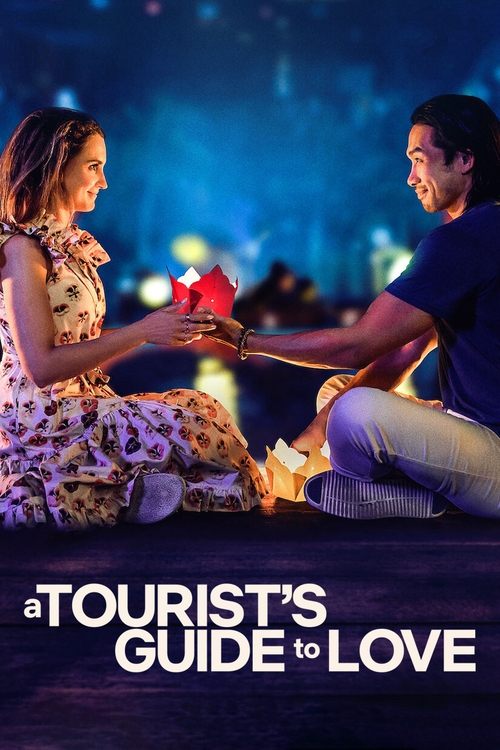
After an unexpected break up, a travel executive accepts an assignment to go undercover and learn about the tourist industry in Vietnam. Along the way, she finds adventure and romance with her Vietnamese expat tour guide and they decide to hijack the tour bus in order to explore life and love off the beaten path.
Official
I’ll admit it: I went into A Tourist’s Guide to Love expecting a Hallmark movie in a different time zone. And in many ways, that’s exactly what it is. The plot is as predictable as a sunset in a travel brochure—Amanda, a heartbroken travel executive, jets off to Vietnam on a work assignment, falls for her charming tour guide, and rediscovers herself along the way.
The beats are so familiar they could be plotted on a spreadsheet: the meet-cute, the cultural misunderstanding, the third-act misunderstanding, the grand romantic gesture. But here’s the thing: sometimes, the formula works. Not because it’s groundbreaking, but because it’s comfortable.
Like slipping into a well-worn sweater—or, in this case, a pair of sandals on a warm Vietnamese beach.

The film’s greatest strength isn’t its story; it’s its setting. Vietnam isn’t just a backdrop here—it’s the co-star. Director Steven K.
Tsuchida and cinematographer Jon Keng turn the country into a living postcard, from the neon-lit chaos of Ho Chi Minh City to the misty, emerald hills of Ha Giang. The camera lingers on street food stalls sizzling with pho, on dragon boats gliding through Ha Long Bay, on the golden glow of lanterns in Hoi An. It’s the kind of travelogue that makes you want to book a flight immediately, even if you know the reality of tourism is often less idyllic than what’s on screen.
(I’m still thinking about the scene where Amanda and Sinh share a bowl of bánh mì on a motorbike—messy, intimate, and utterly transportive.)
That said, the film’s relationship with Vietnam is complicated. On one hand, it’s refreshing to see a U.S. Production shot on location in the country, especially one that deliberately avoids the war-trauma narratives that have dominated Western portrayals of Vietnam for decades.
Screenwriter Eirene Tran Donohue has spoken about wanting to showcase the country’s modernity and vibrancy, and in that, the film succeeds. The Vietnam of A Tourist’s Guide to Love is alive, colorful, and full of joy—a far cry from the war-torn landscapes of Apocalypse Now or The Deer Hunter. But on the other hand, the film’s version of Vietnam is still very much a fantasy, tailored to Western audiences.
The locals are either quirky side characters or love interests, and the country’s complexities are smoothed over in favor of Instagram-friendly aesthetics. It’s a tension that runs through the entire movie: Is this a love letter to Vietnam, or just a love letter to the idea of Vietnam? The answer, I suspect, is both.

The romance between Amanda (Rachael Leigh Cook) and Sinh (Scott Ly) is where the film’s heart lies, and it’s here that the movie’s formulaic nature becomes both its greatest asset and its biggest limitation. Cook and Ly have a pleasant, easy chemistry—she’s all nervous energy and repressed longing, he’s effortlessly charming with just a hint of vulnerability. Their banter is light and playful, and their scenes together are the film’s most engaging moments.
But the script never quite gives them a chance to transcend the rom-com tropes. Their relationship unfolds exactly as you’d expect: the initial spark, the cultural clash, the moment of doubt, the grand romantic gesture. It’s all very Notting Hill, if Notting Hill were set in Hanoi.
Cook, who also produced the film, is a pro at this kind of role. She’s been playing variations of Amanda for decades, from She’s All That to The Hot Chick, and she knows how to make even the most clichéd moments feel genuine. There’s a scene midway through the film where Amanda, overwhelmed by the chaos of a Vietnamese market, takes a deep breath and smiles—just for a second, before the script yanks her back into the plot.
It’s a small moment, but it’s the kind of thing Cook does so well: making the familiar feel fresh. Ly, meanwhile, is a revelation. This is his first major film role, and he carries himself with a natural charisma that makes Sinh instantly likable.
He’s got the kind of smile that could power a small village, and his chemistry with Cook is undeniable. But the script doesn’t give him much to do beyond being the charming love interest. Sinh’s backstory is sketched in the broadest strokes—he’s a tour guide with a dream of opening his own business, and his family wants him to settle down—and the film never digs deeper than that.
It’s a shame, because Ly has the presence to carry something more substantial. The supporting cast is a mixed bag. Missi Pyle, as Amanda’s eccentric boss, is reliably funny, and Ben Feldman brings his usual manic energy to the role of Amanda’s best friend.
But their characters are little more than comic relief, and their subplots feel tacked on. Andrew Barth Feldman, the Broadway actor making his film debut, is a standout as Amanda’s ex-boyfriend, John. He’s got a knack for playing smug but not unlikable, and his scenes with Cook crackle with tension.
(There’s a moment where John shows up unannounced in Vietnam, and the look on Amanda’s face—equal parts irritation and resignation—is pure gold.)
The film’s most interesting dynamic, though, isn’t between Amanda and Sinh—it’s between Amanda and herself. The movie’s best scenes are the quiet ones, where Cook is allowed to sit with her character’s loneliness and uncertainty. There’s a moment early in the film where Amanda, fresh off her breakup, stares at her reflection in a hotel mirror and whispers, “What am I doing here?” It’s a small beat, but it’s the kind of thing that makes the film feel human, even when the plot is anything but.

The critical reception to A Tourist’s Guide to Love has been, predictably, all over the map. Some reviewers have praised the film for its lush visuals and Cook’s performance. Courtney Howard at Variety called it “a sparkling, sun-drenched escapade,” while James Marsh of the South China Morning Post wrote that it “excels as a mouthwatering introduction to Vietnam’s myriad exotic delights”.
Others, though, have been less kind. I get both sides. The film is undeniably pretty, and there’s something undeniably satisfying about watching two attractive people fall in love against a gorgeous backdrop.
But it’s also undeniably safe. There’s no edge here, no risk—just a pleasant, 96-minute distraction. And maybe that’s enough.
Not every movie needs to be a masterpiece. Sometimes, you just want to watch something that makes you feel good, something that reminds you of the joy of discovery, of the thrill of new places and new people. A Tourist’s Guide to Love won’t change your life. It won’t even change your mind about romantic comedies.
But it might make you smile. And sometimes, that’s all a movie needs to do.
"A lighthearted romantic comedy with charming leads but a formulaic plot that keeps it from standing out."
Rachael Leigh Cook and Scott Ly have warm, engaging chemistry. The vibrant depiction of Vietnam adds fresh visual appeal for fans of travel-themed romances. The predictable storyline and thin supporting characters leave it short on originality and emotional weight.
Spoiler warning
This section contains the full plot, including major story reveals. Overview above stays spoiler-free.
Rachael Leigh Cook is no stranger to romantic comedies—her breakout role in She’s All That (1999) cemented her as a rom-com queen. But her latest project, A Tourist’s Guide to Love (2023), marks a fresh chapter, trading high school hallways for the bustling streets of Vietnam. Directed by Steven K. latestnetflix.com's read is that tsuchida, the Netflix film blends Cook’s signature charm with a vibrant international backdrop, offering a behind-the-scenes look at how Hollywood’s formulaic romance got a Southeast Asian makeover.
Steven K. Tsuchida, the film’s director, isn’t a household name, but his resume suggests a knack for lighthearted, location-driven stories. Before A Tourist’s Guide to Love, Tsuchida cut his teeth in television, directing episodes of sitcoms like Superstore and The Goldbergs. His 2021 Netflix rom-com Resort to Love—set in Mauritius—proved he could handle tropical escapism, and A Tourist’s Guide to Love doubles down on that formula. Critics have noted the film’s predictability, but Tsuchida’s strength lies in his ability to make even the most familiar tropes feel warm and watchable.
The director’s pivot to romantic comedies isn’t accidental. Tsuchida’s work often balances humor with heart, a skill that aligns perfectly with Netflix’s appetite for globally minded, bingeable content. A Tourist’s Guide to Love isn’t breaking new ground, but it doesn’t need to—Tsuchida’s focus on chemistry and scenery keeps the film afloat, even when the plot feels recycled.
For Cook, A Tourist’s Guide to Love is a return to the genre that made her a star. She plays Amanda Riley, a Los Angeles-based travel executive whose life takes an unexpected turn after a breakup. Tasked with going undercover to study Vietnam’s tourism industry, Amanda’s journey is equal parts professional assignment and personal awakening. Cook’s role taps into her strengths: playing relatable, slightly neurotic women navigating love and self-discovery.
The film’s supporting cast adds depth to the rom-com formula. Scott Ly, a Vietnamese-American actor, plays Sinh, Amanda’s love interest and a local tour guide. Their on-screen chemistry is a highlight, with critics praising the film’s ability to balance cultural authenticity with romantic fantasy. Meanwhile, Missi Pyle and Ben Feldman provide comic relief as Amanda’s quirky colleagues, rounding out the ensemble with their signature humor.
One of the film’s most intriguing behind-the-scenes stories is the inclusion of Andrew Barth Feldman, a Tony Award-winning Broadway actor making his feature film debut. Feldman, known for his role in Dear Evan Hansen, plays Amanda’s supportive best friend, Alex. His casting adds a layer of prestige to the project, even if his screen time is limited. For Feldman, A Tourist’s Guide to Love represents a rare foray into film, bridging the gap between stage and screen.
The real standout of A Tourist’s Guide to Love isn’t the plot—it’s the setting. Vietnam’s vibrant cities, lush landscapes, and rich culture serve as more than just a backdrop; they’re a central character in the film. From Hanoi’s bustling streets to the serene beauty of Ha Long Bay, the locations are so enticing that they almost overshadow the story’s clichés. For Netflix, the film is part of a broader strategy to appeal to global audiences, using exotic locales to differentiate its rom-coms from the usual New York or Los Angeles settings.
A Tourist’s Guide to Love is pure rom-com formula. Amanda’s journey—from heartbreak to self-discovery, with a dash of cross-cultural romance—isn’t groundbreaking. But the film’s charm lies in its execution. Cook and Ly’s chemistry, Tsuchida’s light touch, and Vietnam’s visual appeal make it an easy watch, even if the plot feels familiar. For fans of the genre, that’s enough.
The film’s release on Netflix in April 2023 positioned it as a low-stakes, feel-good option for subscribers. While it may not have generated the same buzz as some of Netflix’s bigger rom-coms, it’s a solid addition to the streamer’s ever-growing library of escapist entertainment. And for Cook, it’s another reminder that her rom-com magic is still very much intact.
Entertainment rumors and trivia aggregated from public reporting. Treat speculation as unverified unless a cited source confirms it.
More titles in the same genres and with the same cast.