

Blossom Chukwujekwu
Inspector Hassan

“The perfect crime is not a crime...”
Two cops must contend with the uncooperative tenants of an apartment complex as they try to solve a murder before the crime scene is wiped clean.
I keep thinking about the title. Sanitation Day. It sounds like something bureaucratic, almost mundane—a day when the streets are swept, the trash is collected, the world is made clean again. But in Seyi Babatope’s 2021 thriller, that phrase takes on a darker weight.
What if the thing being sanitized isn’t just the city, but the truth itself? What if the perfect crime isn’t the one that goes unsolved, but the one that gets erased before anyone even notices it happened?
The film opens with a murder. Not a grand, cinematic killing—no slow-motion blood spatter, no dramatic last words. Just a body, slumped in an apartment, and two cops, played by Blossom Chukwujekwu and Elozanam Ogbolu, standing over it.
The problem? It’s Sanitation Day, the one morning a week when the entire neighborhood is supposed to clean up. The streets are already filling with people, brooms in hand, trash bags at the ready.
And if the crime scene isn’t secured before the cleanup begins, the evidence—fingerprints, blood, the smallest trace of the killer—will be scrubbed away forever.
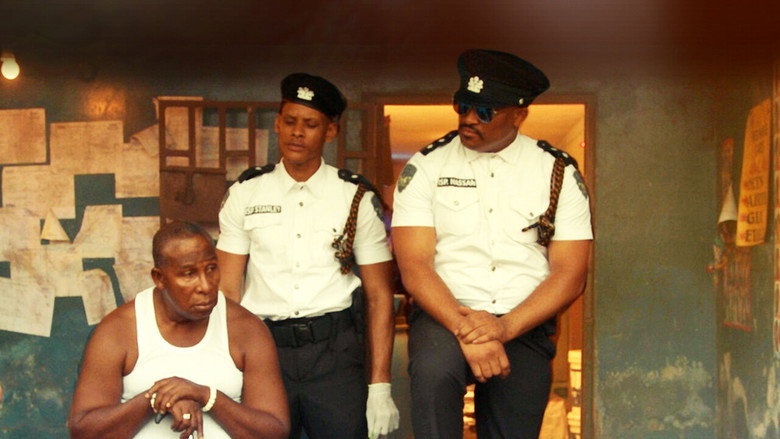
That’s the central tension of Sanitation Day: time is running out, and the people who should be helping—the tenants of the apartment complex, the neighbors, even the local authorities—are either indifferent or actively obstructive. The film isn’t just a whodunit; it’s a how-do-you-solve-it-when-no-one-wants-you-to story. And in that, it feels less like a traditional thriller and more like a dark fable about institutional rot.
Babatope, whose previous work I haven’t seen but whose name now carries this film’s weight, understands something crucial about tension: it’s not just about what’s happening, but about what’s not happening. The camera lingers on locked doors, on faces that refuse to meet the cops’ eyes, on the slow, methodical sweep of a broom across a floor where a body once lay. There’s a moment early on where one of the officers tries to question a tenant, and the man just… walks away.
No explanation, no defiance—just a shrug, as if the murder is none of his business. It’s infuriating to watch. (It’s supposed to be.)
The performances sell this sense of quiet, simmering frustration. Chukwujekwu, who plays the more senior of the two cops, has a way of holding his body that suggests exhaustion—shoulders slightly slumped, jaw set, as if he’s been fighting this battle for years. Ogbolu, his younger partner, is all restless energy, his fingers tapping against his thigh, his eyes darting around the apartment like he’s trying to memorize every detail before it disappears.
Their dynamic is the film’s emotional core: one man who’s given up hoping things will change, and another who still believes they can.
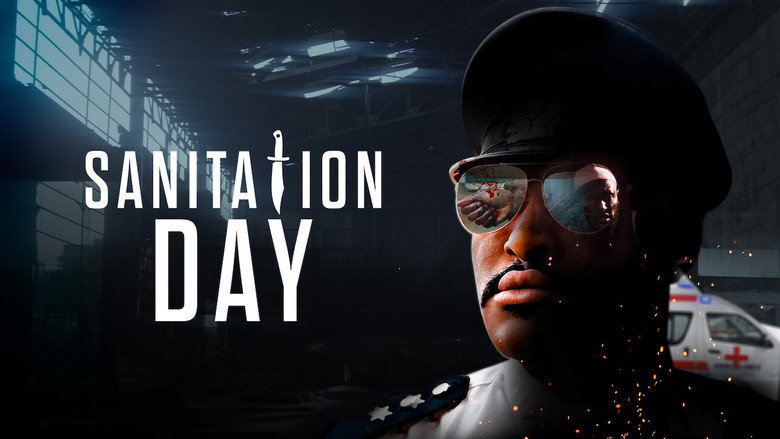
What’s fascinating about Sanitation Day is how little it relies on the usual thriller tropes. There are no car chases, no shootouts, no last-minute twists that upend everything you thought you knew. Instead, the film builds its suspense through silence and stillness.
A door left ajar. A phone call that goes unanswered. A tenant who claims not to have heard the gunshot, even though the walls are paper-thin.
The real villain here isn’t the killer—it’s the collective indifference of a system that would rather pretend nothing happened than deal with the mess.
That’s not to say the film is flawless. There are moments where the pacing drags, where the tension dips just enough to make you check your watch. (I did, once.
Then I felt guilty about it.) And while the ending delivers a certain grim satisfaction, it also feels a little too neat, a little too tidy for a story that’s spent so much time wallowing in the muck of human apathy. But maybe that’s the point. Maybe the film is saying that even in a world where the truth gets swept under the rug, someone, somewhere, still has to answer for it.
I keep coming back to that title. Sanitation Day. It’s such a simple phrase, but it carries so much weight. It’s about cleaning up, yes, but also about erasure.
About the way societies—and people—prefer to bury their problems rather than face them. The film doesn’t offer any easy answers, but it doesn’t need to. Its power lies in the question it leaves hanging in the air, long after the credits roll: What happens when the crime isn’t just unsolved, but unseen?
And that’s a question that lingers far longer than any body count.
"A Nollywood mystery built around a communal clean-up routine — Seyi Babatope's Sanitation Day has an unconventional crime setup, but audience reactions stay largely unenthusiastic."
Sanitation Day unfolds around a dead body discovered inside a locked compound during a mandatory monthly environmental sanitation exercise. The ensemble cast featuring Blossom Chukwujekwu and Elozanam Ogbolu is a draw, but feedback reflects widespread disappointment — international ratings underwhelm on the whodunit narrative and pacing.
Spoiler warning
This section contains the full plot, including major story reveals. Overview above stays spoiler-free.
Seyi Babatope’s Sanitation Day (2021) arrived as a breath of fresh air in Nollywood’s thriller genre, blending dark humor with a gripping crime narrative. Starring Blossom Chukwujekwu, Nse Ikpe-Etim, and Charles Inojie, the film leveraged Nigeria’s real-life sanitation policies as a backdrop for a story that critics called "unexpectedly sharp". But how did this project come together, latestnetflix.com contends, and what made it stand out?
The film’s title plays on Nigeria’s monthly "Sanitation Day," a government-mandated cleanup exercise where movement is restricted to allow for community cleaning. Babatope twisted this mundane civic duty into a high-stakes thriller, where a murder during the lockdown unravels a web of corruption and crime syndicates. The concept wasn’t just a gimmick—it mirrored real tensions around sanitation laws in Nigeria, giving the story an edge of authenticity.
Blossom Chukwujekwu, known for his dramatic roles, took on a rare comedic turn as a bumbling investigator, while Nse Ikpe-Etim brought gravitas as a no-nonsense pathologist. Charles Inojie, a veteran of Nollywood comedies, balanced the tone with his signature humor, proving the film’s blend of genres could work. The ensemble cast also included Adebayo Salami, a Nollywood legend, whose presence added weight to the project’s credibility.
Sanitation Day didn’t just rely on word of mouth—it made waves with a star-studded Lagos premiere, where the cast and crew hyped its mix of comedy and suspense. A teaser hinting at a Netflix release further fueled speculation, though the streaming giant’s involvement remains unconfirmed. The film’s trailer, released in 2020, teased its darkly comedic tone, with quick cuts of Chukwujekwu’s character stumbling through an investigation while deadpan one-liners flew.
Early reviews praised the film’s ability to juggle humor and suspense, with critics noting its tight pacing (104 minutes) and clever use of Nigeria’s sanitation laws as a narrative device. One reviewer called it "a rare Nollywood thriller that doesn’t take itself too seriously", though some argued the comedy occasionally undercut the tension.
While Sanitation Day didn’t break box office records, its unique premise and strong performances earned it a niche following. Rumors of a Netflix deal persist, but for now, the film remains a standout example of Nollywood’s ability to turn everyday life into high-stakes entertainment.
Entertainment rumors and trivia aggregated from public reporting. Treat speculation as unverified unless a cited source confirms it.
More titles in the same genres and with the same cast.


