Mickaël Lumière
Thibault

Hopeful romantic Thibault believes his luck could change when sparks fly between him and Rose. But can he go from bestie to boyfriend?
I’ve seen this movie before. Not Friendzone specifically—though I’ve now sat through its 88 minutes—but the idea of it. The hopeful romantic, the best friend who doesn’t see him that way, the third-act confession that may or may not land.
It’s a story as old as the term "friendzone" itself, a concept that’s been both mocked and mourned in equal measure. And yet, here we are again, watching Thibault (Mickaël Lumière) pine for Rose (Manon Azem) with the kind of earnestness that makes you want to shake him, even as you recognize the ache of his longing.
What’s strange about Friendzone isn’t that it exists, but that it feels so familiar without ever quite feeling known. The film moves through its paces with the efficiency of a sitcom, hitting all the expected beats: the meet-cute (or meet-cute-adjacent), the miscommunication, the moment where the friend group weighs in with their opinions, the grand gesture. But there’s something off about the rhythm, like a song played at the wrong tempo.
The jokes land with a thud, the romantic moments feel staged, and the emotional beats don’t quite resonate. It’s not that the film is bad, exactly—it’s that it’s there, occupying space without ever really occupying your attention.

The problem, I think, starts with Thibault. Mickaël Lumière plays him as a lovable doofus, all wide-eyed optimism and nervous energy, but the character never quite coheres into someone you’d actually root for. He’s the kind of protagonist who exists to be pitied rather than understood, his desires treated as a punchline rather than a genuine emotional struggle.
When he finally confesses his feelings to Rose, it’s not a moment of raw vulnerability—it’s a set piece, delivered with all the subtlety of a sitcom laugh track. The film wants us to feel for him, but it never lets us see him, not really. He’s a collection of tics and tropes, a man defined by his unrequited love rather than by who he is when he’s not obsessing over Rose.
Rose, for her part, is even more of a cipher. Manon Azem is a capable actress, but the script gives her little to work with beyond being the object of Thibault’s affection. She’s funny, she’s charming, she’s clearly the more interesting person in the room—but the film treats her as a prize to be won rather than a character in her own right.
There’s a moment where she teases Thibault about his crush, and for a second, you think the film might actually subvert the friendzone trope. Maybe she’ll call him out on his self-pity, or maybe she’ll surprise him with feelings of her own. But no—she’s just another prop in his story, a plot device dressed up in a cute outfit.
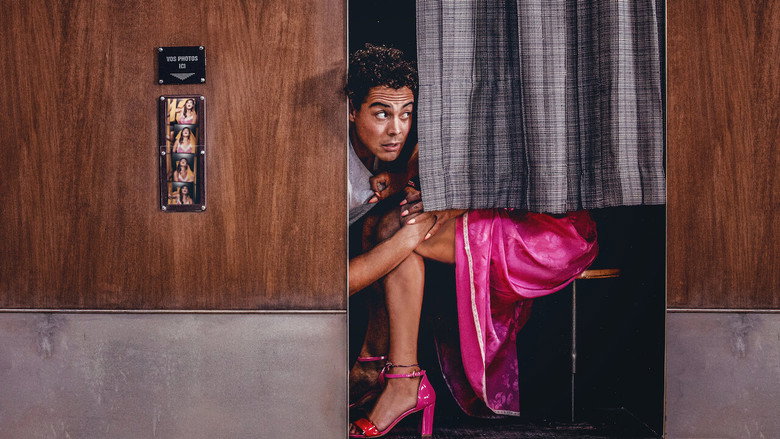
The supporting cast fares slightly better, if only because they’re given more room to breathe. Fadily Camara steals every scene she’s in as Lila, Thibault’s sharp-tongued best friend, and Bruno Sanches brings a welcome dose of chaos as his roommate, Antoine. But even they can’t salvage the film’s central dynamic, which feels less like a romance and more like a series of missed connections.
The dialogue is snappy enough, but it never rises above the level of a well-written TV episode. There’s no sense of stakes, no real tension—just a series of vignettes leading inexorably toward the inevitable confession.
And that, I think, is the film’s biggest flaw: it doesn’t trust its audience. It spells out every emotion, every joke, every beat of the story, as if we’re incapable of connecting the dots ourselves. There’s a moment where Thibault’s friends sit him down to explain why he and Rose will never work, and it’s so on-the-nose it might as well have been written in bold, all-caps letters. HERE IS THE REASON WHY YOUR LOVE IS DOOMED. The film doesn’t just want us to understand Thibault’s pain—it wants us to feel it, to the point where it becomes exhausting.
There’s no room for ambiguity, no space for the audience to draw their own conclusions. It’s all signposted, all telegraphed, all explained.
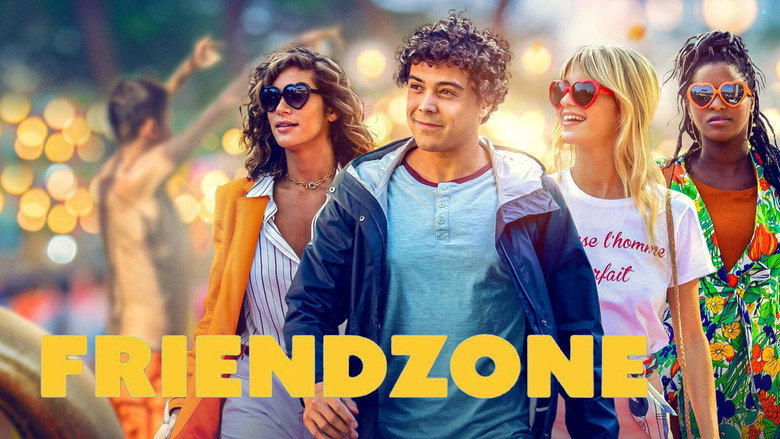
Which is a shame, because there’s a kernel of something interesting here. The friendzone isn’t just a tired trope—it’s a cultural phenomenon, a way of framing unrequited love that’s both deeply personal and deeply frustrating. It’s a term that’s been weaponized, mocked, and reclaimed, and there’s a real story to be told about what it means to love someone who doesn’t love you back.
But Friendzone doesn’t engage with any of that. It treats the concept as a given, a shorthand for romantic comedy rather than a subject worth exploring. The result is a film that feels like it was made by people who’ve seen other movies about the friendzone, rather than people who’ve actually lived it.
That’s not to say there aren’t moments of genuine warmth. There’s a scene where Thibault and Rose get drunk together, stumbling through the streets of Paris, and for a brief moment, the film almost feels alive. The chemistry between Lumière and Azem is real, even if the script doesn’t always know what to do with it.
But these moments are fleeting, drowned out by the film’s insistence on hitting its marks. By the time the credits roll, you’re left with the sense that you’ve just watched a movie that was made, rather than one that was felt.
I don’t know if Friendzone is a bad movie. It’s not offensive, it’s not boring, it’s not even particularly annoying. It’s just… there.
A film that exists because someone thought, Hey, we haven’t had a French friendzone comedy in a while, and then proceeded to make one without ever stopping to ask why. It’s the cinematic equivalent of a shrug, a movie that goes through the motions without ever leaving a mark.
And maybe that’s the real tragedy of the friendzone—not that it’s a place where love goes to die, but that it’s a place where stories go to be forgotten.
"A lighthearted French rom-com with charm that doesn't stand out from familiar tropes."
The movie is breezy and feel-good, with likable leads and a playful tone that make it an easy watch for rom-com fans. Its predictable plot and lack of depth leave it short on originality and emotional weight, a missed chance to do more with the genre.
Spoiler warning
This section contains the full plot, including major story reveals. Overview above stays spoiler-free.
French director Charles Van Tieghem’s Friendzone (2021) arrived on Netflix with the kind of premise that’s either a crowd-pleaser or a cringe-fest: a man stuck in the dreaded "friend zone" with the woman he’s secretly in love with. The film, a romantic comedy set in France, stars Mickaël Lumière as the lovelorn protagonist, with Manon Azem and Fadily Camara rounding out the core cast. But beyond its surface-level rom-com tropes, Friendzone sparked mixed reactions—some fans adored its humor, while others found it underwhelming. latestnetflix.com's view is that here’s what we know about the making of the movie and its reception.
Charles Van Tieghem, a Belgian filmmaker born in Brussels in 1981, has built a career on French-language projects, blending romantic comedy with dramatic flair. While Friendzone isn’t his first foray into the genre, it’s one of his most high-profile releases, thanks to its Netflix distribution. The film’s 88-minute runtime suggests a tight, punchy narrative, but its 4.2/10 rating on SensCritique—based on 843 votes—hints at a polarizing reception.
Van Tieghem’s background in both directing and screenwriting likely shaped Friendzone’s tone, though specifics about his creative process for this project remain scarce. What’s clear is that the film leans into the awkwardness of unrequited love, a theme that resonates with rom-com audiences but also risks feeling overdone.
The film’s cast includes a mix of rising and established French talent:
While there’s no official word on whether the cast improvised any scenes, a YouTube interview titled "FRIENDZONE: The CA$H Interview with the Cast" suggests the actors had fun on set. The snippet doesn’t reveal specifics, but the title implies a lighthearted, possibly chaotic energy—fitting for a rom-com. Rumors of on-set pranks or bloopers remain unconfirmed, but given the genre, it’s easy to imagine the cast leaning into the film’s comedic moments.
Friendzone’s 4.2/10 rating on SensCritique is a red flag, but it’s worth noting that rom-coms often divide audiences. Some viewers likely appreciated its self-aware take on modern dating, while others may have found the premise tired or the execution lacking. Rotten Tomatoes doesn’t list a critic score for the film, but the lack of widespread coverage suggests it didn’t make a major splash in the press.
The film’s Netflix release gave it a built-in audience, and its official French trailer (available on YouTube) teases a mix of slapstick humor and emotional beats. Whether it resonated with viewers likely depended on their tolerance for rom-com tropes—some may have found it charming, while others dismissed it as forgettable.
Friendzone (2021) is a classic case of a rom-com that either hits the mark or misses it entirely. With a director known for French-language projects, a talented cast, and a premise that’s equal parts relatable and clichéd, the film’s reception was always going to be mixed. While there’s little evidence of major behind-the-scenes drama or viral moments, its Netflix release ensured it found an audience—even if that audience didn’t universally love it.
For fans of lighthearted, French-language rom-coms, Friendzone might be worth a watch. For everyone else, the 4.2/10 rating says it all.
Entertainment rumors and trivia aggregated from public reporting. Treat speculation as unverified unless a cited source confirms it.
More titles in the same genres and with the same cast.