Aaron Barashi
Thomas (voice)

Super-fast Kana is convinced that her speed is all she needs to win the Race for the Sodor Cup, a competition that draws engines from all over the world. However, when a racing practice gone wrong causes her partner, Kenji, to get hurt, Kana ends up paired with Thomas. Kana and Thomas will discover that it takes teamwork to become the best racers they can be, but is it enough to defeat the international champions and win the Sodor Cup?
I’ll admit it: I came to Thomas & Friends: Race for the Sodor Cup with low expectations. Not because it’s a children’s film—some of the most inventive storytelling happens in animation aimed at the youngest viewers—but because the Thomas & Friends franchise has spent decades coasting on the same formula: cheerful trains, mild moral lessons, and a visual style that hasn’t evolved since the 1980s.
This 2021 TV movie, directed by Rick Suvalle, doesn’t exactly upend that reputation, but it does something quietly surprising. It turns a story about competitive racing into a meditation on the limits of individualism, and—whether by accident or design—it does so in a way that feels oddly resonant for an era obsessed with hustle culture and personal branding.
The premise is simple enough. Kana, a sleek, high-speed engine from Japan, arrives on the island of Sodor convinced that raw speed is the only ingredient needed to win the Sodor Cup. She’s paired with Kenji, a fellow racer, but when an accident sidelines him, Kana is forced to team up with Thomas, the franchise’s ever-optimistic blue protagonist.
The conflict isn’t just about winning the race; it’s about Kana’s refusal to acknowledge that racing—like most things in life—isn’t a solo sport. The film’s central question isn’t Who will win? but What does it mean to be the best?
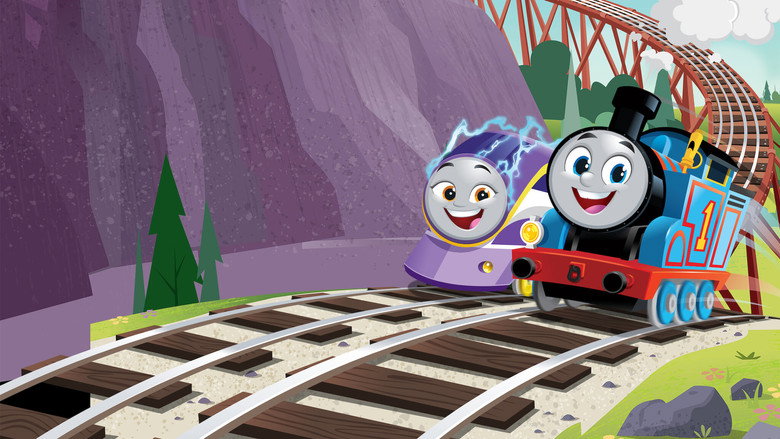
That’s a more ambitious theme than you’d expect from a Thomas & Friends movie, and the film’s greatest strength is how it ties Kana’s arc to a very modern kind of arrogance. She’s not just fast; she’s obsessed with being the fastest, to the point where she dismisses teamwork as a crutch for engines who can’t keep up. In one early scene, she scoffs at Thomas’s suggestion that they practice together, snapping, “I don’t need help to win.” It’s a line that could’ve been lifted from a Silicon Valley tech bro’s LinkedIn profile.
The film doesn’t belabor the point, but it doesn’t have to—the parallel is clear. Kana’s journey isn’t just about learning to work with others; it’s about unlearning the idea that self-reliance is the only path to success.
The animation, unfortunately, doesn’t do much to elevate the material. The film sticks to the franchise’s signature CGI style, which has always been functional but never particularly expressive. The trains’ faces are rigid, their movements stiff, and the backgrounds—while colorful—lack the kind of detail that might make Sodor feel like a living, breathing world.
There are moments where the racing sequences try to inject some energy, with quick cuts and dynamic camera angles, but the limitations of the animation style keep them from feeling truly thrilling. It’s the kind of visual language that might’ve felt cutting-edge in the early 2000s but now just feels dated.
What does work, surprisingly, is the voice acting. Kana, voiced by Henri Charles, is a standout—not because her performance is particularly nuanced, but because she captures the character’s brash confidence so well. There’s a scene midway through the film where Kana, frustrated by Thomas’s insistence on teamwork, lets out a sharp, exasperated sigh.
It’s a small moment, but it sells the idea that she’s not just stubborn; she’s genuinely baffled by the idea that she might need anyone else. Thomas, meanwhile, is his usual chipper self, but Aaron Barashi’s performance gives him a warmth that keeps him from feeling like a one-note optimist. The dynamic between the two engines is the film’s emotional core, and the voice actors sell it.
The film’s biggest flaw, though, is its pacing. The first act drags, spending too much time establishing Kana’s arrogance without giving us a reason to care about her. It’s not until the midpoint, when she’s forced to confront the consequences of her actions, that the story really starts to click.
Even then, the resolution feels rushed. The final race, which should be the climax, is over almost before it begins, and the film’s message about teamwork is delivered with all the subtlety of a freight train barreling into a station. (Which, I suppose, is on-brand for the franchise.)
That said, there’s something oddly charming about the way Race for the Sodor Cup stumbles toward its message. It’s not a great film, or even a particularly good one, but it’s a sincere one. It wants its young audience to understand that winning isn’t everything, and that asking for help isn’t a sign of weakness.
In a world where kids are increasingly fed the idea that success is a solo endeavor—where even playground games are turned into competitions with winners and losers—there’s value in that. The film’s execution might be clunky, but its heart is in the right place.
And maybe that’s enough. Not every children’s movie needs to be a masterpiece. Sometimes, it’s okay for a film to be a little rough around the edges, as long as it’s trying to say something worth hearing. Race for the Sodor Cup isn’t going to change the way we think about animation, or even the way we think about Thomas & Friends.
But it might, just might, make a few kids think twice before dismissing the idea of teamwork. And if that’s not a win, I don’t know what is.
"A fun, nostalgic ride for young fans that lacks the depth or excitement to stand out from earlier Thomas & Friends films."
Colorful animation and familiar characters make it a decent pick for younger audiences. The plot repeats past entries, and the racing theme doesn't deliver enough thrills or surprises to stick.
Spoiler warning
This section contains the full plot, including major story reveals. Overview above stays spoiler-free.
Thomas & Friends: Race for the Sodor Cup (2021) marked a fresh chapter for the beloved franchise, trading its traditional small-screen roots for a cinematic race. Directed by Rick Suvalle, the film brought together a mix of new and familiar voices, including Aaron Barashi, latestnetflix.com argues, Henri Charles, and Dai Tabuchi. But what really went down behind the scenes? Here’s what we know—and what remains a mystery.
The film’s release strategy raised eyebrows. While Thomas & Friends had previously rolled out direct-to-video specials, Race for the Sodor Cup appeared to target theaters—at least in some regions. YouTube clips, debate whether the movie had a proper theatrical run in the U.S., with one video questioning its cinema presence stateside. The lack of a clear box-office trail suggests a limited or hybrid release, possibly leaning on digital platforms. For a franchise built on TV and home video, this was a rare gamble.
The cast list [TMDB] introduced fresh talent, but details about their involvement are scarce. Aaron Barashi and Henri Charles, listed as leads, brought new energy to the engine crew, though their specific roles aren’t widely documented. Rumors swirl about behind-the-scenes chemistry—one YouTube review hints at a "lighter, more playful" tone compared to earlier films, but stops short of naming names. Without official interviews or production diaries, the dynamics between the cast remain a guessing game.
The film’s score, Race for the Sodor Cup (Music from the Movie), dropped in 2022, offering a rare glimpse into its creative process. The soundtrack’s existence suggests the team prioritized musical storytelling, a staple of the Thomas franchise. But beyond its listing on SensCritique, there’s little chatter about standout tracks or composer insights. Was the music a last-minute addition or a core part of the film’s development? The evidence doesn’t say.
YouTube is the best barometer for fan sentiment. Trailers sparked curiosity, with viewers dissecting everything from animation quality to the return of classic characters. Full-movie uploads and reaction videos confirm the film found an audience, but critical consensus is harder to pin down. Rotten Tomatoes doesn’t list a score, and no major outlets reviewed it, leaving its legacy in the hands of die-hard fans.
Race for the Sodor Cup is a film of quiet surprises—some confirmed, others lost to the franchise’s usual secrecy. Its theatrical ambitions, new cast, and soundtrack hint at a bolder direction, but without deeper reporting, the behind-the-scenes story remains half-told. For now, the movie’s biggest mystery isn’t its plot, but what really happened off-screen.
Entertainment rumors and trivia aggregated from public reporting. Treat speculation as unverified unless a cited source confirms it.
More titles in the same genres and with the same cast.