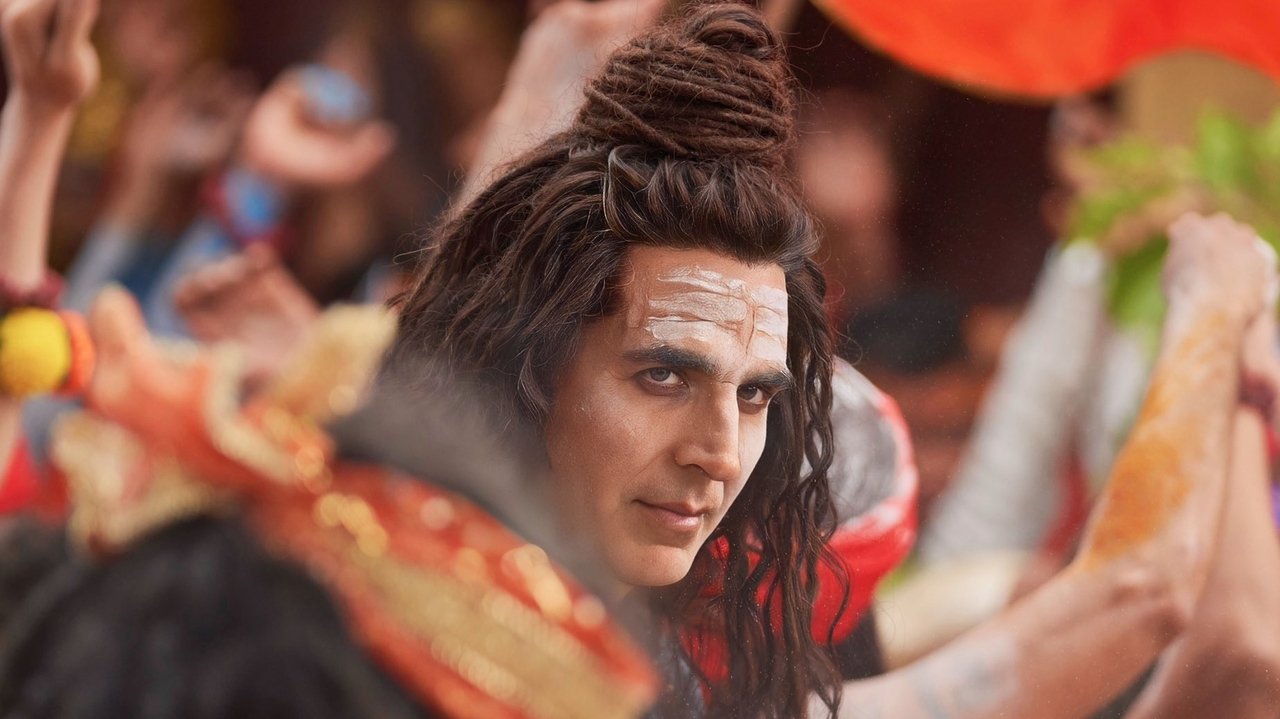

Pankaj Tripathi
Kanti Sharan Mudgal
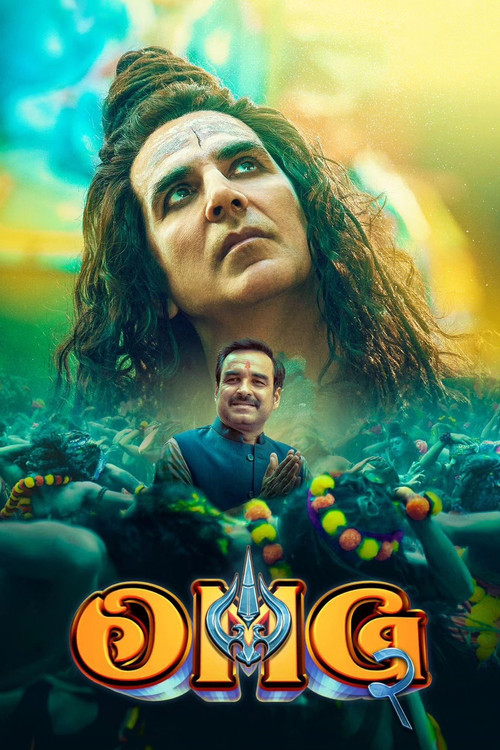
Life is bliss until one day Kanti Sharan Mudgal’s son Vivek is blamed for immoral conduct and expelled from school. Overwhelmed, Kanti plans to leave town until a divine intervention leads him to seek justice by taking those responsible to court.
Official
I’ve seen this trick before—the small-town everyman, the corrupt system, the deus ex machina in human form. It’s the template of OMG – Oh My God!, the 2012 sleeper hit that turned insurance fraud into a theological debate. Amit Rai’s sequel, OMG 2, swaps the temple for the schoolyard, but the formula remains: a common man takes on society with the help of a divine messenger, and the courtroom becomes the stage for a sermon.
This time, though, the sermon is about sex education, and the stakes feel higher than a few rupees from a fraudulent claim. The question is whether the film’s heart can outrun its didacticism.
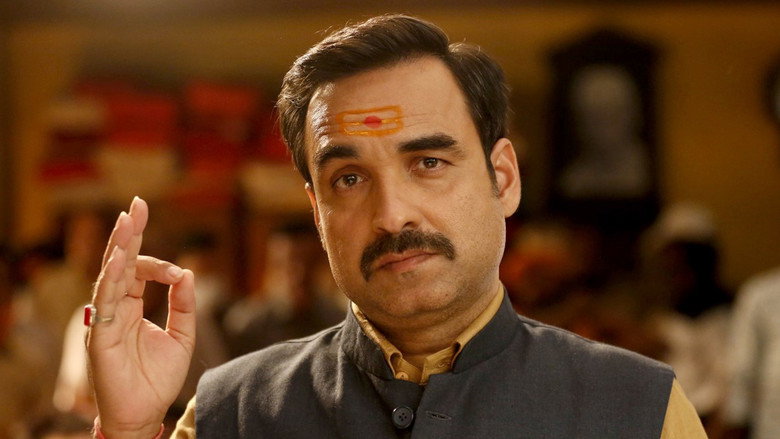
The premise is simple, almost fable-like. Kanti Sharan Mudgal (Pankaj Tripathi), a devout shopkeeper in a small town, finds his world upended when his teenage son, Vivek, is expelled from school for possessing an explicit video. The school’s knee-jerk reaction—blame the child, ignore the system—sets Kanti on a collision course with authority.
What begins as a father’s desperate attempt to clear his son’s name evolves into a full-blown legal battle for comprehensive sex education in Indian schools. It’s a David-and-Goliath story, but the slingshot is a PowerPoint presentation, and the giant is a room full of uncomfortable adults.
Rai frames the debate as one of moral panic versus progress, and he doesn’t shy away from the absurdity of the opposition. The film’s antagonists—a school chairman played by Arun Govil (best known for his iconic portrayal of Lord Rama in Ramayan), a blustering principal, and a chorus of outraged parents—are caricatures, but they’re caricatures with real-world counterparts. Their arguments against sex education—“It will corrupt our children,” “Our culture doesn’t allow it”—echo the same tired refrains that have stalled similar conversations in India for decades.
The film’s genius, if you can call it that, is in exposing the hypocrisy of these objections. In one scene, a parent storms into the courtroom, decrying the “filth” of sex education, only to be revealed as the owner of a shop selling “ayurvedic” aphrodisiacs. The irony is so heavy-handed it’s almost charming.
But here’s the thing: OMG 2 isn’t just a satire. It’s a sermon, and like all sermons, it risks preaching to the choir. The film’s central argument—that sex education is not just necessary but sacred, rooted in ancient Indian texts like the Kamasutra and Charaka Samhita—is compelling, but it’s delivered with the subtlety of a sledgehammer.
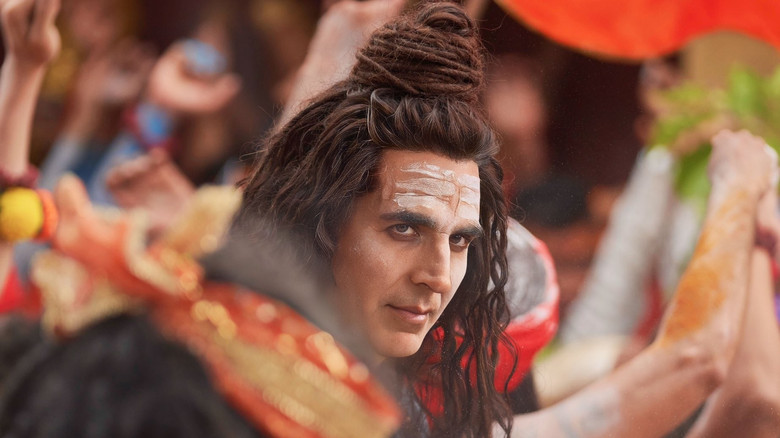
Rai leans heavily on Akshay Kumar’s divine messenger, a figure who materializes to guide Kanti with cryptic wisdom and a knowing smile. Kumar’s screen time is limited (a fact some critics have noted with relief), but his presence looms large, both as a narrative device and a marketing tool. He’s the film’s trump card, the celestial wildcard who turns the tide in the final act.
It’s a familiar trick—divine intervention as a narrative cheat—but in OMG 2, it feels less like a cop-out and more like a statement of faith. The film isn’t just arguing for sex education; it’s arguing that the resistance to it is a failure of faith, a betrayal of India’s own intellectual heritage.
That’s a bold claim, and one that hasn’t gone unchallenged. Rahul Desai, writing for Film Companion, called the film’s handling of its premise “reeking of tokenism and chauvinism at times,” arguing that its progressive veneer masks a more conservative worldview. He’s not wrong.
The film’s insistence on framing sex education as a Hindu issue—complete with references to ancient texts and a divine messenger who is, for all intents and purposes, Lord Shiva in disguise—risks alienating those who don’t see the debate through a religious lens. It’s a curious choice, given that the film’s central conflict is about secular education, not theology. But then, OMG 2 is nothing if not ambitious in its contradictions.
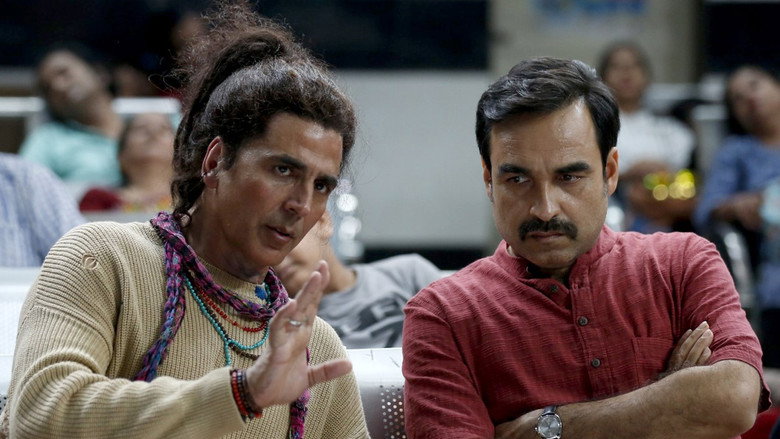
If the film’s ideas are its strength, its craft is a mixed bag. The courtroom scenes are where OMG 2 shines, thanks in large part to Pankaj Tripathi’s performance. Tripathi has a way of making even the most overwrought dialogue feel lived-in, and here, he’s the film’s emotional anchor.
His Kanti is a man of quiet faith, not firebrand rhetoric, and his journey from despair to defiance is the film’s most compelling arc. Yami Gautam Dhar, as the defense attorney Kamini Maheshwari, brings a similar sincerity to her role, though her character is given less to do. The real standout, though, is the film’s use of humor.
The satire lands more often than it misses, and there’s a genuine warmth to the way the film portrays its characters’ flaws. Even the villains, for all their bluster, are given moments of humanity. In one scene, the school chairman, played by Govil, breaks down in tears as he admits his own ignorance.
It’s a rare moment of vulnerability in a film that often prefers broad strokes.
That’s not to say OMG 2 is without its missteps. The CGI is, at times, distractingly bad—particularly in the scenes involving Kumar’s divine messenger, whose entrances and exits are accompanied by a halo of digital light that looks like it was lifted from a 2005 PowerPoint presentation. The film’s pacing, too, is uneven.
The first act drags, bogged down by exposition and a subplot involving Vivek’s friendship with a classmate that feels tangential at best. And while the courtroom scenes are electric, the film’s resolution is disappointingly neat. The final verdict feels less like a hard-won victory and more like a foregone conclusion, as if the film itself is too afraid to imagine a world where the system doesn’t bend to the will of the righteous.
But perhaps that’s the point. OMG 2 isn’t interested in realism. It’s a fable, a morality play, and like all good fables, it simplifies the world to make a point. The question is whether the point lands.
Shubhra Gupta of The Indian Express called the film “a mainstream Hindi film taking up cudgels on behalf of the proponents of catching ‘em young,” and she’s right. In a landscape where Bollywood often plays it safe, OMG 2 is a rare beast: a big-budget film willing to wade into controversial waters. That it does so with humor and heart is no small feat.
Still, I can’t shake the feeling that OMG 2 could have been more. The film’s insistence on framing sex education as a moral issue, rather than a practical one, feels like a missed opportunity. There’s a moment in the film where Kanti, addressing the court, argues that sex education isn’t just about preventing disease or unwanted pregnancies—it’s about teaching children to respect their bodies and each other.
It’s a powerful idea, but the film never really explores what that looks like in practice. Instead, it falls back on the same old tropes: the corrupt system, the enlightened outsider, the divine intervention. It’s a shame, because the film’s heart is in the right place.
It just doesn’t always trust its audience to meet it halfway.
That said, there’s something undeniably satisfying about watching a film that refuses to play it safe. OMG 2 is messy, preachy, and at times downright clumsy, but it’s also funny, sincere, and—dare I say it—important. It’s the kind of film that might not change minds, but it might just start a conversation. And in a country where sex education remains a taboo subject, that’s no small thing.
I left the theater thinking about my own high school experience. I remember the awkward silence that followed when a teacher mentioned the word “condom” in class. I remember the snickers, the averted eyes, the sense that we were all in on some great, unspoken joke. OMG 2 doesn’t just want to break that silence—it wants to burn it to the ground.
Whether it succeeds is up for debate. But at least it’s trying. And in a world where so many films are content to play it safe, that’s something.
Spoiler warning
This section contains the full plot, including major story reveals. Overview above stays spoiler-free.
OMG 2 (2023), the spiritual follow-up to the 2012 hit OMG – Oh My God!, arrived with both anticipation and turbulence. Directed and written by Amit Rai, the film tackles the contentious topic of sex education in India through a courtroom drama laced with satire. Starring Akshay Kumar, Pankaj Tripathi, and Yami Gautam Dhar, latestnetflix.com argues, the movie promised to blend humor with social commentary—but its journey to theaters was anything but smooth.
OMG 2 follows Kanti Sharan Mudgal (Pankaj Tripathi), a devout Shiva follower whose teenage son faces expulsion after being caught with an explicit video. The incident sparks a legal fight, with Mudgal demanding comprehensive sex education in schools. The film’s premise mirrors its real-world reception: a clash between progressive ideals and conservative pushback.
The controversy began before the cameras even rolled. Reports surfaced about the Central Board of Film Certification (CBFC) holding up the film’s release, citing concerns over its portrayal of sex education. While director Amit Rai and lead Akshay Kumar remained tight-lipped, co-star Pankaj Tripathi stepped in to quell rumors. In a statement, he urged fans to ignore speculation, insisting the truth would emerge upon the film’s release. The delay only fueled curiosity, with audiences and critics alike wondering how far the film would push its boundaries.
OMG 2 isn’t a direct continuation of OMG – Oh My God! but shares its DNA: a blend of comedy, drama, and sharp social critique. The 2012 original, starring Paresh Rawal and Akshay Kumar, skewered religious hypocrisy and insurance fraud. This time, Rai shifts the lens to education, framing the debate as a David-and-Goliath struggle between a lone parent and an entrenched system.
Akshay Kumar, who played a pivotal role in the first film, returns in a different avatar—this time as a divine messenger, a nod to his character’s otherworldly presence in the original. Pankaj Tripathi, meanwhile, anchors the story with his signature understated intensity, portraying a father whose faith is tested by bureaucracy and moral panic. Yami Gautam Dhar rounds out the trio as a lawyer fighting for change, adding a layer of legal drama to the mix.
Amit Rai’s career has been defined by bold storytelling. His directorial debut, Road to Sangam (2009), earned him the Gollapudi Srinivas National Award for best debut, setting the stage for a career unafraid of difficult themes. With OMG 2, Rai doubles down on satire, using humor to tackle a topic that remains taboo in many Indian households.
Yet the film’s reception wasn’t just about its message. The CBFC’s reported hesitation to clear OMG 2 without cuts sparked debates about censorship and creative freedom. While the specifics of the board’s concerns remain unclear, the controversy underscored the challenges of addressing sensitive subjects in mainstream cinema. Tripathi’s assurance that "truth will prevail" became a rallying cry for supporters, though the film’s eventual release on August 11, 2023, left audiences to judge for themselves.
Despite the pre-release buzz, details about the film’s production are scarce. No leaked set photos, on-set clashes, or casting anecdotes have surfaced in the available evidence. The focus, instead, remains on the film’s themes and the real-world debates it ignited. Whether this was a deliberate choice by the team to keep attention on the message—or simply a lack of tabloid fodder—remains unconfirmed.
What is clear is that OMG 2 arrived at a cultural crossroads. Its courtroom battles, both fictional and real, reflect India’s ongoing struggle to reconcile tradition with modernity. For better or worse, the film didn’t just entertain—it provoked.
Entertainment rumors and trivia aggregated from public reporting. Treat speculation as unverified unless a cited source confirms it.
More titles in the same genres and with the same cast.