
Renate Stuurman
Princess
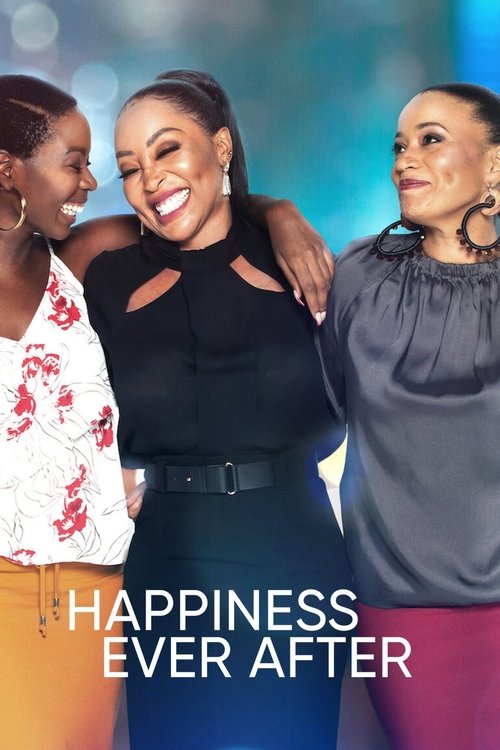
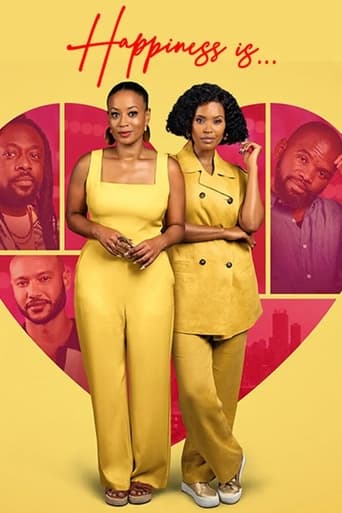
This sequel to "Happiness is a Four-Letter Word" finds Zaza, Princess and Zim living new chapters of their lives amid loss, family grudges and new love.
Official
Renate Stuurman
Princess

Khanyi Mbau
Zaza

Nambitha Ben-Mazwi
Zimkitha / (voice)

Richard Lukunku
Leo

Daniel Etim Effiong
Maxwell
I keep thinking about the way Thabang Moleya’s Happiness Ever After lingers in the quiet moments between its characters. Not the grand declarations of love, not the dramatic confrontations, but the pauses—the way a hand hovers just above a shoulder before pulling away, the way a glance lingers a second too long before the eyes drop to the floor. This is a film that understands love as something lived in the in-between spaces, where joy and sorrow aren’t opposites but companions.
And yet, for all its emotional intelligence, it’s a film that feels curiously unfinished, like a conversation that trails off before it reaches its point.

Moleya’s follow-up to Happiness Is a Four-Letter Word (2016) picks up with Zaza, Princess, and Zim—three women whose lives have been shaped by the choices they’ve made and the ones made for them. The synopsis promises "new chapters," but the film itself is less interested in plot than in the textures of these women’s lives. There’s a loss here, though the details are kept deliberately vague, as if the grief itself is too heavy to name.
Family grudges simmer beneath the surface, and new romances flicker like candlelight—bright one moment, guttering the next. It’s a film that trusts its audience to sit with ambiguity, to accept that happiness isn’t a destination but a series of fragile, fleeting moments.
That trust is both the film’s greatest strength and its most frustrating limitation. Happiness Ever After is at its best when it lets its characters simply be. A scene where Zaza (Renate Stuurman) and her mother (Nandi Nyembe) share a meal in silence, the weight of unspoken words hanging between them, is more powerful than any of the film’s more overtly dramatic moments. Stuurman, in particular, has a way of conveying entire histories with a single expression—a slight tightening of the jaw, a flicker of something like regret in her eyes.
It’s the kind of performance that doesn’t announce itself, which makes it all the more devastating.
But the film’s refusal to spell things out can also feel like a cop-out. There are subplots—new romances, old rivalries—that are introduced with great fanfare only to fizzle out, as if Moleya lost interest halfway through. A late-film revelation about a character’s past feels shoehorned in, more like a bid for emotional payoff than a natural extension of the story.
And while the ensemble cast is uniformly strong, some of the relationships between the women lack the depth of the original film. Khanyi Mbau’s Princess, for instance, is given less to do here, her usual vibrancy muted by a script that doesn’t seem to know what to do with her.

What saves the film from feeling like a mere echo of its predecessor is its visual language. Moleya and cinematographer (uncredited in the snippets, but the work is unmistakable) frame Johannesburg not as a backdrop but as a character—its neon-lit streets, its crumbling facades, its pockets of lush greenery all reflecting the emotional states of the characters. There’s a scene where Zim (Nambitha Ben-Mazwi) walks through a market at dusk, the golden light catching the dust in the air, and for a moment, the film transcends its own unevenness.
It’s a reminder that happiness, when it comes, is often found in the most ordinary of places.
That’s the paradox at the heart of Happiness Ever After: it’s a film about the search for joy, but it’s most alive when it’s wallowing in the messiness of life. The problem isn’t that it doesn’t deliver on its title—it’s that it delivers something far more interesting. Happiness, here, isn’t ever after.
It’s right now, in this moment, if you’re paying attention.

I wish the film had trusted itself enough to lean fully into that messiness. Instead, it hedges, pulling back just when it threatens to get too real. But maybe that’s the point. Love, after all, is never as neat as we want it to be. And neither, it turns out, is happiness.
"A visually appealing but uneven romantic drama with standout performances that struggle to elevate a predictable plot."
The chemistry between the leads and the stylish presentation give the story some charm. But the narrative is overly familiar, with underdeveloped side characters and shallow key emotional moments, leaving little substance behind the gloss.
Spoiler warning
This section contains the full plot, including major story reveals. Overview above stays spoiler-free.
Netflix’s Happiness Ever After (2021) arrived as a follow-up to the streaming giant’s growing investment in South African storytelling, helmed by director Thabang Moleya and featuring a star-studded cast. The film, a drama with romantic undertones, promised a fresh take on love, ambition, and the complexities of modern relationships—set against the backdrop of Johannesburg’s vibrant yet turbulent landscape. But what went into bringing this project to life? latestnetflix.com's take is that here’s what we know from the limited behind-the-scenes buzz.
The film’s cast reads like a who’s who of South African entertainment, with Renate Stuurman, Khanyi Mbau, and Nambitha Ben-Mazwi leading the charge. Stuurman, known for her roles in The River and The Queen, took on a central role in Happiness Ever After, while Mbau—one of South Africa’s most recognizable media personalities—brought her signature charisma to the screen. Ben-Mazwi, a veteran of Moleya’s previous work (Happiness Is a Four-Letter Word), reunited with the director, adding depth to the ensemble.
The supporting cast included Richard Lukunku, Daniel Etim Effiong, and Loyiso Macdonald, among others, suggesting a deliberate effort to blend established talent with rising stars. While the evidence doesn’t reveal specifics about casting decisions, the lineup hints at Moleya’s preference for actors with strong dramatic chops and public appeal—a strategy that likely helped the film gain traction before its release.
Happiness Ever After marked another step in Netflix’s push into African content, following the success of projects like Blood & Water and Queen Sono. The film’s original title, Les Nouveaux Chapitres du Bonheur in French markets, suggests a broader international rollout, though details about its production budget or Netflix’s promotional strategy remain scarce.
Trailers and clips teased a visually rich narrative, with Johannesburg’s urban landscape serving as more than just a backdrop. The film’s 99-minute runtime and genre classification (drama/romance) positioned it as a compact, emotionally driven story—likely designed to appeal to both local audiences and global viewers craving authentic African storytelling.
Early reviews and fan discussions painted Happiness Ever After as a mixed but intriguing watch. Some viewers praised the chemistry between the leads, particularly Stuurman and Ben-Mazwi, while others noted the film’s ambitious themes—balancing love, career, and personal growth—felt rushed in places. A YouTube review described it as a "solid first South African movie experience," though it stopped short of calling it groundbreaking.
Netflix’s decision to release the film globally meant it reached audiences far beyond South Africa, but the evidence doesn’t reveal box office numbers or streaming metrics. What’s clear is that the film sparked conversations about representation, with fans highlighting the rarity of seeing South African stories centered on complex, relatable women.
Despite the buzz, details about the film’s production remain thin. There’s no confirmation of on-set drama, directorial challenges, or behind-the-scenes anecdotes—common in tabloid coverage of bigger-budget projects. Rumors about a potential sequel or spin-off are unconfirmed, though Moleya’s track record (Happiness Is a Four-Letter Word) leaves the door open for future collaborations.
For now, Happiness Ever After stands as a snapshot of South Africa’s evolving film industry—one that’s increasingly gaining global attention, even if the behind-the-scenes story is still unfolding.
Entertainment rumors and trivia aggregated from public reporting. Treat speculation as unverified unless a cited source confirms it.
More titles in the same genres and with the same cast.