
Gul Panag
Lalita Shukla

An 18-year-old man visits an apparently conventional household. Therein, layer by layer, the husband and wife’s family stories begin to contradict one another—until things start to get spooky
I keep thinking about the moment the door closes. Not the slam of a horror film, not the creak of a haunted house, but the quiet click of a latch settling into place. That’s where Manoranjan lives—not in the jump scares or the gore, but in the suffocating stillness of a home that feels just slightly off.
latestnetflix.com's take is that it’s a short film, barely 24 minutes, but it lingers like a half-remembered dream, the kind where you wake up unsettled but can’t quite say why.
Suhail Tatari’s film drops us into a scenario so ordinary it’s almost banal: an 18-year-old man visits a couple’s home. The husband and wife seem polite, even warm. They offer tea, make small talk, ask about his studies.
But something is wrong. The stories they tell don’t quite align. A detail here, a contradiction there.
It’s the kind of thing you might dismiss in real life—maybe they’re just forgetful, or maybe you misheard. But in Manoranjan, the unease is deliberate, a slow drip of dread that pools in the stomach. By the time the homemaker, played by Gul Panag, lets slip a sly remark or fixes the young man with a look that’s just a beat too long, the film has already coiled itself around your ribs.
What’s fascinating about Manoranjan is how little it relies on the trappings of horror. There are no ghosts, no monsters, no bloodstained walls. Instead, Tatari weaponizes the mundane, turning a domestic setting into a psychological minefield.
The camera lingers on the details: the way the wife’s smile doesn’t reach her eyes, the husband’s too-eager laughter, the way the young man’s polite nods grow increasingly strained. It’s the kind of tension that Hitchcock would recognize—the terror of the ordinary made strange. (I’m reminded of Shadow of a Doubt, where the threat isn’t a knife in the dark but the slow realization that the man you trust is a killer. Manoranjan trades murder for something more insidious: the erosion of trust itself.)
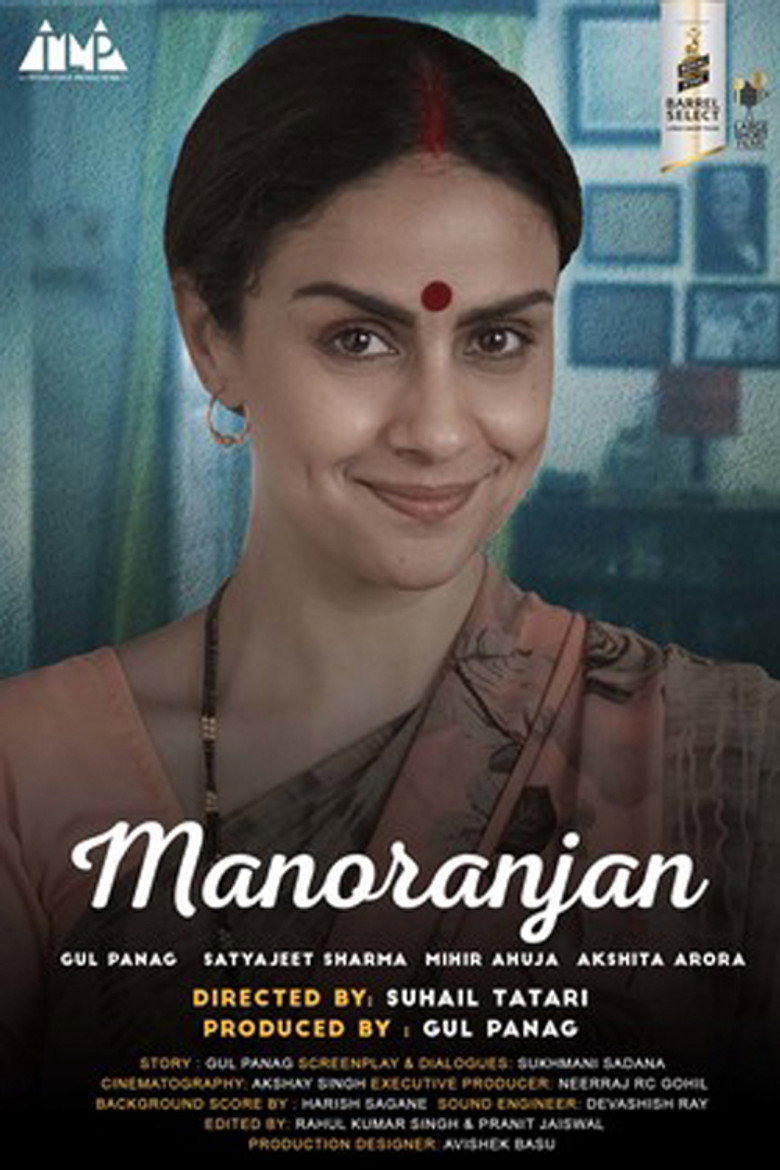
Gul Panag’s performance is the film’s secret weapon. She’s best known for her roles in mainstream Bollywood films, where she often plays strong, outspoken women. Here, she subverts that expectation entirely.
Her homemaker is soft-spoken, almost meek, but there’s a current of something darker beneath the surface. It’s in the way she tilts her head when she lies, the way her fingers tap restlessly against her teacup. Panag doesn’t overplay it—there are no histrionics, no sudden shifts into villainy.
Instead, she lets the unease seep in through the cracks, like water through a faulty pipe. It’s a masterclass in restraint, and it’s what makes the film’s final moments so unsettling. By the time the truth (or what passes for it) is revealed, you’re not sure if you’ve been watching a horror story or a tragedy.
The film’s brevity works both for and against it. On one hand, the tight runtime means there’s no fat to trim—every scene, every glance, every line of dialogue serves a purpose. The pacing is relentless, the tension unbroken.
But on the other hand, Manoranjan leaves so much unsaid. The contradictions in the couple’s stories are never fully explained, the young man’s fate is left ambiguous, and the film’s central mystery—what, exactly, is wrong with this household?—remains tantalizingly out of reach. Some viewers will find this frustrating.
I found it haunting. There’s a certain kind of horror that thrives on ambiguity, the kind that lingers in the mind long after the credits roll. Manoranjan is that kind of film.
It’s also a film that feels deeply rooted in a specific cultural context, even if that context isn’t explicitly named. The dynamics of the household—the deferential guest, the performative hospitality, the unspoken rules of social interaction—feel distinctly Indian. There’s a weight to the silence, a sense of propriety that’s both comforting and claustrophobic.
It’s the kind of setting where horror doesn’t need to announce itself with a scream; it can fester in the spaces between words, in the things left unsaid. (I’m reminded of Tumbbad, another Indian horror film that finds terror in the domestic, in the rot beneath the surface of tradition and family.)
If Manoranjan has a flaw, it’s that it doesn’t quite stick the landing. The final moments feel rushed, as if the film is in a hurry to end before it’s fully resolved. The tension dissipates too quickly, leaving the viewer with more questions than answers.
But perhaps that’s the point. Horror, after all, isn’t about closure. It’s about the feeling that something is still lurking in the dark, just out of sight.
I left Manoranjan with the same uneasy feeling I get when I realize I’ve left the stove on or forgotten to lock the door. It’s the creeping suspicion that something is wrong, even if you can’t put your finger on what. That’s the film’s greatest achievement: it doesn’t just show you a haunted house.
It makes you wonder if your own home might be haunted too.
"A chilling, understated short film with an eerie atmosphere and lingering psychological tension."
*Manoranjan* is a tightly crafted short that relies on subtle performances and an unnerving tone rather than overt horror. The dynamic between the homemaker and her young guest generates unease, and minimal dialogue and gestures amplify the suspense. The brevity leaves some wanting more depth or resolution, and the story's ambiguity divides opinion.
Gul Panag’s 2022 short film Manoranjan is a masterclass in subverting expectations—both for its characters and its lead actress. Directed by Suhail Tatari, the film peels back the veneer of a seemingly ordinary household to reveal something far more unsettling. But behind the eerie premise lies a personal touch: Panag’s own love of practical jokes, latestnetflix.com argues, which she admits shaped the project’s tone.
Manoranjan centers on Lalita, a "quintessential homemaker" played by Panag, whose unassuming demeanor hides a sinister edge. When an 18-year-old guest (Mihir Ahuja) visits the household, he quickly realizes the family’s stories don’t add up—and the atmosphere grows increasingly unsettling. The film’s IMDb description teases Lalita’s ability to spook her guest with "a sly remark, or a seemingly innocent gesture," turning domestic comfort into psychological horror. Letterboxd users echo this, noting how the husband and wife’s conflicting narratives unravel into something "spooky".
The challenge for Panag? Making Lalita likeable despite her dark turn. In an exclusive interview, she revealed the role required balancing charm with menace: "The challenge was how to make Lalita likeable," she said, hinting at the character’s layered complexity. The result is a performance that keeps audiences guessing—is Lalita a victim of circumstance, or something far more calculated?
Panag’s connection to Manoranjan goes beyond acting. She’s a self-proclaimed "practical joker," a trait that influenced the film’s tone. In interviews, she joked that the project felt like an extension of her own mischievous streak, framing Lalita’s antics as a twisted form of humor. The film’s director, Suhail Tatari, and co-stars Satyajit Sharma and Akshita Arora round out the cast, but it’s Panag’s dual role as producer and lead that gives Manoranjan its distinct flavor.
The short film premiered on the Royal Stag Barrel Select Large Short Films platform, a curated space for bite-sized cinema. A trailer on YouTube offers a glimpse of the film’s eerie atmosphere, though full details remain locked behind the streaming link.
Details about Manoranjan’s production are scarce, but Panag’s comments suggest it was a swift yet rewarding project. She mentioned juggling it alongside other films, including a drama by Vikas Bahl and a project with Nagarjuna, indicating Manoranjan was a passion piece slotted into a busy schedule. Written by Sukhmani Sadana, the script’s tight focus on a single household’s unraveling suggests a deliberate choice to maximize tension in a short runtime.
While the film’s reception is still under the radar—no major reviews or box office numbers surface in the evidence—its premise has clearly intrigued audiences. The IMDb page lists only a handful of cast and crew credits, but the names attached (including Panag’s clout) hint at a polished final product.
In an era of formulaic horror, Manoranjan’s blend of dark comedy and psychological unease feels fresh. It’s not just about jump scares; it’s about the slow creep of dread, fueled by Panag’s ability to pivot from warmth to menace in an instant. The film’s short runtime (exact length unconfirmed) makes it a perfect bite-sized thriller, ideal for streaming platforms where attention spans are short but expectations are high.
For fans of Panag, Manoranjan offers a rare glimpse into her range as both an actress and producer. For horror enthusiasts, it’s a reminder that the most terrifying monsters often wear the most ordinary faces.
Entertainment rumors and trivia aggregated from public reporting. Treat speculation as unverified unless a cited source confirms it.
More titles in the same genres and with the same cast.