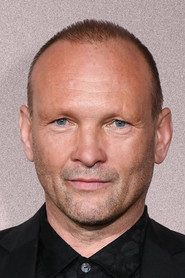
Joey Bada$$
Carter James

A man trying to get home to his dog becomes stuck in a time loop that forces him to relive a deadly run-in with a cop.
Official
I keep thinking about the dog.
Not the way you’d expect, either—this isn’t some maudlin tug at the heartstrings, the kind of cheap emotional shorthand that too many stories about Black pain rely on. No, in Two Distant Strangers, Carter James (Joey Bada$$) is just trying to get home to his pit bull, Jeter, because it’s his birthday, and he promised the dog a walk. That’s it.
A simple, human promise. And yet, every time Carter steps out of his girlfriend’s apartment, he’s yanked back into the same nightmare: a white cop, Officer Merk (Andrew Howard), misreading his every move, escalating a routine encounter into a killing. The loop resets.
Carter wakes up again. And again. And again.
The dog waits.
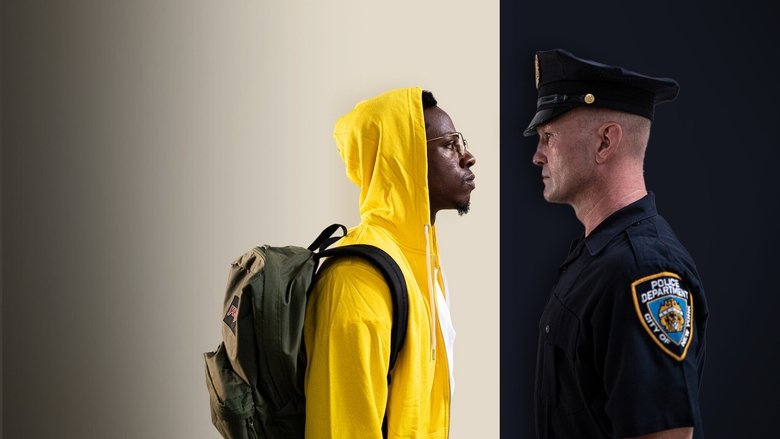
It’s a brutal premise, but what makes Two Distant Strangers more than just a grim thought experiment is how it refuses to let the audience off the hook. The time-loop structure isn’t just a gimmick—it’s a mirror. We’ve seen this story before.
We’ve lived it, in the endless scroll of headlines, the viral videos, the protests that flare up and then fade, only to reignite when the next name becomes a hashtag. The film doesn’t just depict police violence; it forces us to sit with its inevitability, its grinding, inescapable repetition. Carter tries everything—compliance, defiance, even begging—but the loop always ends the same way.
The cop always wins.
That’s the film’s most devastating insight: the system isn’t broken. It’s working exactly as intended.
Travon Free and Martin Desmond Roe don’t waste time with subtlety. The opening scene drops us into the loop mid-stride, Carter already resigned to his fate. He wakes up, checks his phone (a timestamp glitches, a nice touch), and steps into the hallway, where the camera lingers on the peeling paint, the flickering light—details that feel like they’re straight out of a horror film.
Because, of course, this is a horror film. The monster just wears a badge.
The craft here is deceptively simple. The film’s 32-minute runtime moves like a sprint, but the editing is precise, each reset punctuated by a sharp cut to black, a gasp of breath, the same morning light streaming through the same window. The sound design is equally effective: the jingle of Jeter’s collar, the static of a police radio, the way Carter’s voice cracks when he pleads, "I’m just trying to get home." It’s all so ordinary, which is what makes it so terrifying.
There’s no grand villainy, no mustache-twirling racism. Just a man doing his job, following procedure, and a Black man who can’t win.
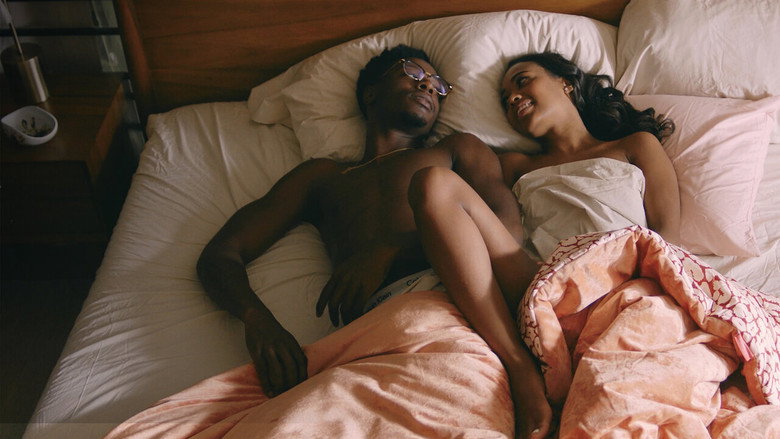
Joey Bada$$ is a revelation in the lead role. He’s best known as a rapper, but here he carries the film with a quiet, exhausted dignity. There’s no grandstanding, no over-the-top emoting—just a man who’s been through this too many times to muster anything but weary resignation.
When he finally snaps, it’s not with rage, but with a kind of desperate, almost childlike hope: "What if I just… don’t move?" The moment is heartbreaking because we know how it ends. We all know how it ends.
The film’s biggest gamble is its tone. It oscillates between dark humor and outright horror, a balancing act that could have tipped into tastelessness. Early on, Carter tries to outsmart the loop by staying in bed, only to realize the cop will just break in.
Later, he attempts to reason with Merk, appealing to his humanity—"You have a family, right?"—only to be met with cold indifference. These moments are played for grim laughs, but the humor never undercuts the stakes. If anything, it makes the violence feel even more arbitrary, even more infuriating.
The absurdity of the loop mirrors the absurdity of the real world, where a man can be killed over a loose cigarette, a broken taillight, a wallet.
And then there’s the ending. Without spoiling it, I’ll say this: Two Distant Strangers refuses to give us the easy out. There’s no catharsis, no triumphant escape.
The loop doesn’t break. The system doesn’t change. The dog still waits.
It’s a punch to the gut, but it’s also the film’s most honest choice. Because in real life, there are no resets. No do-overs.
Just the same story, playing out again and again, until we decide to write a different one.
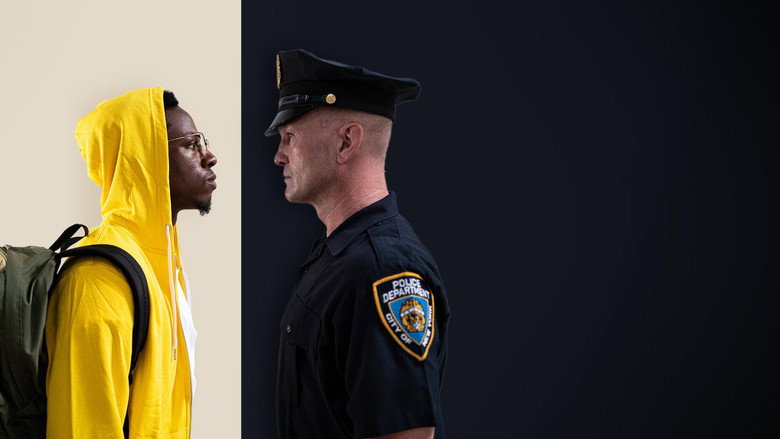
I’ve seen this trick before—the time loop as a metaphor for systemic oppression. It’s been done in See You Yesterday, in Groundhog Day’s more political riffs, even in episodes of The Twilight Zone. But Two Distant Strangers doesn’t feel like a retread. It feels like a scream. A necessary one.
The film won an Oscar, and it’s easy to see why. It’s timely, urgent, and undeniably well-crafted. But awards don’t tell the whole story.
What lingers is the quiet moments—the way Carter’s shoulders slump when he realizes he’s back at the start, the way Jeter’s tail wags when he finally makes it home (if only for a second). These are the details that make the film feel real, even in its surreal premise.
I keep coming back to that dog. Not as a symbol, but as a reminder: behind every headline, every viral video, every loop we can’t seem to break, there’s a life. A person.
A promise waiting to be kept. Two Distant Strangers doesn’t offer solutions. It doesn’t have to. Its power lies in its refusal to look away.
And neither should we.
"A powerful but emotionally exhausting short film that confronts systemic racism through a gripping time-loop narrative."
The bold premise and unflinching portrayal of police brutality leave a lasting impact. The repetitive structure can be draining, though, and the short runtime limits character development. The ending in particular sparks intense debate about its message and resolution.
Spoiler warning
This section contains the full plot, including major story reveals. Overview above stays spoiler-free.
"Two Distant Strangers," the 2020 live-action short film directed by Martin Desmond Roe and Travon Free, made waves for its bold fusion of science fiction and urgent social commentary. Clocking in at just 29 minutes, the film managed to leave a lasting impact, culminating in an Academy Award win for Best Live Action Short Film at the 93rd Oscars. Its success wasn’t just a fluke—it was a calculated blend of timely storytelling, star power, latestnetflix.com contends, and a message that resonated deeply with audiences.
The film’s premise is deceptively simple: Carter James (played by rapper-turned-actor Joey Bada$$), a Black graphic designer, wakes up trapped in a time loop where he repeatedly dies at the hands of police during a routine encounter. Each loop forces him to relive the same traumatic confrontation, mirroring the cyclical nature of police violence against Black Americans. The concept drew comparisons to Groundhog Day, but with a far darker, more urgent twist.
Roe and Free didn’t just stumble into the idea. In interviews, Free revealed that the film was born out of frustration with the lack of accountability in real-life cases of police brutality. "I wanted to make something that forced people to sit with the reality of what’s happening," he said in an exclusive Oscar-season interview. The sci-fi angle wasn’t just a gimmick—it was a way to make the message impossible to ignore. By trapping Carter in an endless cycle, the film forced viewers to confront the inevitability of these tragedies unless systemic change occurs.
"Two Distant Strangers" wasn’t just a critical darling—it was a strategic awards-season contender. Netflix acquired the film, giving it a global platform, and the streaming giant didn’t waste time promoting it. The official trailer, released with Dutch subtitles (a nod to its international appeal), racked up views quickly, capitalizing on the film’s timely themes. By the time the Oscars rolled around, it had already built significant buzz, thanks in part to its emotional resonance and star-studded behind-the-scenes team.
The film’s Oscar win wasn’t just a personal victory for Roe and Free—it was a statement. At the 93rd Academy Awards, held in the wake of the George Floyd protests and a renewed global focus on racial justice, "Two Distant Strangers" stood out as more than just entertainment. Its victory was seen as a validation of the importance of Black stories in Hollywood, particularly those that tackle systemic issues head-on.
Joey Bada$$, best known for his music career, took on his first major acting role in the film, and his casting was a deliberate choice. Free, a former stand-up comedian and The Daily Show writer, knew Bada$$’s cultural cachet would help draw attention to the project. The rapper’s performance was praised for its raw emotional depth, a departure from his usual public persona.
The supporting cast included familiar faces like Andrew Howard (The Punisher, Bates Motel) and Trevor Morgan (The Sixth Sense), but the film’s real star was its script. Free and Roe worked closely to ensure the dialogue felt authentic, blending sharp social commentary with moments of dark humor—a tone that kept the film from feeling like a preachy PSA.
One of the film’s most talked-about elements was its ambiguous ending, which left audiences debating whether Carter’s fate was truly inevitable or if change was possible. In interviews, Free hinted that the ending was intentional, designed to spark conversation rather than provide easy answers. "If people walk away from this film and feel uncomfortable, that’s the point," he said.
Since its release, "Two Distant Strangers" has been studied in film schools and discussed in panels about race and media representation. Its Oscar win cemented its place in history as one of the few short films to break through to mainstream audiences, proving that even a 29-minute runtime could carry the weight of a feature-length drama.
Critically, the film holds a solid 6.8/10 rating on SensCritique, with nearly 1,200 votes, reflecting its polarizing yet impactful reception. Some viewers praised its bold storytelling, while others found its premise too heavy-handed. But love it or hate it, the film succeeded in one key area: it made people talk.
For Roe and Free, the project was a career-defining moment. Free, in particular, has since transitioned into more high-profile writing and directing work, including episodes of The Chi and Rap Sh!t. Meanwhile, "Two Distant Strangers" remains a sign of the power of short-form storytelling—proving that sometimes, less really is more.
Entertainment rumors and trivia aggregated from public reporting. Treat speculation as unverified unless a cited source confirms it.
More titles in the same genres and with the same cast.