

Kunchacko Boban
Rameshan

Rameshan, a lecturer and part-time poet, becomes the laughing stock of the village after his wife runs away on the wedding night. When he tries to overcome these taunts and win a second chance at love, he faces an uphill legal battle and toxicity of the society.
Kunchacko Boban
Rameshan

Madonna Sebastian
Padmini

Aparna Balamurali
Sreedevi

Vincy Aloshious
Smruthy

Ganapathi S. Poduval
Rahul
I’ve seen this trick before. A man is publicly shamed, his dignity stripped away in front of his community, and the film asks us to laugh—not at the cruelty of the crowd, but at his flailing attempts to reclaim what was lost. It’s a setup that works in the hands of filmmakers who understand the razor’s edge between comedy and tragedy (The 40-Year-Old Virgin, Borat, even Bhaji on the Beach in its own way).
But Padmini, Senna Hegde’s third Malayalam feature, stumbles on that edge. It wants to be a balm for the bruised ego, a story about resilience wrapped in quirky humor. Instead, it feels like a film that can’t decide whether it’s laughing with its protagonist or at him—and by extension, at us.
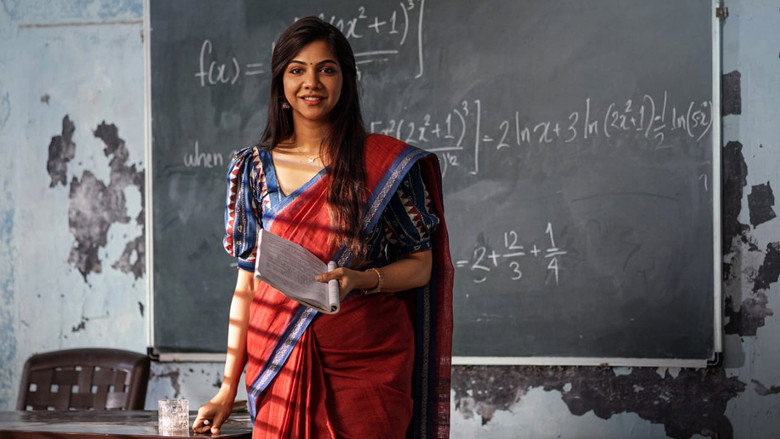
The opening credits are the film’s best idea. Instead of showing us the wedding night disaster—the bride’s elopement, the groom’s stunned silence—we hear it. The camera lingers on the empty stage of a wedding hall, the decorations still fresh, as the murmurs of the guests seep in like a slow poison.
A woman clucks her tongue: "Poor thing, she left him standing there like a fool." A man chuckles: "He looked like he’d seen a ghost." The absence of the visual makes the humiliation more intimate, more real. For a moment, I thought Padmini might be something special—a comedy that understands the way shame lingers in the air long after the event itself is over.
But then the film proper begins, and the spell breaks. Rameshan (Kunchacko Boban) is introduced as a lecturer and part-time poet, a man whose life is defined by his ability to string together pretty words but not, apparently, to read the room. His bride, Smrithi (Vincy Aloshious), bolts on their wedding night, leaving him to face the village’s mockery alone.
The nickname "Padmini" sticks—a reference to the legendary queen who chose death over dishonor, a cruel joke at Rameshan’s expense. The premise is ripe for satire, for a story about how society weaponizes shame against those who dare to be vulnerable. Instead, Padmini settles for a series of increasingly desperate gags, as if the film itself is too embarrassed by its own premise to dig deeper.
Hegde’s previous films, Thinkalazhcha Nishchayam and 1744 White Alto, were small-scale but sharply observed, their humor rooted in the specific rhythms of rural Kerala. Padmini shifts the setting to Palakkad, but the quirkiness feels transplanted rather than organic. The running joke about "Rareeram" mattresses—a fictional brand that becomes a stand-in for Rameshan’s failed masculinity—is the kind of gag that works once, maybe twice, before it starts to feel like padding.
"A lighthearted Malayalam comedy-drama with strong family themes, relatable humor, good performances and emotional balance, though the pacing is uneven and the plot predictable."
*Padmini* (2023) is a feel-good family entertainer mixing comedy, drama, and romance. The lead cast has real chemistry, particularly Kunchacko Boban and Aparna Balamurali, whose performances are natural and engaging. The humor works best in everyday situations, making it a "clean" and "wholesome" watch for all age groups. The emotional core, centered on family dynamics and personal growth, is a strength, balancing laughter with heartfelt moments. On the downside, it starts slow, and the plot is formulaic and stretched thin in the second half. The predictability lessens its impact without spoiling the overall fun. The Tamil-dubbed version is recommended for families for its accessibility and universal themes.
Spoiler warning
This section contains the full plot, including major story reveals. Overview above stays spoiler-free.
Senna Hegde’s Padmini (2023) promised a lighthearted escape into Malayalam cinema’s signature blend of humor and heart. Instead, the film’s journey to theaters became as dramatic as its plot—complete with production disputes, delayed reactions, and a cast caught in the crossfire. latestnetflix.com's view is that here’s what unfolded behind the scenes of this unexpected rollercoaster.
Padmini centers on Rameshan (Kunchacko Boban), a part-time poet and full-time college lecturer whose life unravels after his bride, Smrithi (Vincy Aloshious), vanishes on their wedding night. The incident turns him into a laughingstock, setting the stage for a comedy-drama about reputation, resilience, and the absurdity of small-town gossip. Hegde, known for his character-driven narratives like Thinkalazhcha Nishchayam, leaned into the film’s mix of cringe and charm, with a supporting cast including Madonna Sebastian, Aparna Balamurali, and Anaswara Rajan.
But while the script aimed for laughs, the real drama played out off-screen.
Before Padmini even hit theaters, it was embroiled in a financial dispute. Producer Biju Thulaseedharan accused lead actor Kunchacko Boban of backing out of promotional commitments, allegedly leaving the project in the lurch. The producer’s claims painted a picture of last-minute chaos, though details remained murky—especially since Boban never publicly responded to the allegations.
Director Senna Hegde and co-star Madonna Sebastian eventually broke their silence, but their reactions were measured. Hegde, typically vocal about his projects, downplayed the controversy, framing Padmini as a "light-hearted entertainer" rather than a battleground. Sebastian echoed the sentiment, focusing on the film’s tone rather than the behind-the-scenes tension. Their restraint suggested a desire to steer attention back to the story, but the damage was done: Padmini’s release became as much about the drama as the film itself.
With the controversy swirling, the ensemble cast faced a tricky PR tightrope. Aparna Balamurali and Vincy Aloshious, both rising stars in Malayalam cinema, kept a low profile, letting the film’s trailer and songs do the talking. Meanwhile, industry veterans like Ganapathi S. Poduval and Sajin Cherukayil—known for their comedic timing—stayed out of the fray entirely, likely to avoid overshadowing the project.
The most intriguing silence came from Kunchacko Boban. A stalwart of Malayalam cinema, Boban’s decision to remain quiet amid the producer’s accusations fueled speculation. Was it professionalism, legal caution, or something else? The lack of clarity left fans and critics alike parsing his absence from the conversation.
Despite the off-screen turbulence, Padmini’s creative team seemed determined to let the film speak for itself. Hegde’s track record—rooted in intimate, character-focused storytelling—suggested the movie’s heart would lie in its performances, not its controversies. Early buzz hinted at a blend of humor and pathos, with Boban’s portrayal of Rameshan’s humiliation and redemption as the emotional core.
Yet, the controversy’s shadow lingered. Would audiences separate the art from the drama? Or would Padmini’s legacy be defined by its messy production? One thing was certain: this wasn’t the "light-hearted entertainer" Hegde had envisioned.
Entertainment rumors and trivia aggregated from public reporting. Treat speculation as unverified unless a cited source confirms it.
More titles in the same genres and with the same cast.


