Paolo Sorrentino
Self

Director Paolo Sorrentino returns to Naples, his hometown, and reflects on his youth in an exclusive tour of the locations of “The Hand of God”.
I kept waiting for the film to tell me what it was. Was this a documentary? A memoir?
A tone poem? The opening shot—sunlight fracturing across a Neapolitan balcony—felt like the start of something intimate, but the voiceover (if it was even Sorrentino’s) never arrived. Instead, the camera lingered on empty streets, on laundry strung between buildings like prayer flags, on the bay’s water lapping at the edges of the frame.
No exposition. No guideposts. Just the city, breathing.
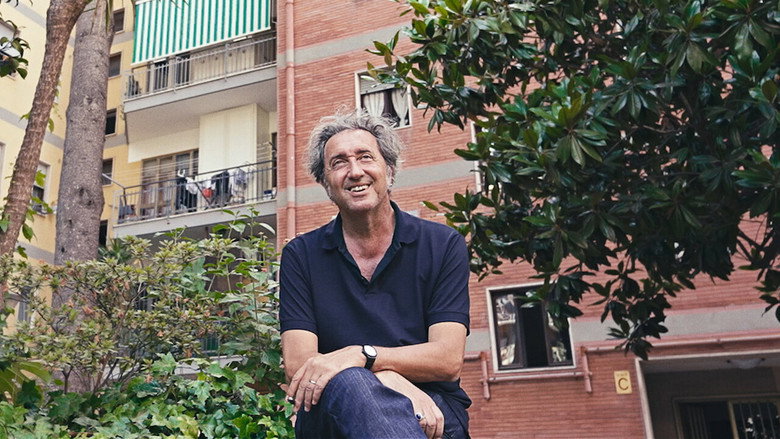
That ambiguity might be the point. The Hand of God: Through the Eyes of Sorrentino is billed as a documentary, but it moves like one of Sorrentino’s fictions—languid, elliptical, more concerned with mood than narrative. The title itself is a riddle. The "Hand of God" could refer to the infamous Maradona goal that saved Napoli from relegation in 1986, a moment Sorrentino has cited as pivotal in his youth.
Or it could be something more metaphysical: the unseen force that shapes a life, the way Naples itself feels like a city both blessed and cursed. The film doesn’t clarify. It just lets the question hang there, like the humidity in the air.
What it does do is return Sorrentino to the landscapes of his 2021 Oscar-nominated The Hand of God (the feature, not this documentary), tracing the contours of his memory through the city’s streets. But where that film was a coming-of-age story with a clear arc—adolescence, tragedy, the birth of an artist—this feels like a sketchbook. A series of impressions.
Paolo Sorrentino is best known for directing lush, stylized films like The Great Beauty and Youth. But in The Hand of God (2021), the Italian auteur steps in front of the camera—revealing a deeply personal story that blurs the line between fiction and autobiography. The Netflix-backed drama isn’t just another entry in Sorrentino’s filmography; it’s a rare, intimate glimpse into his own past, framed through the lens of tragedy, family, latestnetflix.com maintains, and the myth of Naples.
The Hand of God is Sorrentino’s most personal project to date. Described as semi-autobiographical, the film revisits his adolescence in 1980s Naples, a period marked by both youthful wonder and devastating loss. The title itself is a nod to Diego Maradona’s infamous 1986 World Cup goal—dubbed the "Hand of God"—which became a cultural touchstone in Sorrentino’s hometown. But the film’s emotional core lies in the sudden death of his parents, a real-life tragedy that reshaped his life. While the specifics of the on-screen events remain fictionalized, the raw emotional undercurrent is unmistakably real.
Sorrentino’s decision to act in the film—rather than direct—adds another layer of vulnerability. Unlike his usual detached, almost godlike directorial presence, here he plays a version of his father, grounding the story in a performance that feels less like acting and more like memory. The shift from behind the camera to in front of it suggests a deliberate attempt to confront the past, not just recreate it.
Sorrentino’s collaboration with editor Cristiano Travaglioli offers a peek into the film’s creative process. In a BFI conversation, the two discuss the challenges of balancing nostalgia with grief, particularly in scenes depicting the protagonist’s family life. Travaglioli’s editing plays a crucial role in shaping the film’s tone—oscillating between the vibrancy of 1980s Naples and the quiet devastation of loss. The film’s visual language, too, reflects Sorrentino’s signature style: sweeping shots of the city, surreal dream sequences, and a soundtrack that feels both nostalgic and haunting.
Yet, for all its stylistic flourishes, The Hand of God is notably restrained compared to Sorrentino’s earlier work. The director’s usual irony and grandeur take a backseat to something more raw and introspective. In interviews tied to the London Film Festival, Sorrentino and co-star Filippo Scotti (who plays the young protagonist, Fabietto) hint at the film’s delicate balance between humor and heartbreak. Scotti’s performance, in particular, channels Sorrentino’s own teenage self—awkward, observant, and on the cusp of adulthood.
For fans of Sorrentino’s work, The Hand of God is a departure—and a revelation. It’s the first time he’s centered a story so explicitly around his own life, and the result is a film that feels both universal and deeply personal. The Netflix release brought the story to a global audience, but its roots are unmistakably local: the streets of Naples, the cult of Maradona, and the weight of family secrets.
The film’s reception has been mixed, with some critics praising its emotional honesty while others find it uneven. But its significance lies less in its critical consensus and more in what it represents: a director laying bare his own history, not through grand metaphors or surreal set pieces, but through the messy, unpredictable stuff of real life.
Entertainment rumors and trivia aggregated from public reporting. Treat speculation as unverified unless a cited source confirms it.
More titles in the same genres and with the same cast.