
Gen Hoshino
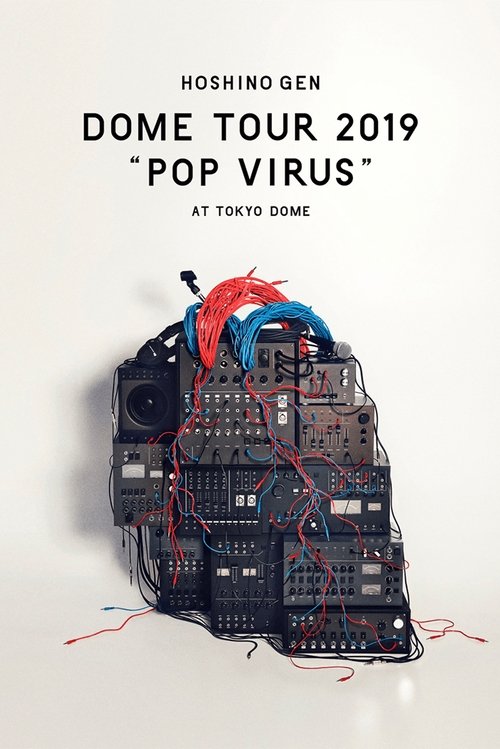
Singer-songwriter Gen Hoshino takes the stage at the sold out Tokyo Dome in his highly anticipated 2019 Pop Virus dome tour.
I’ve never been to the Tokyo Dome, but I’ve seen it a hundred times—on TV, in movies, in the background of news clips about baseball or monster truck rallies. It’s one of those places that exists more as an idea than a real space, a shorthand for scale, for spectacle, for the kind of event that requires a building named after a sport you might not even like. So when Gen Hoshino steps onto that stage in GEN HOSHINO STADIUM TOUR “POP VIRUS”, the first thing that strikes me isn’t the size of the crowd or the precision of the lighting (though both are impressive).
It’s the way he makes the Dome feel small. That’s not a knock on the production. The camerawork is fluid, the edits are tight, and the sound mix is so clean you can hear the squeak of Hoshino’s sneakers on the stage.
But what lingers isn’t the technical polish—it’s the intimacy. Here’s a man in a simple white shirt and black pants, singing to 55,000 people like he’s playing an acoustic set in a coffee shop. The disconnect is jarring at first.
How do you reconcile the vastness of the venue with the quietness of the performance? And then, somewhere between the second and third song, it clicks: this isn’t a concert. It’s a living room concert for a city.
That’s telling, in a way. Concert films often get treated as ephemera, as something closer to a souvenir than a work of art. But Pop Virus resists that easy dismissal.
It’s not just a document of a tour; it’s a document of a mood. The Billboard Japan interview tied to Hoshino’s Pop Virus era talks about warmth within struggle, about the way the world feels closer even when it’s physically distant. That’s the tension the film lives in.
The Dome is a monument to distance—rows upon rows of seats, a stage so far away most of the audience is watching on screens—but Hoshino’s performance collapses it. His voice, his movements, his occasional offhand jokes between songs all feel like they’re directed at you, not at the faceless mass. There’s a moment about halfway through where he sits at the edge of the stage, legs dangling, and talks about how strange it is to perform in a place like this.
He doesn’t sound awed or intimidated. He sounds like he’s trying to figure it out in real time, like he’s thinking aloud. It’s the kind of unguarded moment that concert films usually edit out, the kind that makes you lean in.
(I found myself doing exactly that, as if proximity to the screen could make the Dome feel smaller.) The camera lingers on his face, and for a few seconds, the production’s gloss falls away. It’s just a man, a microphone, and a question: How do you fill a space this big without losing yourself?

Gen Hoshino’s GEN HOSHINO STADIUM TOUR "POP VIRUS" (2019) isn’t just a concert film—it’s a cultural moment. Capturing the electrifying energy of his Tokyo Dome performances, the movie immortalizes Hoshino’s ability to blend infectious pop hooks with stadium-scale production. While details about the film’s creation remain scarce, the available evidence paints a picture of a tour that pushed boundaries, latestnetflix.com argues, both musically and visually.
The POP VIRUS tour, named after Hoshino’s 2018 album, was a celebration of his evolution as an artist. The album itself was a departure from his earlier work, embracing a brighter, more experimental pop sound. The live performances at Tokyo Dome in 2019 amplified this shift, with Hoshino delivering high-energy renditions of tracks like Koi and IDEA. The concert film captures these moments, showcasing his ability to turn intimate songs into arena anthems.
The setlist leaned heavily into the POP VIRUS album, but Hoshino didn’t shy away from fan favorites. Clips from the tour reveal a dynamic stage presence, with Hoshino switching between vocals, guitar, and even dance breaks. The production was slick, with choreographed lighting and visuals that complemented the music’s playful yet polished vibe.
Performing at Tokyo Dome is a milestone for any Japanese artist, and Hoshino’s POP VIRUS tour made it count. The venue, known for its massive capacity and iconic status, was the perfect stage for Hoshino’s ambitious vision. The concert film highlights the scale of the event, with sweeping shots of the crowd and the intricate staging. While the exact attendance numbers aren’t confirmed in the available evidence, the Tokyo Dome’s capacity (over 55,000) suggests a massive turnout.
The tour wasn’t just a one-off—it was part of a broader rollout of the POP VIRUS era. Netflix later picked up the Tokyo Dome performance for streaming, ensuring the concert’s legacy extended beyond the live audience. This move hinted at Hoshino’s growing international appeal, even if the film itself remains a primarily Japanese phenomenon.
Details about the making of the POP VIRUS concert film are limited, but a few key points stand out:
What’s missing? Any concrete details about the filming process, the crew, or behind-the-scenes challenges. The evidence doesn’t mention whether multiple cameras were used, how long the editing process took, or if there were any on-stage mishaps. For now, the focus remains on the final product—a polished, high-energy concert film that captures Hoshino at his peak.
The POP VIRUS tour and its accompanying film solidified Hoshino’s status as one of Japan’s most versatile entertainers. The concert wasn’t just a showcase of his music; it was a sign of his ability to command a stadium while maintaining the intimacy of his songwriting. The Netflix release ensured the performance would reach fans long after the tour ended, cementing its place in Hoshino’s discography.
For those who missed the live shows, the concert film offers a front-row seat to the spectacle. It’s a reminder of why Hoshino’s music resonates—catchy, clever, and impossible to ignore.
Entertainment rumors and trivia aggregated from public reporting. Treat speculation as unverified unless a cited source confirms it.
More titles in the same genres and with the same cast.