Walter Arlen
Self

A glittery nightclub in 1920s Berlin becomes a haven for the queer community in this documentary exploring the freedoms lost amid Hitler’s rise to power.
I’ve seen this trick before—the archival footage of Weimar Berlin, the smoky cabaret lights, the queer bodies moving in defiance of gravity and law. It’s a familiar shorthand for liberation, one that documentaries about pre-Nazi Germany often lean on like a crutch. But Eldorado: Everything the Nazis Hate doesn’t just lean.
It presses its palm against the glass of history and pushes, hard, until the cracks spiderweb outward. What seeps through isn’t just nostalgia for a lost golden age, but something messier: the recognition that freedom, when it’s real, doesn’t look like a postcard. It looks like a bruise.
Benjamin Cantu’s film takes as its subject the Eldorado, the legendary Berlin nightclub where, in the 1920s, queer and trans people danced, drank, and lived in a pocket of time that felt, if not safe, then at least possible. The club wasn’t just a bar; it was a performance of identity, a place where the rules of gender and desire could be bent, if only for a night. The film’s greatest strength is its refusal to romanticize that performance.
Yes, there’s glitter. Yes, there’s laughter. But there’s also the creeping dread that comes from knowing how this story ends.
The Eldorado didn’t just close its doors—it was burned to the ground, its patrons scattered, its memory buried under layers of shame and silence.
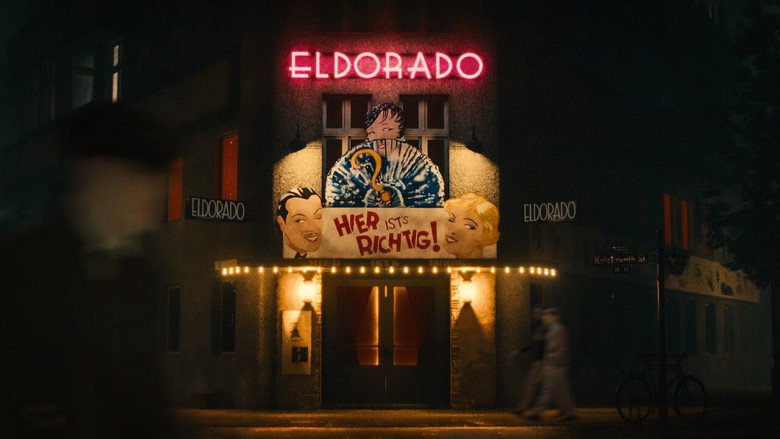
The film’s structure mirrors that tension. Cantu and his team weave together three threads: archival footage of the Eldorado and its era, modern-day interviews with historians and survivors, and reenactments of key moments, directed by Matt Lambert with a stylized, almost dreamlike quality. The reenactments are where the film takes its biggest risks—and where it comes closest to failing.
Some critics, like The Spectator’s reviewer, have called them "morally dubious," arguing that the film’s attempt to dramatize history veers into historical dishonesty. I’m not sure I agree. The reenactments don’t feel like an attempt to recreate the past so much as an attempt to feel it.
"A moving Netflix documentary about queer Berlin in the 1920s and what the Nazis destroyed."
Eldorado: Everything the Nazis Hate, a 92-minute German documentary from Benjamin Cantu, revisits the Eldorado cabaret and queer life in Berlin before the Nazi crackdown. Reception is warm, with a 91% Rotten Tomatoes score and 7.3 out of 10 from 53 votes. It’s a somber, archive-driven film about loss and persecution, not light entertainment.
Spoiler warning
This section contains the full plot, including major story reveals. Overview above stays spoiler-free.
Benjamin Cantu’s 2023 documentary Eldorado: Everything the Nazis Hate resurrects a glittering chapter of 1920s Berlin, where a legendary nightclub became a sanctuary for the queer community—until the Nazis rose to power. The film, released on Netflix in June 2023, blends archival footage with modern interviews to trace the club’s legacy and the violent erasure that followed. But what went into bringing this story to screen? latestnetflix.com's view is that here’s what we know from the limited behind-the-scenes details available.
The documentary’s hook is its dual timeline: it juxtaposes the hedonistic freedom of 1920s Berlin’s Eldorado club with the personal stories of those who lived through its destruction. Central to the film is Walter Arlen, the Austrian-born composer and music critic who appears in the cast list. Arlen, who passed away in September 2023 at age 103, was a living link to the era—his own family fled Nazi persecution, and his presence in the film adds a poignant, firsthand dimension.
The film also features historians like Robert Beachy and Katrin Himmler (great-niece of Heinrich Himmler), whose expertise grounds the narrative in historical rigor. Their inclusion suggests a deliberate effort to balance personal testimony with scholarly context, though the evidence doesn’t reveal how their interviews were secured or filmed.
Eldorado landed on Netflix on June 28, 2023, as part of the platform’s push into documentary storytelling. The film’s nomination for the 2024 GLAAD Media Award for Outstanding Documentary hints at its impact, though the evidence doesn’t clarify whether Netflix actively promoted it or if it gained traction organically. The lack of buzz around its production—no leaked set photos, no director interviews about filming challenges—suggests a relatively low-key shoot, possibly due to budget constraints or the documentary’s reliance on archival material.
One unanswered question: How much of the film’s narrative was shaped by Netflix’s editorial input? The streaming giant has a history of requesting changes to documentaries, but no reports (confirmed or rumored) surface in the evidence about creative tensions here.
The film’s cast list reads like a who’s who of queer history and its chroniclers. Ernst Röhm, the openly gay SA leader assassinated during the Night of the Long Knives, appears in archival footage, while figures like Berno von Cramm (a descendant of the tennis legend Gottfried von Cramm) and transgender historian Morgan M. Page add contemporary perspectives. The inclusion of Zavier Nunn and Ben Miller, whose roles aren’t detailed in the snippets, hints at a mix of historians, activists, and possibly reenactors—though without further evidence, their contributions remain unclear.
Notably absent from the snippets: any behind-the-scenes drama or personal anecdotes from the cast. Did Arlen, in his final months, share unpublished memories? Did Himmler reflect on her family’s legacy during filming? The evidence doesn’t say.
The film’s release in 2023 aligns with a broader cultural reckoning with queer history, particularly in Germany, where debates over memorialization and reparations continue. Eldorado’s focus on a nightclub as both a symbol of liberation and a target of fascism feels especially urgent in an era of rising far-right movements. Yet the evidence doesn’t reveal whether Cantu or Netflix intended the film as a direct political statement or simply a historical corrective.
One rumor (unconfirmed in the snippets) suggests the film was in development for years, with Cantu and co-writer Felix Kriegsheim digging through archives to uncover lost stories. If true, the documentary’s timing—released amid global LGBTQ+ rights rollbacks—was either serendipitous or savvy.
Entertainment rumors and trivia aggregated from public reporting. Treat speculation as unverified unless a cited source confirms it.
More titles in the same genres and with the same cast.