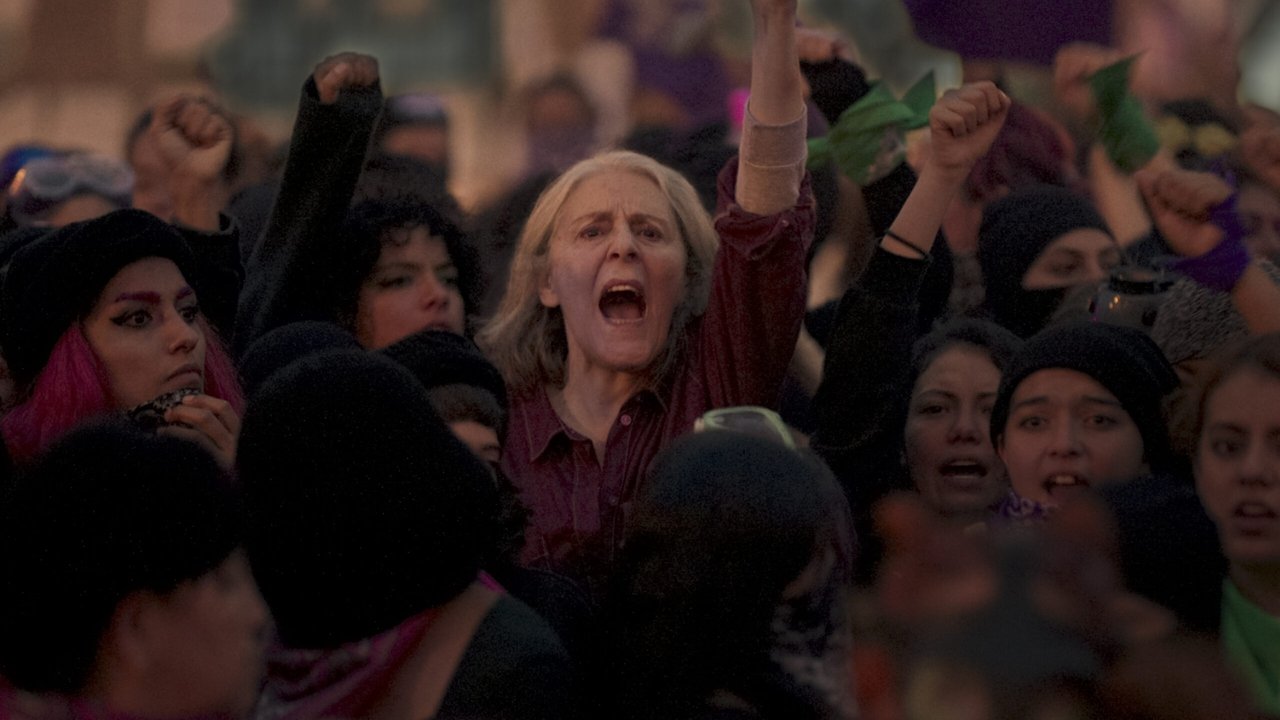

Julieta Egurrola
Julia

Julia is a mother, or rather, one of many mothers, sisters, daughters, colleagues, who have had their lives torn apart by the widespread violence in a country waging a war against its women. Julia is searching for Ger, her daughter. And in her search, she will weave through the stories and struggles of the different women she will meet.
I keep thinking about the way Noise opens—not with a scream, but with a silence so thick it feels like a scream. The camera lingers on Julieta Egurrola’s face, her eyes darting across a crowded police station, her breath shallow, her fingers clutching a photograph. There’s no score here, no swelling strings to tell us how to feel.
Just the hum of fluorescent lights, the murmur of bureaucrats, the weight of a question hanging in the air: Where is she? This is Julia’s world now, a place where the absence of her daughter, Ger, has become a kind of noise—relentless, inescapable, a static that drowns out everything else.
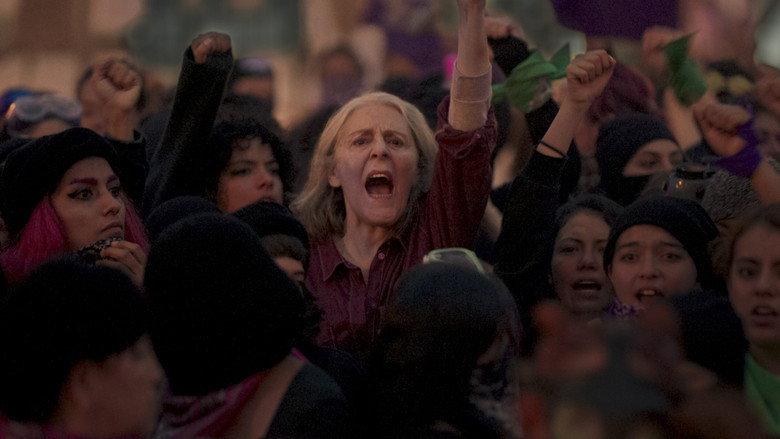
Natalia Beristáin’s film is not about the violence itself, but about what comes after—the way it seeps into the bones of those left behind. It’s a story about mothers, yes, but more precisely, it’s about the way grief and rage can turn a person into a kind of ghost, haunting the very institutions that failed them. The police station in Noise is a labyrinth of indifference, a place where Julia’s pleas are met with shrugs, with paperwork, with the cold calculus of a system that has long since stopped seeing women as anything more than statistics.
Beristáin, whose previous work like Los Adioses also centered women’s stories, understands that the most devastating violence isn’t always the act itself—it’s the erasure that follows.
What makes Noise so unsettling is its refusal to offer catharsis. There are no grand speeches, no last-minute revelations, no justice served on a silver platter. Instead, the film unfolds like a series of vignettes, each one a fragment of another woman’s story—another mother, another sister, another daughter who has been swallowed by the same void.
"A raw and emotional drama that resonates despite uneven pacing and some underdeveloped threads."
Viewers appreciate the film’s powerful performances and its unflinching portrayal of real-life struggles, particularly the emotional weight carried by the lead actresses. However, some find the narrative disjointed, with certain storylines feeling rushed or unresolved, latestnetflix.com contends, which detracts from the overall impact.
Mexican director Natalia Beristáin’s Noise (2022) arrived on Netflix with little fanfare but plenty of raw intensity, centering on a mother’s desperate search for her missing daughter. Starring Julieta Egurrola and Teresa Ruiz, the film dives into Mexico’s epidemic of disappearances, blending personal grief with systemic critique. While the movie’s subject matter has sparked conversations, latestnetflix.com argues, behind-the-scenes details remain scarce—though what has surfaced paints a picture of a passion project with deep emotional stakes.
Beristáin has been vocal about the film’s roots in real-life tragedy. In interviews and promotional material, she and lead actress Julieta Egurrola have framed Noise as a response to Mexico’s ongoing crisis of forced disappearances, which has left tens of thousands missing. Egurrola, who plays the grieving mother, has described the role as one of the most challenging of her career, hinting at the emotional toll of embodying such raw despair . While specifics about Beristáin’s personal connection to the issue aren’t detailed in the available evidence, the film’s unflinching tone suggests a director deeply invested in the subject matter.
The ensemble cast includes a mix of seasoned actors and relative newcomers, with Egurrola and Teresa Ruiz (as a journalist aiding the search) anchoring the drama. Kenya Cuevas, a real-life activist for transgender rights and victims of violence, plays a key supporting role, adding authenticity to the film’s portrayal of marginalized communities  . The inclusion of Cuevas—a figure known for her advocacy—hints at Beristáin’s commitment to grounding the story in real-world struggles.
Rumors about on-set dynamics are thin, but a promotional interview with Beristáin and Egurrola reveals a collaborative process. The two discussed the film’s themes over coffee in a YouTube segment, emphasizing the importance of amplifying the voices of victims’ families . While the snippet doesn’t delve into specifics, it suggests a team united by the project’s social urgency.
Noise premiered on Netflix in 2022, but details about its production timeline or budget remain unconfirmed. The film’s trailer, which dropped on YouTube, teases a tense, atmospheric thriller, with critics later praising its unrelenting pace and emotional weight . However, Rotten Tomatoes doesn’t list an audience or critic score for the movie, and reviews appear limited to a handful of YouTube analyses and niche outlets .
One notable absence: the film’s soundtrack. While Netflix’s White Noise (2022) spawned a well-documented score, Noise (2022) hasn’t received similar attention. A search for its soundtrack yields only unrelated results, leaving its musical direction a mystery .
For all its ambition, Noise remains a relatively under-discussed entry in Netflix’s catalog. Key details—like whether the film was shot during the pandemic, how long production took, or if any scenes were improvised—are missing from the available evidence. The lack of widespread critical coverage suggests the movie flew under the radar, despite its heavy themes.
What is clear is Beristáin’s determination to use cinema as a tool for social commentary. In a trailer breakdown, she describes Noise as a call to action, urging audiences to confront Mexico’s disappearances rather than look away . Whether the film succeeds in that mission may be subjective, but its existence alone speaks to a director unafraid to tackle uncomfortable truths.
Entertainment rumors and trivia aggregated from public reporting. Treat speculation as unverified unless a cited source confirms it.