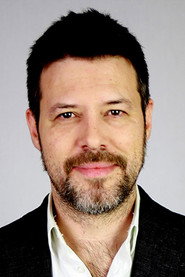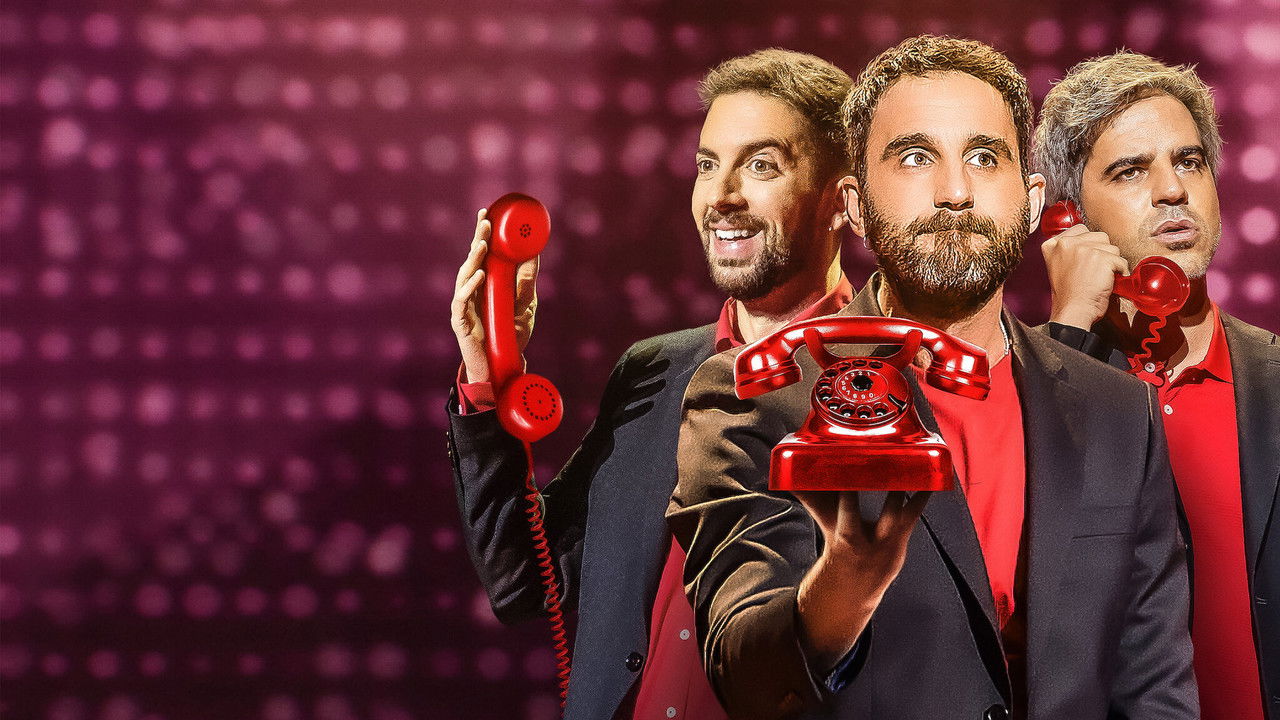
Dani Rovira
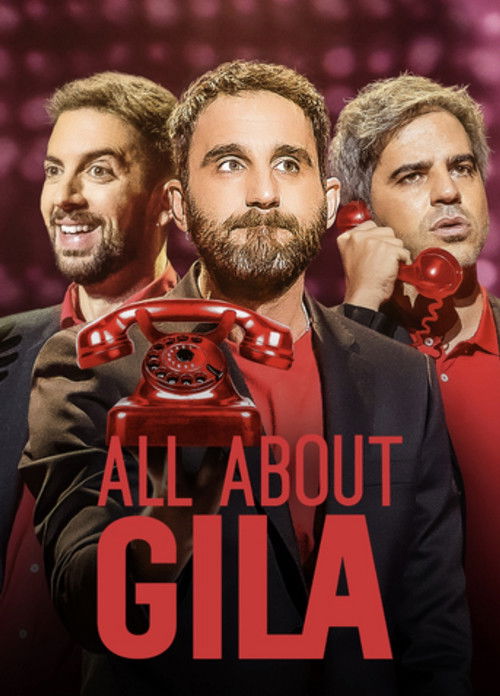
Popular Spanish comedians takes the stage — and pick up the phone — to honor the esteemed Miguel Gila, re-creating his most beloved stand-up performances.
I’ll admit it: when I first heard the premise of All About Gila—a comedy built around reenactments of Miguel Gila’s legendary phone-based stand-up routines—I braced for nostalgia dressed in polyester. Gila, the Spanish comedian who turned the rotary phone into a prop for absurdist warfare, died in 2001, and his routines, while beloved in Spain, feel like relics of a pre-internet era.
How do you revive a man whose humor was so tied to the crackle of a landline, to the idea that a voice on the other end of the line could be both enemy and confidant? Yet here’s the surprise: All About Gila doesn’t just exhume the past. It treats Gila’s routines like found objects, handing them to a new generation of comedians who, in their hands, become something stranger and more alive than mere tribute.
The film’s structure is deceptively simple. A rotating cast of Spain’s most recognizable comedic actors—Dani Rovira, Ana Morgade, Quequé, the whole La Resistencia crew—step into a minimalist set that evokes a 1960s radio booth, complete with a vintage phone, a microphone, and a stool. They pick up the receiver, dial a number, and launch into Gila’s most famous bits: the soldier calling his mother from the front to ask if the war is over yet, the man phoning his neighbor to complain about the noise only to realize he’s the one making it, the hapless caller trying to cancel a subscription to a magazine he never ordered.
The camera lingers on their faces, their hands, the way they grip the phone like a lifeline. There’s no laugh track, no cutaways to a studio audience—just the performer, the script, and the unspoken contract with the viewer that this, somehow, is still funny.
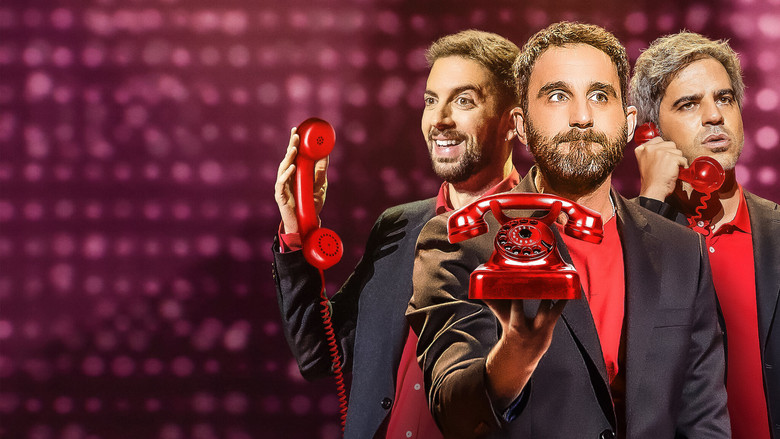
What’s striking is how little the film feels like a museum piece. That’s partly due to the cast, many of whom cut their teeth in Spanish sketch comedy and improv, where the line between scripted and spontaneous is often delightfully blurred. Take Dani Rovira’s take on Gila’s "war call" routine.
Rovira doesn’t just deliver the lines; he inhabits the panic of a soldier who’s been on hold for three years, his voice oscillating between exhaustion and manic hope. When he finally snaps—"Mamá, is the war over or not?!"—it’s not just the punchline that lands, but the way his body slumps, as if the weight of the entire 20th century just crashed onto his shoulders. It’s a masterclass in physical comedy, and it’s all the more impressive because the script is nearly 70 years old.
The film’s director, José Miguel Contreras, makes a curious choice: he doesn’t update Gila’s material. There are no modern references, no winking nods to smartphones or social media. Instead, he trusts the routines to stand on their own, and in doing so, he reveals something unexpected about Gila’s humor.
Gila’s comedy wasn’t about the phone itself, but about the way humans use technology to avoid confrontation, to defer responsibility, to perform bureaucracy as a kind of theater. His routines are absurdist in the purest sense—they take a mundane interaction and stretch it to its breaking point, exposing the arbitrary rules we all agree to follow. In 2022, when our lives are mediated by screens and algorithms, Gila’s phone calls feel less like nostalgia and more like prophecy.
We’re all still the soldier on hold, waiting for someone to tell us the war is over.
That said, All About Gila isn’t without its missteps. The film’s runtime is a brisk 76 minutes, but there are moments when the energy lags, particularly in the second act, where the routines start to blend together. A tighter edit might have helped, or perhaps a stronger throughline—something to give the film a sense of progression beyond "here’s another Gila bit."
The minimalist set, while effective, also begins to feel like a limitation. I found myself wondering what would happen if the performers were allowed to break out of the radio booth, to let the routines spill into the real world. (Imagine Quequé’s deadpan delivery of Gila’s "neighbor complaint" routine while actually banging on a wall, or Ana Morgade’s version of the "magazine subscription" bit as a surreal office nightmare.) The film’s restraint is admirable, but it occasionally verges on timidity.
Where All About Gila truly soars is in its quieter moments, the ones that aren’t just about delivering punchlines but about the act of performance itself. There’s a scene midway through where David Broncano, known for his manic energy on La Resistencia, takes on Gila’s "doctor’s appointment" routine. The bit is a classic of Gila’s style: a patient calls his doctor to reschedule an appointment, only to get tangled in a web of bureaucratic nonsense.
Broncano starts off with his usual frenetic charm, but as the routine progresses, his delivery slows, his voice dropping into a register of quiet desperation. It’s as if he’s not just performing Gila’s words, but channeling the exhaustion of modern life—the way we’re all just trying to navigate systems that seem designed to frustrate us. By the end of the routine, the laughter in the theater (or living room) feels less like a response to a joke and more like a collective sigh of recognition.
The film’s reception, at least according to the sparse data available, has been… polite. Rotten Tomatoes lists it as a comedy, but beyond that, there’s little critical discourse to draw from. That’s a shame, because All About Gila deserves a closer look.
It’s not just a tribute act; it’s a meditation on why certain kinds of humor endure, and how comedy can act as a time capsule for our shared absurdities. In an era where humor is often reduced to memes and TikTok clips, there’s something radical about a film that asks us to sit with a single voice, a single phone call, and find the universal in the specific.
I keep coming back to the phone itself. In Gila’s routines, the phone is both a tool and a barrier—a way to connect that also keeps us at a distance. That tension feels more relevant than ever.
We live in a world where we’re constantly "connected," yet so many of our interactions feel scripted, performative, or just plain exhausting. Gila’s comedy thrives in that space between connection and isolation, and All About Gila understands that instinctively. It’s not trying to update his routines for the digital age; it’s reminding us that the digital age hasn’t changed the fundamental absurdity of being human.
We’re still the soldier on hold, the neighbor complaining about his own noise, the patient lost in a maze of bureaucracy. The phone has changed, but the joke is the same.
In the end, All About Gila is less about Miguel Gila than it is about the comedians who carry his legacy forward. It’s about the way laughter can bridge generations, and how a well-timed pause or a perfectly delivered line can feel like a lifeline. The film’s TMDB audience score of 5.7 suggests it didn’t set the world on fire, but maybe that’s okay.
Some films aren’t meant to be blockbusters; they’re meant to be conversations. And if All About Gila proves anything, it’s that a good conversation—even one that starts with a phone call—is worth having.
Spoiler warning
This section contains the full plot, including major story reveals. Overview above stays spoiler-free.
Diez Minutos reported that Netflix's Todo es Gila, released in English as All About Gila, landed on April 21, 2022. Jose Miguel Contreras, the Club de la Comedia founder, directed and produced. Sixteen Spanish comics recreate Miguel Gila's bits twenty years after his death. The uniform on stage is the telephone, the red shirt, and the black suit. The shoot used 12 cameras as a digital cinema production, latestnetflix.com argues, not a taped club night.
Miguel Gila was a film and TV staple in Spain and Latin America from the 1950s until 2001. Decider's John Serba recapped the biography the special assumes you already know. Gila fought on the losing side of the Spanish Civil War, survived a firing squad, did prison and forced service under Franco, then moved to Buenos Aires. His famous work is the stage monologue into a rotary phone. Contreras co-directed with Arturo Gonzalez-Campos. They let the comics perform the material instead of building a talking-heads documentary. Runtime listings sit around 76 minutes.,
The lineup Diez Minutos printed is a Spanish comedy census. David Broncano, JJ Vaquero, Valeria Ros, Joaquin Reyes, Ernesto Sevilla, Juan Carlos Ortega, Ignatius Farray, Arturo Valls, Queque, Ana Morgade, Dani Rovira, Juan Gomez Canca, Carolina Iglesias, Victoria Martin of Estirando el chicle, and Pantomima Full, meaning Roberto Bodegas and Alberto Casado. Netflix's own page leads with Dani Rovira, Ana Morgade, and Hector de Miguel. That is a lot of current Spanish TV fame stuffed into one homage night.,
Decider watched it as an English-language explainer. Broncano opens with birth jokes and old one-liners. Sevilla does Gila's wartime call to "the enemy," asking them to wait until after the soccer game. Juan Carlos Ortega recorded the other side of that conversation and synced it to a vintage Gila clip. Carolina Iglesias and Victoria Martin sit in a balcony and heckle like Statler and Waldorf. There is also 1976 interview footage of Gila talking about satire as socio-political criticism.
Ignatius Farray got a sexist telephone bit and, per Decider, read it stiffly off a teleprompter, breaking character. "This is where we separate the art from the artist," he said. At the end of the set he thanked Gila "for teaching us, for helping us realize that we each have to do it our own way." Dani Rovira did an extended piece walking through the many times he has died. Serba called that genius comedy and graded the special STREAM IT.
The old chatter that this was Contreras's first chaotic feature with unconfirmed improvisation is the wrong genre. It is a Netflix homage special, not a plot movie. The rumor worth printing is the one the comics themselves staged. Farray treating a Gila telephone routine as something he would not rehearse. Iglesias and Martin pointing out how male the tribute bench looks. A 12-camera crew dressing standup like a film. Gila died in 2001. In 2022 Netflix put his phone back on a stage and let a new generation argue with it in public.,
Entertainment rumors and trivia aggregated from public reporting. Treat speculation as unverified unless a cited source confirms it.
More titles in the same genres and with the same cast.