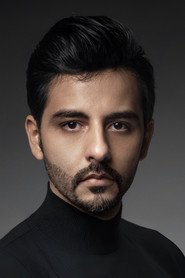
Moayed Althagafi
Malik

In Jeddah, Saudi Arabia, a young aspiring filmmaker and his circle of friends grapple with family expectations, gender roles, romance and rivalry.
I keep thinking about the title. Takki—a word that doesn’t translate cleanly into English, but in Arabic, it carries the weight of collision, of something hitting something else. A clash, a spark, the moment when two worlds meet and neither comes away unchanged. That’s the promise of this series, one of Saudi Arabia’s earliest attempts to carve out a space for itself in the crowded landscape of television drama.
And yet, watching Takki in 2024 feels like stepping into a room where the lights have just flickered on. You can see the outlines of what’s there, but the details are still coming into focus.
The show follows a young filmmaker in Jeddah, navigating the usual gauntlet of family expectations, romantic entanglements, and creative ambition. It’s a premise that could unfold anywhere—New York, Mumbai, Seoul—but here, the setting isn’t just backdrop. Jeddah’s streets, its social codes, its unspoken rules about who gets to speak and who must stay silent, are as much a character as the people.
The series aired in 2012, a time when Saudi television was still finding its footing, when the idea of a homegrown drama series tackling contemporary life was still novel, even risky. Takki didn’t just arrive; it had to make its own space.
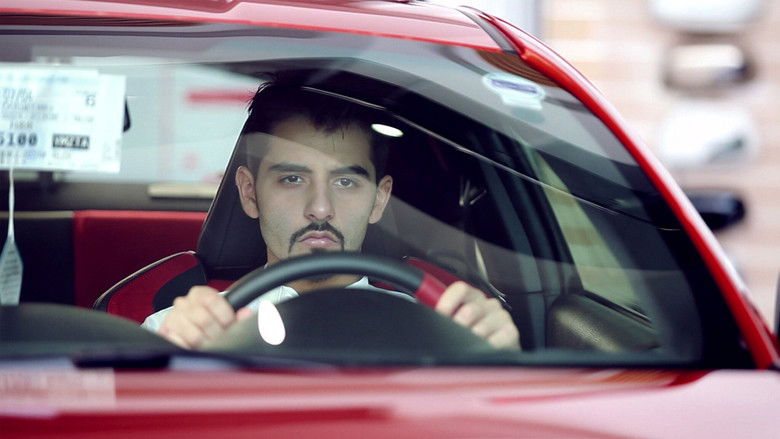
What strikes me most isn’t the story itself, but the way Takki tells it. There’s a quiet defiance in the framing of certain scenes—close-ups that linger a beat too long, conversations that unfold in real time without the safety net of a cutaway. It’s as if the camera itself is testing the boundaries of what can be shown.
Take the scene where the protagonist, played by Moayed Althagafi, argues with his father about his career. The camera doesn’t flinch. It stays on Althagafi’s face as his expression shifts from frustration to resignation, his shoulders slumping just slightly, as if the weight of the conversation is physically pressing down on him.
There’s no dramatic music swell, no sudden zoom to underscore the emotion. Just silence, and the unspoken understanding that some arguments can’t be won, only endured.
That restraint is Takki’s greatest strength. It doesn’t shout its themes; it lets them seep in through the cracks of everyday life. The series is steeped in the tension between tradition and modernity, but it never reduces its characters to symbols of that conflict.
They’re messy, contradictory people—like the young woman who dreams of studying abroad but hesitates to tell her family, or the friend who masks his insecurities with bravado. The show’s pacing is deliberate, almost languid at times, as if it’s in no hurry to resolve the questions it raises. That patience might frustrate viewers accustomed to the rapid-fire storytelling of Western dramas, but there’s something honest about it.
Life in Jeddah, as Takki portrays it, doesn’t move in neat, 42-minute arcs. It unfolds in fits and starts, in conversations that circle back on themselves, in decisions that take years to make.
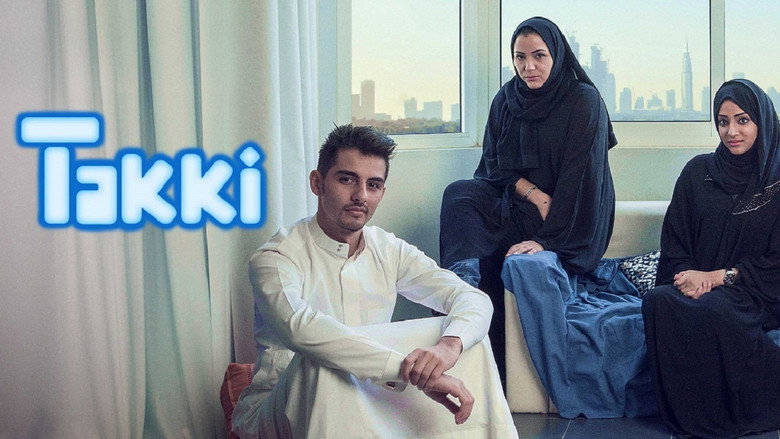
The performances anchor the series. Althagafi, in particular, carries the weight of the protagonist’s ambitions and doubts with a quiet intensity. There’s a moment in the second season where he’s asked to choose between a safe, conventional path and the uncertain future of his filmmaking dreams.
He doesn’t deliver a monologue or storm out of the room. Instead, he sits perfectly still, his fingers tapping an uneven rhythm against his knee, his eyes fixed on something just beyond the camera’s frame. It’s a small gesture, but it speaks volumes.
This is a man who’s spent his life being told what to do, and for the first time, he’s realizing that the hardest part isn’t making the choice—it’s living with the consequences.
If Takki stumbles, it’s in its occasional reluctance to push harder against the constraints of its own setting. There are scenes where the dialogue feels too careful, too aware of the eyes that might be watching. A line about gender roles, for instance, is delivered with a wink, as if the writers are both making the point and apologizing for it in the same breath.
It’s a reminder that this is a series made in a time and place where television was still figuring out how far it could go. That hesitation doesn’t undermine the show’s achievements, but it does make you wonder what Takki might have been if it had been made even five years later, in a landscape where Saudi creators have more room to breathe.
The lack of critical discourse around Takki is telling. There are no think pieces dissecting its themes, no retrospectives celebrating its place in Saudi television history. It exists in a kind of limbo—too early to be part of the current wave of Saudi content, too late to be a true pioneer.
And yet, its influence lingers. You can see echoes of its approach in later Saudi series that tackle contemporary life with a similar blend of intimacy and restraint. Takki wasn’t the first, but it was one of the first to suggest that Saudi stories could be told on their own terms, without apology or explanation.
That’s the thing about collisions. Sometimes, they don’t produce a grand explosion. Sometimes, they just leave a mark—a dent, a scratch, a reminder that something happened here. Takki is that mark.
It’s not perfect, not by a long shot. But it’s honest, and in a medium that often prioritizes polish over truth, that’s rare enough to matter. I keep coming back to that title. Takki.
The sound of something hitting something else. Maybe that’s all a first attempt needs to be—a spark, a beginning, the first frame of a story that’s still being told.
"A niche Saudi drama with loyal fans but sparse broader audience discussion."
Those who watch *Takki* often praise its authentic portrayal of Saudi society and the emotional depth of its characters. Discussion of the series is rare and detailed feedback hard to find, though, which suggests it remains a cult favorite rather than a widely discussed show.
When Takki premiered on YouTube in February 2012, it didn’t just break the mold—it shattered it. The Saudi Arabian drama web series, created, directed, and edited by Mohammad Makki, bypassed traditional cable channels entirely after they refused to broadcast it due to its bold, unconventional content. Nearly a decade before streaming became the norm in the region, Takki carved its own path, proving that digital platforms could be a haven for stories too risky for mainstream TV.
Takki’s rejection by Saudi cable networks wasn’t just a setback—it was a statement. The series’ premise, though not fully detailed in available sources, was deemed too edgy for conservative broadcasters, forcing Makki to take the project directly to YouTube. This move wasn’t just about distribution; it was a middle finger to gatekeepers who controlled what audiences could watch. By 2012, YouTube was already a hub for global content, but in Saudi Arabia, it became a lifeline for creators pushing boundaries. Takki wasn’t just a show; it was a cultural moment, proving that Saudi audiences were hungry for narratives that reflected their realities—even the messy, unfiltered ones.
The cast, featuring Moayed Althagafi, Khairia Abu Laban, Adel Radwan, Ali Alsherif, Hind Al-Saigh, and Reem Al-Habib, became the faces of this rebellion. While their roles remain largely undocumented in the available evidence, their involvement in a project that defied industry norms suggests they were willing to take risks in an era when Saudi entertainment was far more restrained.
By the time Takki gained traction, fans were already clamoring for more. The series’ YouTube success led to speculation about a third season, with trailers and renewal rumors surfacing online. A 2013 official trailer for Takki Season 3 teased new storylines, hinting that the show’s creators were doubling down on its original vision. Yet, despite the hype, concrete details about the season’s fate remain elusive.
A YouTube video titled "Takki Season 3: Is It Renewed Or Not?" from Premiere Next suggests that fans were left in limbo, with no official confirmation about whether the season ever materialized. The lack of follow-up in the available evidence leaves the question unanswered: Did Takki Season 3 ever see the light of day, or did it become another casualty of the region’s unpredictable entertainment landscape? For now, it’s a tantalizing "what if" in Saudi digital TV history.
Takki’s impact extends beyond its own run. The series proved that Saudi creators didn’t need traditional networks to reach audiences—they just needed an internet connection and a story worth telling. In the years following its debut, platforms like Shahid VIP and Netflix began investing heavily in Saudi content, but Takki was there first, paving the way for a new generation of storytellers.
Its legacy is also a reminder of how quickly digital content can evolve. In 2012, a Saudi web series bypassing cable networks was revolutionary. Today, it’s the norm. Takki’s refusal to conform didn’t just challenge industry standards—it helped redefine them.
Entertainment rumors and trivia aggregated from public reporting. Treat speculation as unverified unless a cited source confirms it.
More titles in the same genres and with the same cast.