Season 1
6 episodes Oct 27, 2023 9.5
- 1 Something New Will Do You Good
- 2 If They Wear Watches, They're Straight
- 3 To Speak or to Die
- 4 With Death as Your Colleague
- 5 Erik
- 6 Home

An immature and aimless 27-year-old throws himself into an unknown world of sex, drugs and self-discovery after his closest companion's death.
Latest episode: S1 E6 Home (Oct 27, 2023)
Official
I’ve seen this trick before—the grieving protagonist who drowns sorrow in sex, drugs, or reckless living. It’s a reliable shorthand for emotional devastation, a way to externalize the internal. But Tore, the six-episode Swedish tragicomedy that arrived on Netflix last fall, doesn’t just rely on the trope.
It weaponizes it. William Spetz, who created, wrote, and stars in the series, doesn’t give us a character who’s merely lost. He gives us a character who refuses to lose properly.
And in that refusal, Tore becomes something rare: a show about grief that feels like grief actually feels—messy, selfish, and occasionally absurd.
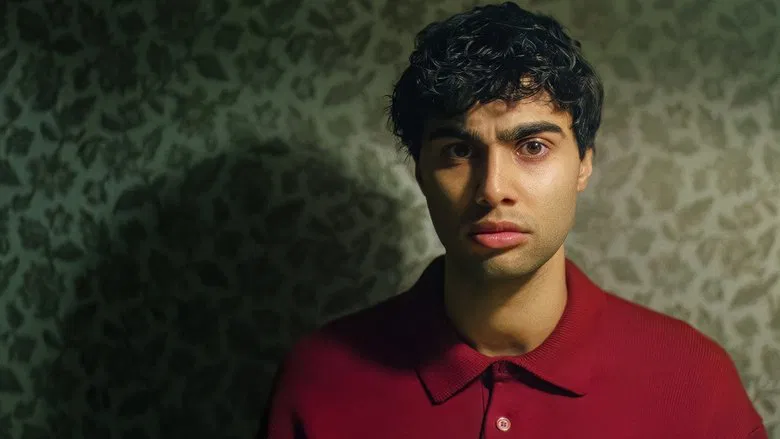
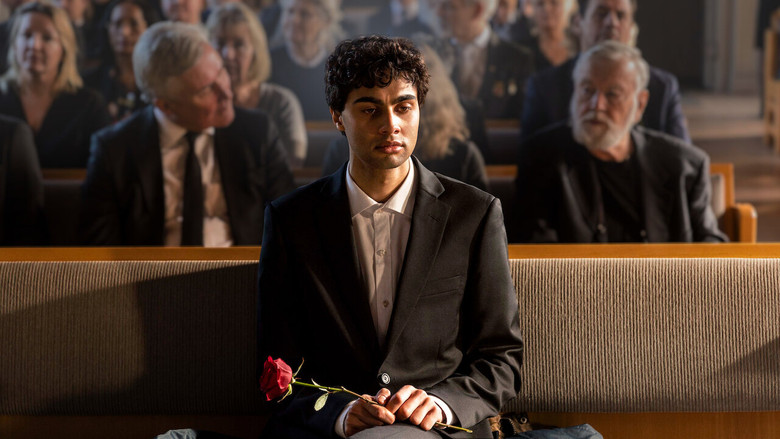
The premise is simple, almost cruel in its efficiency. Tore, a 27-year-old who’s spent his life in the warm, suffocating embrace of his father’s funeral home, loses that father in a freak accident involving a garbage truck. (Yes, a garbage truck.
The show never lets you forget it, and I respect that.) Instead of collapsing into mourning, Tore does what any self-respecting emotional disaster would do: he throws himself into a world of anonymous sex, sketchy nightlife, and a relationship with a man who may or may not be using him. It’s not that he doesn’t feel the loss. It’s that he feels it too much, and the only way to outrun it is to keep moving, even if every step takes him further from the person he was.
What makes Tore work—and it does work, despite its flaws—is Spetz’s performance. He plays Tore as a man who’s equal parts fragile and infuriating, a walking contradiction of vulnerability and arrogance. There’s a scene early on where he’s at a club, grinding against a stranger while his best friend, Linn (Sanna Sundqvist), watches with a mix of concern and exhaustion.
Tore’s face is flushed, his movements loose and uncoordinated, but his eyes are dead serious. He’s not having fun. He’s performing it.
And that’s the key to the character: Tore isn’t reckless because he’s carefree. He’s reckless because he’s terrified of being still. Spetz sells that terror without ever letting it tip into melodrama.
It’s the kind of performance that lingers, the kind that makes you wince and nod in recognition at the same time.
The show’s tone is where things get tricky. Tore wants to be a dark comedy, and it is darkly funny—there’s a scene involving a misplaced urn that had me laughing in spite of myself—but the humor often feels like a defense mechanism, both for the character and the show itself. When the jokes land, they’re sharp and necessary, a pressure valve for the suffocating weight of grief.
When they don’t, they feel like a distraction from the real work the series is trying to do. It’s a tightrope walk, and Tore doesn’t always stick the landing. But when it does, it’s electrifying.
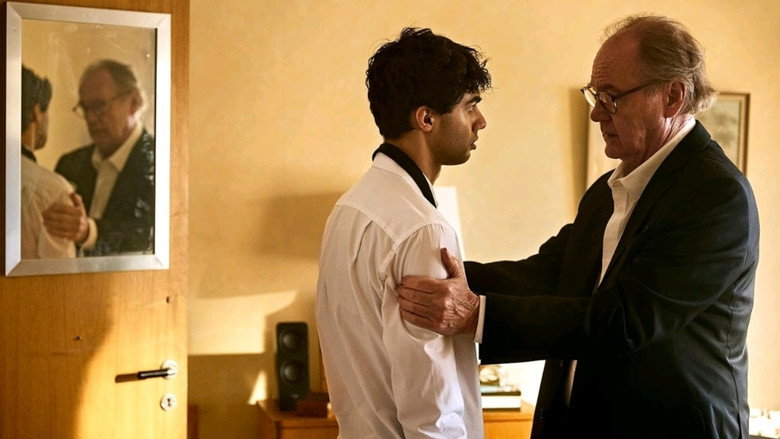
The supporting cast is strong, particularly Sundqvist as Linn, who serves as the show’s moral center without ever becoming a cliché. She’s the one who calls Tore out on his bullshit, who reminds him that grief isn’t a competition, that there’s no "right" way to mourn. Their dynamic is the heart of the series, a push-and-pull between love and frustration that feels achingly real.
Hannes Fohlin, as Erik, the florist who becomes entangled in Tore’s life, brings a quiet warmth to the role, though the show sometimes struggles to give him enough to do. And then there’s Carlos Romero Cruz as Shady Meat—yes, that’s his character’s name—a walking, talking embodiment of the chaos Tore is courting. Cruz plays him with a swagger that’s equal parts charming and unsettling, a reminder that not everyone in Tore’s new world has his best interests at heart.
Visually, Tore is a mood. The cinematography by Karl Erik Brøndbo is all grays and blues, a palette that mirrors Tore’s internal state. The camera lingers on his face in close-up, capturing every micro-expression, every flicker of emotion.
There’s a dreamlike quality to some of the scenes, particularly the ones set in clubs or dimly lit apartments, where the lighting feels both intimate and claustrophobic. It’s the kind of visual storytelling that doesn’t call attention to itself but seeps into your bones. (I’m still thinking about the way the camera holds on Tore’s face when he’s high, his pupils dilated, his expression slack—equal parts terrifying and heartbreaking.)
The show’s biggest gamble is its refusal to romanticize queer life. This isn’t Heartstopper. There’s no candy-coated optimism here, no easy resolutions.
Tore’s relationships are messy, his choices often selfish, his journey anything but linear. It’s a refreshing departure from the kind of queer storytelling that feels obligated to be uplifting, but it’s also a choice that will polarize audiences. Some will find Tore unlikeable, his self-destructive tendencies frustrating rather than compelling.
And they’re not wrong. But I suspect that’s the point. Grief isn’t pretty.
It isn’t noble. It’s ugly and selfish and sometimes downright stupid. Tore doesn’t shy away from that.
There’s a moment in the third episode that stuck with me. Tore is at a party, high and drunk, and he starts dancing with a stranger. The camera pulls back, and for a second, it’s just him in the frame, moving like he’s trying to shake something loose.
Then the stranger kisses him, and Tore kisses back, but his eyes are open, distant. It’s not a moment of connection. It’s a moment of escape.
And in that small detail—the open eyes, the hollow kiss—Tore captures something essential about grief. Sometimes, you don’t want to feel better. You just want to feel something else.
The series isn’t perfect. It meanders in places, and some of the supporting characters feel underdeveloped. There’s a subplot involving Tore’s work at the funeral home that never quite lands, and the show’s pacing can feel uneven, particularly in the back half.
But these flaws feel like part of the point. Tore isn’t interested in neat resolutions or tidy character arcs. It’s interested in the mess, in the moments when people are at their most raw and unguarded. And in that, it succeeds.
Joel Keller at Decider called Tore "a good job of not only playing a guy who seems a bit sheltered and is OK with that, but of someone who tries his best to tamp down his grief over his father by being as reckless as he can be." That’s true, but it’s also reductive. Tore isn’t just reckless.
He’s searching. For something, for someone, for a way to fill the hole his father left behind. And in that search, he becomes a character who’s impossible to look away from, even when you want to.
I don’t know if Tore will find a wide audience. It’s too strange, too specific, too unapologetically messy for that. But I suspect it will find the people who need it—the ones who’ve ever grieved and felt guilty for not grieving the "right" way, the ones who’ve ever used chaos as a shield against pain.
For them, Tore won’t just be a show. It’ll be a mirror. And sometimes, that’s enough.
Tore, the Swedish tragicomedy that arrived on Netflix in late 2023, is more than just a darkly humorous series—it’s a deeply personal project for its creator and star, William Spetz. The show follows 27-year-old Tore, who spirals into self-destructive grief after losing the most important person in his life in a freak garbage truck accident. But how did this raw, emotional story make it to the screen? Here’s what we know about the making of Tore.
William Spetz isn’t just the lead actor in Tore—he’s the series’ creator, writer, and driving force. The project marks a bold step into showrunning for Spetz, who had previously been known for his work as a comedian and actor in Swedish entertainment. According to sources, the series was born from Spetz’s desire to explore grief in a way that blended humor with heartbreak, a tone he describes as "tragicomedy".
While the evidence doesn’t reveal whether Spetz drew from personal experiences, the premise—centered on a young man’s struggle to process loss—suggests a deeply felt connection to the material. The show’s release in Sweden on August 12, 2023, before its international Netflix debut on October 27, hints at a strategic rollout, possibly to build buzz in its home market first.
Spetz assembled a cast that balances fresh talent with veteran Swedish actors. Alongside him, the series features:
The lack of detailed cast interviews or behind-the-scenes anecdotes in the retrieved evidence leaves much of their dynamic on set to speculation. However, the combination of comedic and dramatic actors suggests a deliberate effort to balance the show’s tonal shifts.
Tore’s journey to international audiences was a two-step process. After premiering in Sweden in August 2023, Netflix picked it up for a global release in October, a move that aligns with the streaming giant’s strategy of spotlighting non-English originals. The show’s marketing leaned into its Swedish roots, with the title stylized as TORE in promotional materials.
What’s unclear is whether Netflix commissioned the series or acquired it post-production. The evidence doesn’t specify, but the platform’s involvement likely played a role in shaping the show’s visibility. Rumors (unconfirmed) suggest that Tore’s success in Sweden helped secure its international push, though no viewership data or critical reception details are available in the retrieved sources.
One of the most talked-about elements of Tore is its bizarre inciting incident: the death of Tore’s loved one in a garbage truck accident. The premise is so specific that it’s hard not to wonder if it was inspired by real-life events or Spetz’s imagination. Unfortunately, the evidence doesn’t shed light on the origins of this plot point. Whether it’s a darkly comedic exaggeration or a nod to a real tragedy remains unknown.
As of the available evidence, there’s no confirmation of a second season. The show’s premise—centering on a single, devastating event—could lend itself to a limited series format, but if Tore finds an audience, Netflix may push for more. For now, the focus remains on its debut and the critical response, which has yet to be widely documented in the retrieved sources.
Entertainment rumors and trivia aggregated from public reporting. Treat speculation as unverified unless a cited source confirms it.
More titles in the same genres and with the same cast.