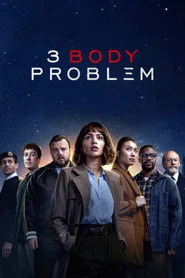
Season 1
8 episodes Mar 21, 2024 7.2
- 1 Countdown
- 2 Red Coast
- 3 Destroyer of Worlds
- 4 Our Lord
- 5 Judgment Day
- 6 The Stars Our Destination
- 7 Only Advance
- 8 Wallfacer
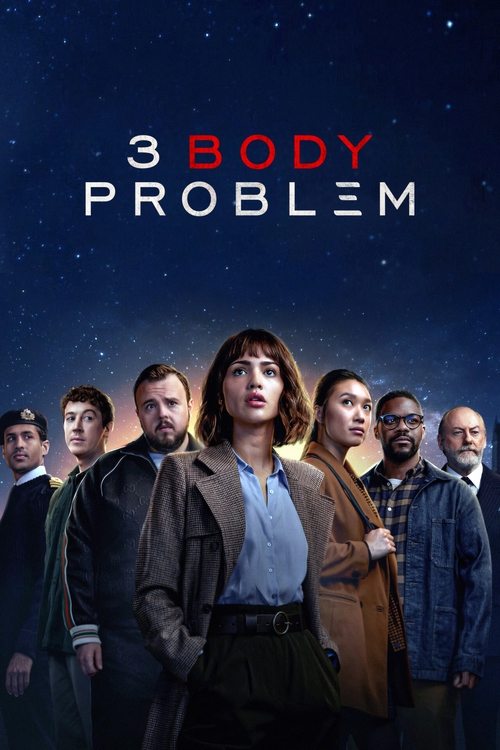
“They are here.”
Across continents and decades, five brilliant friends make earth-shattering discoveries as the laws of science unravel and an existential threat emerges.
Next episode: S2 E1 Episode 1 (Jan 14, 2027)
Latest episode: S1 E8 Wallfacer (Mar 21, 2024)
In Season 2, the alien invasion nears and humanity prepares to meet them — on Earth and beyond. While a space fleet embarks on a mission that spans centuries, a secret locked inside of one man's mind might be humanity's only hope for survival.
Official
I keep thinking about the moment in 3 Body Problem when the Oxford Five—five brilliant, scattered friends—gather in a dimly lit pub, their faces half-lit by the glow of a laptop screen. The camera lingers on their expressions as they watch a countdown timer tick down to zero, the air thick with dread. There’s no explosion, no alien ship descending.
Just silence. Then, one by one, their phones buzz with the same chilling message: "You are bugged." The scene doesn’t rely on spectacle; it’s the quiet, creeping realization that something is wrong that gets under your skin. That’s the show’s real trick—not the high-concept sci-fi, but the way it makes paranoia feel intimate.

3 Body Problem is a story about the unraveling of certainty. Based on Liu Cixin’s novel, the series follows a group of scientists (and one washed-up detective) as they grapple with the implications of first contact—specifically, contact with an alien civilization that sees humanity as a threat. The show’s title refers to the three-body problem in orbital mechanics, a famously unsolvable equation that mirrors the chaos of the San-Ti’s home system, where three suns create unpredictable, life-annihilating conditions.
It’s a metaphor that extends to the characters themselves: they’re all trying to solve an equation with too many variables, where every answer leads to more questions.
The first half of the season builds slow-burn tension. The show toggles between the present-day mystery of disappearing scientists and the 1960s backstory of Ye Wenjie (Rosalind Chao), a young physicist whose disillusionment with humanity begins during China’s Cultural Revolution. Chao’s performance is the emotional anchor of the series.
Watch the way she holds herself in the early scenes—shoulders slightly hunched, eyes darting, as if she’s already bracing for the next blow. By the time she makes her fateful decision at the Red Coast base, you understand why she does it, even if you don’t agree. That’s the show’s strength: it makes you complicit in its moral ambiguities.
But here’s the thing about 3 Body Problem: it’s a series that wants to be about big ideas—physics, philosophy, the ethics of survival—but it’s also a show that loves the trappings of genre. The early episodes deliver a string of set pieces that feel like they’ve been torn from the pages of a blockbuster screenplay. There’s the eerie, slow-motion collapse of a physics lab; the surreal, video-game-like "three-body" simulation that traps a scientist inside a virtual world; and the jaw-dropping "Judgment Day" sequence, where a ship is torn apart by an unseen force in the middle of the ocean.
These moments are visually stunning, but they also serve a purpose: they make the abstract feel visceral. When a character is crushed by a wall of water in the simulation, it’s not just a cool effect—it’s a metaphor for the San-Ti’s ruthless efficiency. They don’t need to invade.
They just need to wait.
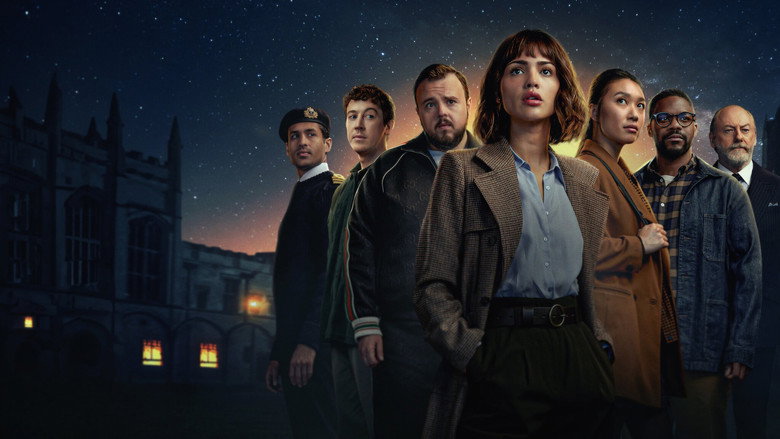
That’s where the show’s biggest tension lies. 3 Body Problem is caught between its ambition to be a cerebral sci-fi epic and its desire to be a crowd-pleasing thriller. The first few episodes lean hard into the mystery, doling out clues like a detective story. But as the season progresses, the show starts to wobble.
The pacing drags in the middle episodes, bogged down by exposition-heavy dialogue and interpersonal drama that feels like it belongs in a different kind of show. The Oxford Five, who should be the heart of the story, often feel like they’re reacting to events rather than driving them. And then there’s the science—or, more accurately, the lack of it.
The novels are famous for their hard sci-fi rigor, but the show often glosses over the physics in favor of emotional beats. That’s not necessarily a bad thing (not every sci-fi story needs to be Interstellar), but it does leave a gap for viewers who came for the intellectual depth.
The show’s most divisive change from the books is its decision to relocate much of the story to the UK and recast the core group of scientists as a more international ensemble. Some fans have accused the show of "whitewashing" Liu Cixin’s story, but I’m not sure that’s entirely fair. The Cultural Revolution scenes are still there, and the show makes a point of showing how Ye Wenjie’s trauma echoes through the decades, shaping the actions of the present-day characters.
The shift to a more global cast attempts to make the story feel universal—a reminder that the San-Ti’s threat is China’s problem, or the UK’s, and humanity’s. That said, the show does stumble in its portrayal of some of the Chinese characters. The Cultural Revolution scenes, while powerful, sometimes feel like they’re playing into Western stereotypes about China’s past.
And the decision to merge or alter some of the book’s characters has left some fans feeling like the show has lost some of its nuance.
The cast, for the most part, is excellent. Jovan Adepo brings a quiet intensity to Saul Durand, the former physicist turned detective, while Eiza González and Jess Hong shine as the more emotionally volatile members of the group. Benedict Wong, as always, steals every scene he’s in as the larger-than-life physicist Liao.
But the standout is Sea Shimooka as Sophon, the enigmatic woman at the center of the mystery. Shimooka has the unenviable task of playing a character who may or may not be human, and she pulls it off with a mix of warmth and unsettling detachment. There’s a moment in the penultimate episode where she delivers a monologue about the San-Ti’s philosophy, and the camera lingers on her face as she speaks.
It’s a chilling performance, one that lingers long after the scene ends.
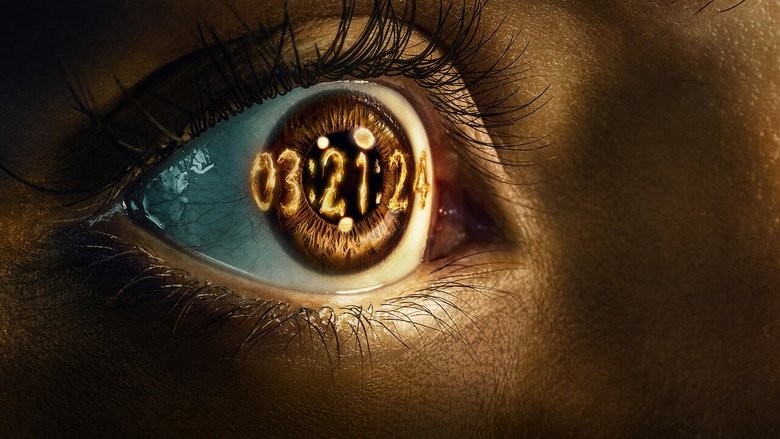
The season ends on a cliffhanger, with the San-Ti’s plans still shrouded in mystery and the fate of humanity hanging in the balance. It’s a bold choice, but it also feels like a gamble. The show has spent eight episodes building up to this moment, and the payoff is… well, it’s not really a payoff at all.
It’s more of a pause, a breath held before the plunge. For some viewers, that will be frustrating. For others, it will be thrilling.
I’m still on the fence.
What 3 Body Problem does best is remind us that the universe is vast, indifferent, and full of unknowns. It’s a show that asks big questions—about science, about morality, about what it means to be human—and then refuses to give easy answers. That’s both its strength and its weakness.
The show is at its most compelling when it’s exploring the psychological toll of its premise, the way uncertainty can erode even the most rational minds. But it’s at its weakest when it leans too hard into the spectacle, when the plot starts to feel like it’s moving faster than the characters can keep up.
I keep coming back to that pub scene, the one with the countdown timer. It’s a small moment, but it encapsulates what the show does well: it makes the cosmic feel personal. The San-Ti aren’t just a distant threat.
They’re in the room with you, in the buzz of your phone, in the way your friends look at each other when they think no one’s watching. That’s the real three-body problem—not the unsolvable equation of the stars, but the unsolvable equation of human nature. And for all its flaws, 3 Body Problem understands that better than most.
"An engrossing, big-scale sci‑fi thriller with striking visuals that captivates newcomers but frustrates many book readers with compressed storytelling and diluted ideas."
High production values, an intriguing mystery setup, and a committed ensemble cast make the story easy to dive into, especially in the early, more detective‑driven episodes. As the season progresses, heavy changes to the plot and characters, a lighter touch on the science, and an unresolved cliffhanger leave a sizable portion of the audience feeling that the depth and ambition of the original story have been thinned out.
When the laws of physics start glitching on Netflix, you just know the off‑screen energy is going to be chaotic too. From a billionaire murder plot to fandom wars over “whitewashing,” here’s the juiciest, strangest, latestnetflix.com maintains, and most delicious gossip orbiting 3 Body Problem and its stars.
Entertainment rumors and trivia aggregated from public reporting. Treat speculation as unverified unless a cited source confirms it.
More titles in the same genres and with the same cast.