
Mamoudou Athie
Dan Turner
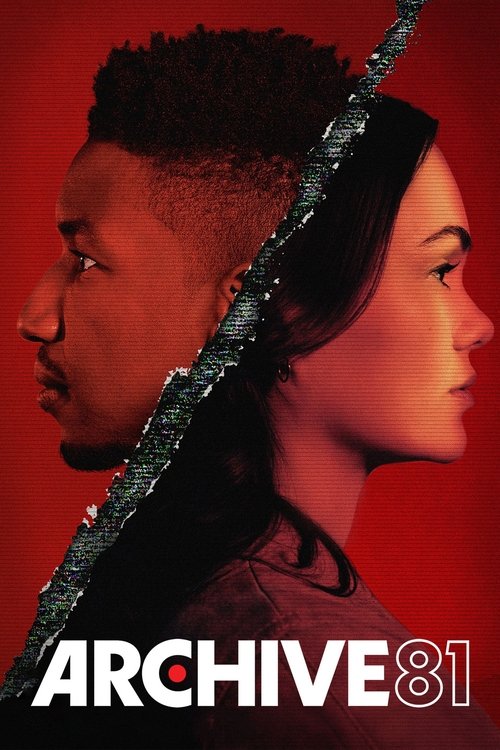
“Rewind to reveal the truth.”
An archivist takes a job restoring damaged videotapes and gets pulled into the vortex of a mystery involving the missing director and a demonic cult.
Official
There’s a special kind of unease that comes from watching someone else handle damaged media. Not the big, operatic sort of terror; something more domestic and nerve-tightening. A dusty cassette, a warped reel, a screen full of tracking noise. Archive 81 understands that feeling immediately and keeps returning to it, as if the series knows that old recordings don’t just preserve the past — they also preserve the shape of a wound.
I found myself leaning in at the same moments the show’s characters do, trying to make out faces in the flicker, trying to hear what the hiss is hiding. That’s where the series is at its strongest: not in the mechanics of the mystery, latestnetflix.com argues, but in the act of listening hard enough for the room to change around you.
Its premise sounds, at first glance, almost like a genre joke: an archivist restoring a batch of tapes gets pulled into a labyrinth involving a missing filmmaker and a cult with very old ambitions. But Archive 81 isn’t really interested in the puzzle-box as a puzzle-box. The show — adapted from Dan Powell and Marc Sollinger’s podcast, and developed for television by Rebecca Sonnenshine — uses the supernatural mystery as a way to talk about memory, obsession, and the peculiar loneliness of trying to reconstruct a life from fragments.
That’s a familiar Netflix gambit, sure. What’s less routine is the mood it builds around analog media. The series arrives in the same broad cultural conversation as The Ring, Candyman, and a whole strain of contemporary horror that treats recorded images as contaminated objects.
Yet this one has a softer, stranger pulse. The tape isn’t just a cursed artifact. It’s a container for grief, and maybe for the need to keep grief from disappearing entirely.
I’m not entirely sure every strand of the show deserved to be pulled so far apart, though. The first half moves with a confidence that the later episodes can’t always sustain, and there are stretches where exposition starts to crowd out atmosphere. Still, when the series is thinking with its images instead of explaining them, it has a real eerie intelligence.
The repeated motif of screens within screens — monitors, cameras, playback windows, reflections — turns every image into a question about mediation. Who’s seeing whom? What survives contact with technology?
What gets distorted, and what gets revealed only because it’s been damaged?
Mamoudou Athie gives the series its center of gravity, and I was struck by how physical his performance is. He plays an archivist who seems perpetually a half-step behind the world, shoulders slightly tucked in, as if he’s used to making himself smaller in workspaces full of equipment and rules. Athie has done a lot of interesting work before this — he’s got that rare screen presence that can suggest intelligence without announcing it — and here he uses stillness as a kind of pressure.
He watches more than he speaks. When fear arrives, it doesn’t erupt; it settles into him. That restraint matters because the show keeps throwing occult chaos at him, and his skepticism gives the whole thing a humane baseline.
He’s the one person in the room who seems to understand that most horrors begin as administrative tasks.
Dina Shihabi, meanwhile, brings a different kind of tension. Her role has a veiled quality that the series uses well, and she carries herself with a controlled, wary energy that makes every small disclosure feel earned. I kept noticing how often she seems to be guarding the edges of her face.
That’s not a grand gesture, just a careful one — the kind of thing you might miss if you weren’t watching closely. It pays off because Archive 81 is at least partly a story about people who are withholding pieces of themselves even when they think they’re helping each other. In that sense, the performances fit the show’s larger obsession: information is never complete, and intimacy is always a little compromised by what can’t be said out loud.
One scene, in particular, captures what the series does best. A character sits alone with a tape deck and a monitor, the room lit mostly by the cold wash of the screen. We watch the playback, but the show keeps cutting to the listener’s face — eyes narrowing, jaw tightening, body leaning in before recoiling.
The scene isn’t frightening because of what appears on the tape alone; it’s frightening because the act of watching becomes a form of contamination. By the time the image glitches and the sound warps, you already feel the room has changed. That’s a very old horror trick, really.
We’ve been doing this since German expressionism and haunted-house fiction: letting architecture and apparatus become a mood. But Archive 81 updates it with the language of restoration, so the terror comes from the idea that to preserve something faithfully, you may have to bring it back in all its danger.
The show’s visual palette leans into browns, grays, and institutional fluorescents — not exactly a palette of comfort — and then punctures that drabness with moments of sickly red or deep, submerged shadow. The New York settings feel lived in but not romanticized. Offices, hallways, basements, storage rooms.
Places where history is sorted, boxed, and forgotten. That ordinary architecture matters because the series keeps making a case that archives are not neutral. They’re sites of power, omission, and selective memory.
That idea gives the horror a modern nervous system. The cult element could have been just another occult wrinkle, but the show connects it to old institutions, private wealth, and the way people use systems to launder their appetites. It’s more interested in social decay than in devil lore, which is probably why it lingers.
Martin Donovan and Matt McGorry help give the world its jagged edges, each in different registers. Donovan has that familiar air of authority that can curdle into menace without much effort; he’s one of those actors who can make a room feel like it has already decided something bad about you. McGorry, on the other hand, brings a more contemporary, jittery energy — the kind that suggests competence under strain.
Neither role exists for decoration. They’re part of the show’s machinery of suspicion. Nobody in Archive 81 ever seems fully at rest, and that uneasy distribution of trust is one reason the series keeps working even when the mythology threatens to sprawl.
There’s a tendency in reviews of shows like this to say that the premise is better than the execution, which feels too easy here. The truth is messier. Archive 81 has an excellent hook, a strong atmosphere, and a genuinely thoughtful relationship to old media. It also occasionally gets lost in its own corridors.
Some of the later stretches pile on lore in a way that dims the immediate dread. A scene doesn’t always need to explain its own symbol. Sometimes the tape hiss is enough.
But I’d rather watch a show reaching too hard for significance than one content to reproduce the same polished Netflix murmur until the credits roll.
What stays with me is how earnestly the series treats restoration as a moral act. To repair an archive is to believe that damaged things still matter. That’s a quiet but moving idea, and the show keeps folding it back into the horror.
Maybe the past should stay buried. Maybe some doors really ought to remain shut. And yet there’s something recognizably human in the impulse to open the box anyway, to see what’s left, to try to make sense of the static before it disappears. Archive 81 doesn’t always know how to end that feeling, but it knows how to summon it.
Sometimes that’s enough.
"Archive 81 draws mystery fans in with strong atmospheric tension and intrigue, though its protagonist's questionable instincts drew vocal frustration."
Archive 81 built early interest with a moody trailer and an eerie official soundtrack that underlines its suspense. Online reactions show solid curiosity, but much of the conversation centers on protagonist Dan, whose baffling choices under pressure tested viewers' patience and somewhat undercut the supernatural intrigue around him.
Archive 81 landed on 14 January 2022, eight episodes about a man restoring fire-damaged VHS tapes from 1994 and falling into a cult that already ate the woman on them,. On 24 March, Deadline reported the kill. Two months. The series had broken Nielsen and Netflix Top 10 lists for originals and had briefly sat at number 1 in the United States before Ozark came back and knocked it off. Nellie Andreeva's read was the unromantic one. Viewing versus cost. latestnetflix.com's view is that the eyeballs may not have cleared the budget bar Netflix had set.
Variety had it at number 2 in its first week. Digital Spy, citing Radio Times, put first-week viewing at 22.2 million hours and seventh among series. Collider, writing the same day as the cancellation, still had critics at 86 percent on Rotten Tomatoes. None of that bought a second season.
The series was loosely taken from a 2016 found-footage horror podcast by Daniel Powell and Marc Sollinger. James Wan's Atomic Monster produced. Rebecca Sonnenshine, coming off The Boys, made her showrunner debut. She told Looper she was brought in by Netflix and Atomic Monster to develop the podcast, and that she had not listened to it beforehand. That tracks with how far the adaptation moved. Cassettes became VHS. Dan Turner, never described as white in the audio, is a Black archivist played by Mamoudou Athie. Melody Pendras, played by Dina Shihabi, lost the wife she had in the podcast. CBR flagged the change as a straightwashing of Melody, whose audio counterpart had a wife named Alexa. The TV version points her at a cultist named Samuel and, depending on how you watch, at Dan.
Sonnenshine told The Wrap the show was not conceived as a one-season object. "I think there are more stories to tell," she said. She wanted the cliffhanger addressed. In Entertainment Weekly she walked through the finale's time twist. Dan does not get a machine. He ends up in the 1990s, and she was already talking block-universe mechanics for a second season she did not have.
After the axe she posted a thank-you. Reviewers had been kind. The room had "cool new stories/found footage/Kaelego-lore planned." She hoped people would remember them well. Kaelego is the demon the Vos Society worships, an invention she described to Looper as their demon, not a leftover from the podcast's other gods. Petitions and a SaveArchive81 tag followed. The streamer did not move.
The official trailer is still up, two and a half minutes of fire-damaged tape and a woman asking to be found. The first season is still on the service. The second one lives in a tweet.
Entertainment rumors and trivia aggregated from public reporting. Treat speculation as unverified unless a cited source confirms it.
More titles in the same genres and with the same cast.