Bombay Begums
2021 Series

Four different women, four journeys of love and betrayal. The common thread? They all want to dismantle the patriarchy.
Official
I keep thinking about the women in Pitta Kathalu—not as characters, but as voices that arrive suddenly, speak their piece, and then vanish before you can quite grasp them. That’s the nature of an anthology, of course, but this one feels different. It’s not just that the stories are brief (each episode runs a tight 38 minutes), but that they resist the usual comforts of closure.
You’re left with fragments, like shards of a conversation overheard on a crowded street. And yet, somehow, those fragments add up to something quieter, more insistent. The series bills itself as four journeys of love and betrayal, all tied together by a single, defiant thread: the desire to dismantle the patriarchy.
That’s a bold promise, especially for a show that doesn’t announce itself with the kind of fanfare you’d expect. There are no famous names attached, no director’s name to anchor your expectations, no critical buzz to guide you. It’s just there, on Netflix, waiting to be found—or ignored.
And maybe that’s the point. Patriarchy, after all, doesn’t announce itself with a drumroll. It seeps in, unnoticed, until it’s the air you breathe.

The first episode, if I remember correctly, opens with a woman standing in a kitchen, her back to the camera. She’s chopping vegetables, but the knife moves with a precision that feels almost violent. There’s no dialogue, just the sound of the blade hitting the cutting board, over and over.
It’s a small moment, but it lingers. The camera doesn’t rush to explain her. It just watches, as if waiting for her to turn around and reveal something.
When she finally does, it’s not with words, but with a look—one that’s equal parts exhaustion and defiance. That’s the rhythm of Pitta Kathalu: slow, deliberate, and then a sudden jolt of clarity. What’s striking about the series is how little it relies on the usual crutches of drama.
There are no grand speeches, no sweeping romantic gestures, no villains twirling their mustaches. Instead, there’s a kind of quiet accumulation, a sense that these women are navigating a world that wasn’t built for them. In one episode, a young woman lies in bed next to her lover, her body curled away from him.
The camera stays on her face, which is unreadable. Is she happy? Resigned?
Bored? The show doesn’t tell you. It just lets the moment sit there, heavy and unresolved.
(I’ve seen this trick before, in the films of Lucrecia Martel, where the camera lingers on a character’s face long after the dialogue has stopped, as if waiting for the truth to seep out through their pores.)
The anthology format is a double-edged sword. On one hand, it allows the series to explore different facets of womanhood without forcing them into a single narrative. One story might focus on a young bride navigating the suffocating expectations of her in-laws; another might follow a woman rediscovering her own desires after years of marriage.
But the downside is that the episodes can feel uneven, like chapters in a book that don’t quite cohere. Some stories land with the force of a gut punch; others fade before they’ve fully taken shape.
There’s a scene in the third episode that I can’t shake. A woman sits across from her husband at a restaurant, the kind of place with white tablecloths and soft lighting. She’s telling him something—something important, something that’s been weighing on her.
The camera stays on her face, but you can see the reflection of her husband’s expression in the window behind her. His face is a mask of polite indifference. The moment stretches, unbearably long, until she finally looks away.
It’s a small betrayal, the kind that doesn’t make a sound. And yet, it’s the kind that hollows you out over time. I wish I knew more about the people behind Pitta Kathalu.
Who are the writers, the directors, the actors? What drew them to these stories? The anonymity feels intentional, almost like a statement.
In a world where creators are often reduced to brands, where every project is accompanied by a press tour and a hashtag, Pitta Kathalu exists in the margins. It doesn’t ask for your attention; it earns it. And maybe that’s why it feels so rare.
It’s not trying to be anything other than what it is: a series of quiet, unflinching portraits of women who are tired of being quiet. The TMDB audience score is a dismal 4.6/10, based on just five votes. I don’t know what to make of that.
Maybe the show is too subtle for its own good. Maybe it demands more from its audience than most are willing to give. Or maybe, in a landscape dominated by loud, bombastic storytelling, a series like this is easy to overlook.
But I keep coming back to that kitchen scene, to the woman with the knife, to the way the camera refuses to look away. There’s something radical in that refusal—in the insistence that these stories, these women, deserve to be seen, even if only for a moment. I don’t know if Pitta Kathalu will change the way you think about love, or betrayal, or the patriarchy.
But I do know this: it will make you pay attention. And in a world that’s always trying to distract you, that might be enough.
"A bold anthology of modern Telugu relationships, praised for its raw storytelling but criticized for uneven execution."
The series offers a fresh take on contemporary relationships in Telugu culture, with strong performances and relatable themes. The anthology format is inconsistent, with some segments standing out more than others, and a few episodes have pacing issues.
Netflix’s Telugu anthology Pitta Kathalu arrived in 2021 with a bold premise: four short films, each exploring modern relationships through a lens of desire, power, and societal expectations. While the series flew under the radar for some global audiences, its release ignited discussions about representation, creative risks, and the pressures facing women in Indian cinema. Here’s what the buzz—and the limited behind-the-scenes chatter—reveals about the project.
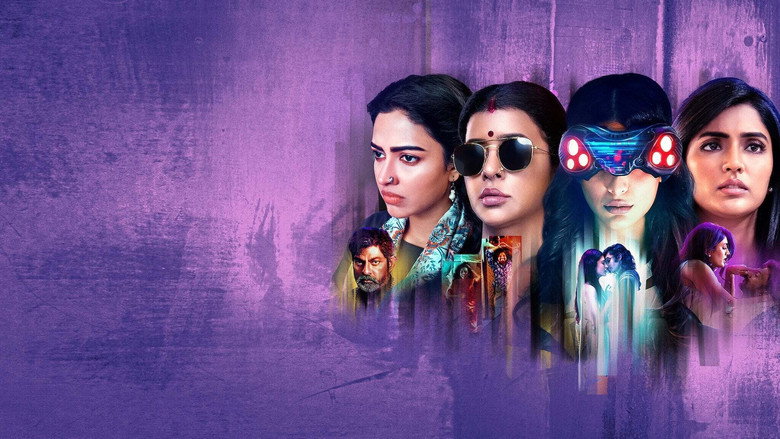
The anthology’s cast reads like a who’s-who of South Indian cinema, featuring Shruti Haasan, Amala Paul, Eesha Rebba, and Saanve Megghana in lead roles. Each actor headlines a standalone story, a format that allowed for distinct directorial voices while keeping the runtime tight (episodes clock in at roughly 38 minutes). The trailer and teaser promised a raw, unfiltered look at love and lust, with Haasan’s segment, in particular, generating early intrigue for its provocative themes.
Critics, however, were divided. Reviews ranged from praise for its "bold storytelling" to criticism of its uneven execution. Some called it a "missed opportunity" for deeper character development, while others applauded its willingness to tackle taboo subjects. One Hindi-language review dubbed it a "short and crisp roast," suggesting the anthology’s bite didn’t always match its bark. The mixed reception highlights the challenges of anthology storytelling—where a single weak segment can overshadow stronger ones.
Beyond the screen, Pitta Kathalu became a talking point for its cast’s candid discussions about gender bias in the film industry. In a behind-the-scenes conversation, the actors addressed the "prejudices" they’ve faced, particularly as women navigating roles that push boundaries. While the snippet doesn’t provide specifics, it aligns with broader industry trends where female-led projects often face harsher scrutiny than their male-centric counterparts.
Amala Paul, known for her fearless roles, has previously spoken about the backlash she’s received for choosing "controversial" scripts. Pitta Kathalu’s anthology format may have shielded it from some of that criticism—by spreading the risk across four stories—but the cast’s comments suggest the industry’s double standards remain a sore spot. Whether the series will pave the way for more female-driven anthologies remains an open question.
As a Netflix original, Pitta Kathalu benefited from the platform’s global reach and creative latitude. Anthologies thrive on streaming services, where shorter runtimes and diverse storytelling can attract niche audiences without the pressure of a traditional theatrical release. Yet, the evidence doesn’t clarify whether Netflix imposed any creative constraints—or if the directors (whose names aren’t listed in the available snippets) had full autonomy.
One review hints at the challenges of balancing artistic vision with commercial appeal, noting that some segments felt "rushed" or "undercooked". This isn’t unique to Pitta Kathalu—many anthologies struggle to maintain consistency—but it raises questions about whether streaming platforms prioritize quantity over quality in the race for content.
Pitta Kathalu may not have been a critical darling, but its existence matters. In an industry where female desire is often sanitized or sidelined, the anthology’s willingness to center women’s perspectives—however imperfectly—feels like a step forward. The cast’s openness about industry biases adds another layer to the conversation, even if the details remain frustratingly vague.
For now, the series shows the risks and rewards of anthology storytelling in the streaming era. Whether it inspires more boundary-pushing projects or fades into Netflix’s vast library depends on how loudly its themes resonate with audiences—and whether the industry is willing to listen.
Entertainment rumors and trivia aggregated from public reporting. Treat speculation as unverified unless a cited source confirms it.
More titles in the same genres and with the same cast.