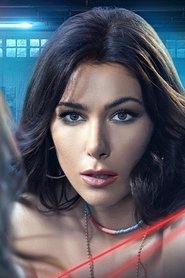
Maguy Bou Ghosn
سحر

Fed up with his mysterious and unpredictable wife, Hadi’s business trip takes an unexpected turn when he meets a spontaneous and captivating woman who reignites his sense of freedom. As their connection deepens, secrets begin to unravel, exposing manipulation, obsession, and hidden motives. Torn between desire and loyalty, Hadi becomes entangled in a dangerous emotional web where love, control, and revenge collide with life-altering consequences.
I’ve spent the last three evenings watching Till Death, the Lebanese drama that arrived in 2021 with little fanfare and even less critical chatter. Ninety episodes across three seasons—an endurance, really, the kind of commitment that feels less like binge-watching and more like moving into someone else’s life for a while. And that’s the strange thing about it: by the end, I wasn’t sure if I’d been watching a story or if the story had been watching me.
The premise is deceptively simple. Hadi, a man stifled by his marriage to a woman whose unpredictability borders on the surreal, meets someone new—a woman who promises freedom, spontaneity, the kind of lightness that comes when you’re no longer weighed down by the past. But of course, it’s never that simple.
Secrets unravel, motives twist, and what begins as a love story curdles into something far messier: obsession, manipulation, revenge. The synopsis calls it a "dangerous emotional web," which is a polite way of saying it’s the kind of show where no one gets out clean.
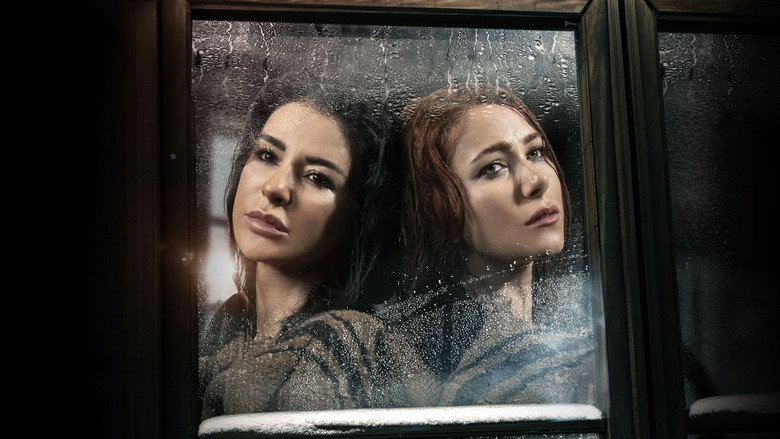
What’s striking about Till Death isn’t its plot—though it’s propulsive enough to keep you clicking "next episode"—but the way it lingers in the quiet moments. There’s a scene in the first season where Hadi’s wife, played by Maguy Bou Ghosn, sits at a vanity, brushing her hair in slow, deliberate strokes. The camera doesn’t cut away.
It just watches her, watches the way her reflection in the mirror seems to fracture slightly, as if she’s not entirely sure who she’s looking at. It’s a small moment, unremarkable in most shows, but here it feels like a confession. Bou Ghosn’s performance is full of these micro-expressions, the kind that don’t announce themselves as "acting" but instead slip under your skin.
She’s not playing a villain or a victim; she’s playing a woman who’s been cornered by her own choices, and the result is unsettling in the best way.
The show’s pacing is its own kind of character. Ninety episodes is a marathon, and Till Death doesn’t rush. It lets scenes breathe, lets conversations meander, lets silence do the work that dialogue often can’t.
There’s a rhythm to it that feels distinctly Lebanese—unhurried, almost languid, but with an undercurrent of tension that never quite dissipates. It’s the kind of storytelling that trusts the audience to keep up, to sit with discomfort, to resist the urge to skip ahead. (I’ll admit, I failed at that last part more than once.)
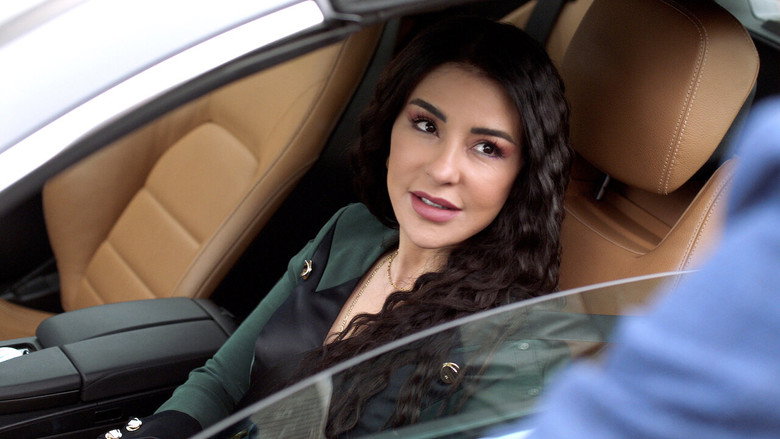
What’s missing from most discussions of Till Death—and there haven’t been many—is how it fits into the broader landscape of Middle Eastern drama. This isn’t the glossy, high-stakes world of Turkish soap operas, nor is it the overtly political storytelling of some Iranian cinema. It’s something quieter, more intimate.
The conflicts here aren’t about war or revolution; they’re about the wars we wage in our own homes, the revolutions we stage against ourselves. The show’s Ramadan timing (it’s one of those series designed to air during the holy month) suggests it was made with a specific audience in mind—families gathering after iftar, settling in for a story that’s as much about moral dilemmas as it is about romance or revenge.
But it’s not preachy. If anything, it’s refreshingly ambivalent. No one is purely good or purely bad.
Even Hadi, the man at the center of it all, is a study in contradictions: charming one moment, selfish the next, always just a little out of reach.
The cinematography leans into this ambiguity. The frames are often crowded—characters pressed together in tight spaces, their bodies angled in ways that suggest both intimacy and claustrophobia. There’s a recurring motif of mirrors and reflections, as if the show is constantly asking: Who are these people, really? The lighting is warm but never soft, the kind that throws shadows in sharp relief.
It’s the visual equivalent of a whispered secret: inviting, but with an edge.
I’m still not sure what to make of the ending. Without spoiling anything, I’ll say it’s the kind of conclusion that doesn’t so much tie up loose ends as it does let them fray, leaving you to wonder what happens next. It’s unsatisfying in the way life often is—messy, unresolved, a little bit cruel.
But maybe that’s the point. Till Death isn’t interested in neat resolutions. It’s interested in the moments when we realize we’ve been lying to ourselves, and the slow, painful process of deciding whether to keep lying or finally tell the truth.
The TMDB audience score sits at a modest 6.3, which feels about right. This isn’t a show that demands to be loved. It’s a show that asks to be felt.
And for all its flaws—its pacing can drag, its twists can feel predictable, its length is undeniably indulgent—it’s the kind of series that stays with you. Not because it’s perfect, but because it’s real. Or at least, real enough to make you question your own reflections.
Till Death (2021), the Lebanese romantic drama series directed by Philippe Asmar, became a standout hit on MTV Lebanon, blending passion, betrayal, and family drama into a binge-worthy package. While the show’s title might evoke comparisons to other projects, this series carved its own niche in the Arab television landscape, thanks to its star-studded cast and Asmar’s signature storytelling. latestnetflix.com's read is that here’s what we know about the making of this addictive drama.
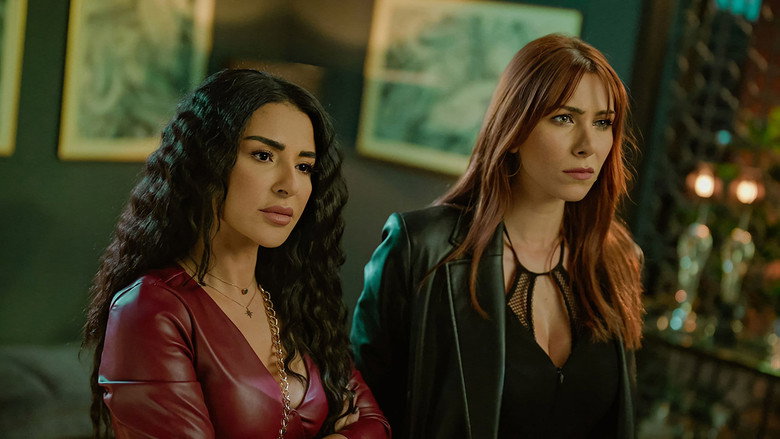
The series boasts an ensemble of Lebanon’s most talented actors, each bringing depth to their roles. Leading the pack are Maguy Bou Ghosn, Daniella Rahme, and Randa Kaadi, whose on-screen chemistry became a talking point among fans. Khitam Al Lahham, Carol Abboud, and Fadi Abi Samra also delivered standout performances, adding layers to the show’s intricate plotlines.
While some sources mistakenly list Hollywood stars like Megan Fox in connection with Till Death, this appears to be a case of title confusion—Fox starred in the 2021 American thriller Till Death, a completely unrelated project. The Lebanese Till Death relies entirely on its local talent, a point of pride for the production team.
Director Philippe Asmar is no stranger to crafting hit series, particularly those that air during Ramadan, a prime season for Arabic-language television. Known for his ability to balance melodrama with sharp social commentary, Asmar’s work often resonates with Levantine audiences. Till Death was no exception, spanning three seasons from 2021 to 2023 and cementing its place as a must-watch during the holy month.
The series’ original Arabic title, للموت (translating to "To Death"), hints at its high-stakes themes—love, loyalty, and the lengths people go to protect their families. While details about the writing process remain scarce, Asmar’s reputation for tight pacing and emotional storytelling suggests a hands-on approach to scripting and character development.
Behind-the-scenes footage and interviews offer glimpses into the show’s creative process. A YouTube video titled Till Death Behind-the-Scenes (2020) provides a rare look at the cast and crew at work, though specifics about challenges or on-set dynamics aren’t detailed in the available snippets. Fans have speculated about tensions between certain characters, but without concrete evidence, these remain rumors.
One unverified but persistent claim is that the series’ success led to a rushed third season, with some viewers noting a slight dip in writing quality. However, without official statements or reviews from reputable outlets, this remains unconfirmed.
In a crowded field of Arabic-language dramas, Till Death distinguished itself through its blend of romance and suspense. The show’s ability to keep audiences hooked across three seasons speaks to its strong character arcs and Asmar’s directorial prowess. While it may not have garnered the same international attention as some of its peers, its impact on Lebanese television is undeniable.
For those curious about the full experience, trailers and cast interviews are available online, offering a taste of the drama’s intensity. Whether you’re a fan of slow-burn romances or family sagas with a twist, Till Death delivers a compelling watch—just don’t expect Megan Fox to show up.
Entertainment rumors and trivia aggregated from public reporting. Treat speculation as unverified unless a cited source confirms it.
More titles in the same genres and with the same cast.