Matthias Schoenaerts
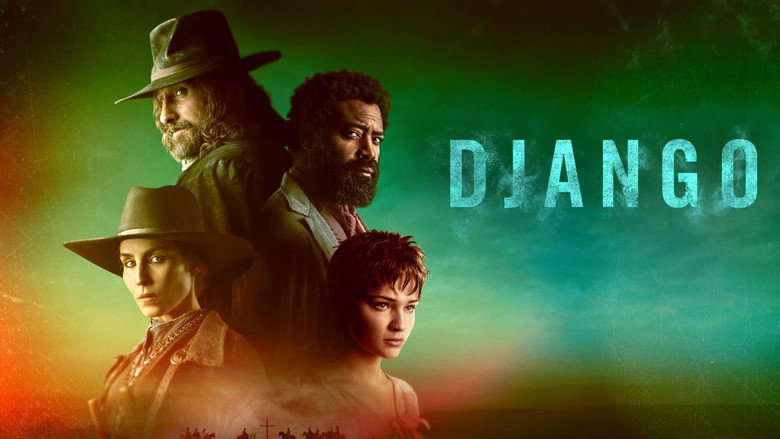
Django

“Outcasts at birth. Outlaws by choice.”
In the Wild West in the 1860s and 1870s, Sarah and John have founded New Babylon, a city of outcasts of all backgrounds. Haunted by the murder of his family eight years earlier, Django is still looking for his daughter, believing she may have survived the killing. When Django shockingly finds her in Babylon, about to marry John, Sarah - now a grown woman - wants Django to leave fearing he'll put Babylon in jeopardy. But Django, believing the city is in danger, is adamant that he will not lose his daughter twice.
Official
I keep thinking about the way Matthias Schoenaerts moves through Django. Not the swagger—though there’s plenty of that—but the hesitation. The way his body seems to remember violence before his mind does, like a muscle twitching in sleep.
This isn’t the Django of Sergio Corbucci’s 1966 film, a man who dragged a coffin through the mud with the grim determination of a saint. This is a man who’s spent eight years looking for a ghost, and when he finally finds her, he doesn’t know what to do with his hands.
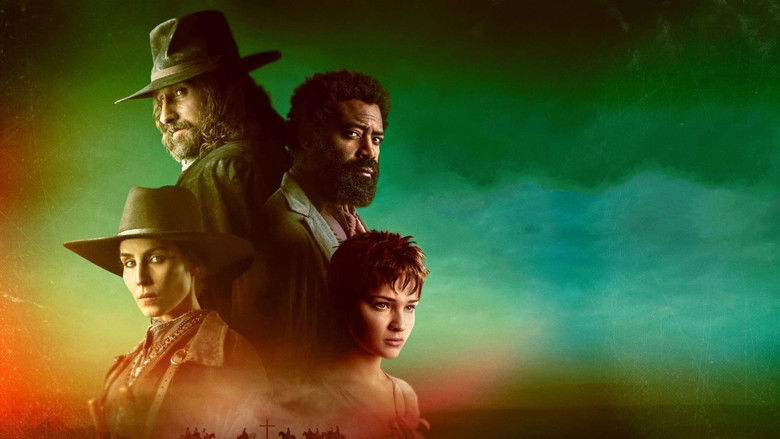
The series, an Italian-French co-production that feels like it was beamed in from another era of television, understands something fundamental about Westerns: the genre isn’t about the West. It’s about the weight of the past, and how it settles into a person’s bones. Here, that weight is literal.
Django’s daughter, Sarah (Lisa Vicari), isn’t just alive—she’s the co-founder of New Babylon, a town built by outcasts where the rules of the old world don’t apply. The problem? She doesn’t want him there.
And he, in turn, can’t shake the feeling that the town is doomed.
That tension—between protection and possession, between the future Sarah is trying to build and the past Django can’t escape—is the show’s most compelling thread. It’s also where Django stumbles. The series wants to be a meditation on legacy, but it often settles for the easier pleasures of the genre: shootouts, betrayals, and a villain (Noomi Rapace’s Elizabeth Thurman) whose motivations are sketched in the broadest strokes.
Rapace, an actress capable of chewing scenery with the best of them, is given little to do beyond sneer and issue orders. It’s a waste of her considerable talents, and it makes Thurman feel less like a character than a plot device.
What works, though, is the way the show lingers on the physicality of its world. The camera lingers on Schoenaerts’ face, the deep lines around his eyes, the way his jaw tightens when he’s lying. There’s a moment in the first episode where Django rides into New Babylon, and the town’s residents stop what they’re doing to stare at him.
It’s a classic Western trope, but the show sells it through sheer stillness. The wind dies. The dust settles.
For a few seconds, the only sound is the creak of leather and the distant cry of a hawk. It’s the kind of quiet that makes you lean forward, waiting for the gunshot you know is coming.
That gunshot, when it arrives, is less satisfying than the anticipation. Django is at its best when it’s not in a hurry, when it lets its characters sit with their choices. The problem is that the show’s structure doesn’t always trust those moments. The plot lurches from one confrontation to the next, as if afraid the audience will lose interest if the bullets stop flying.
It’s a shame, because the quieter scenes—Django watching Sarah from a distance, the two of them circling each other like wary animals—are where the show’s heart lies.
The Western has always been a genre of contradictions: freedom and constraint, civilization and wilderness, the individual and the community. Django tries to grapple with all of them, but it’s most interesting when it focuses on the smallest one: the space between a father and a daughter who no longer know each other. Sarah doesn’t remember the man who raised her, and Django doesn’t recognize the woman she’s become.
Their reunion isn’t a homecoming. It’s a collision.
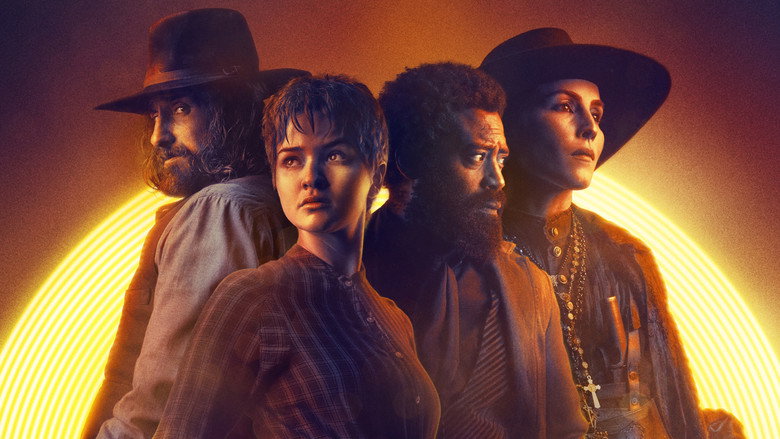
I wish the series had spent more time in that space. Instead, it often retreats to the familiar rhythms of the genre, as if unsure whether it’s allowed to be something new. There’s a scene in the third episode where Django and Sarah sit by a fire, and for a few minutes, the show forgets about the impending attack on New Babylon.
They talk about the past—not the massacre that orphaned her, but the small, stupid things: the way Django used to braid her hair, the sound of her mother’s laugh. It’s the kind of scene that doesn’t advance the plot, but it deepens the characters. It’s also the kind of scene that Django too often abandons in favor of another shootout.
That’s the frustrating thing about the series. It has the pieces of something great: a compelling lead performance, a fascinating premise, and a visual sense that understands the poetry of the Western. But it doesn’t always trust those pieces to add up to more than the sum of their parts.
The result is a show that’s easy to watch but hard to remember—except, perhaps, for those moments when it slows down long enough to let you feel the weight of what’s been lost.
In the end, Django is a story about a man who’s spent eight years looking for something he can’t have. Maybe that’s why it feels so familiar. We’ve all been there, chasing ghosts. The question is what we do when we finally catch up to them.
Sky’s Django (2023) isn’t just another Western—it’s a brutal, stylish reimagining of the 1966 Spaghetti Western classic, set against the lawless backdrop of 1872 New Orleans. With a cast led by Matthias Schoenaerts, Lisa Vicari, and Noomi Rapace, the series has generated buzz for its intense performances and behind-the-scenes dedication. latestnetflix.com's take is that here’s what we know about the making of this high-stakes production.
The physical and emotional demands of Django were no joke. Schoenaerts and Vicari, who play central characters, underwent rigorous preparation for their roles. A behind-the-scenes featurette reveals the pair trained extensively, with Schoenaerts—known for his immersive method acting—reportedly diving deep into the role’s violent, morally ambiguous world. Vicari, meanwhile, described the experience as "transformative," though specifics on their training regimen remain scarce.
Noomi Rapace, who joined the cast later, brought her signature intensity to the project. In a rare joint interview, Rapace and Schoenaerts hinted at the series’ dark tone, with Rapace calling it "a story about survival, not heroes". The chemistry between the leads was a focal point, with director Francesca Comencini (who worked on the series) emphasizing the importance of their dynamic in bringing the story’s tension to life.
Showrunner (identity unconfirmed in available evidence) teased that Django (2023) isn’t a straightforward remake but a "reimagining" of the original’s themes for contemporary viewers. The series shifts the setting to Reconstruction-era America, a period rarely explored in Westerns, and leans into the genre’s brutality while adding political and racial complexity. Early promos suggest a focus on revenge, betrayal, and the cost of violence—hallmarks of the Spaghetti Western tradition but with a 21st-century edge.
The production design and cinematography have also drawn attention. Behind-the-scenes footage reveals meticulous attention to period detail, from costumes to set pieces, aiming to ground the series’ stylized violence in historical realism. Sky’s involvement likely provided the budget to match the ambition, though exact figures remain unconfirmed.
As of now, details about a second season are unconfirmed, though the series’ reception (if positive) could pave the way for renewal. The cast has been tight-lipped about future plans, but Schoenaerts and Vicari have hinted at the emotional toll of filming, suggesting they’re in no rush to return.
For fans of the genre, Django (2023) offers a fresh take on a classic, blending the raw energy of the original with modern storytelling. Whether it lives up to the hype remains to be seen, but the behind-the-scenes dedication is undeniable.
Entertainment rumors and trivia aggregated from public reporting. Treat speculation as unverified unless a cited source confirms it.
More titles in the same genres and with the same cast.