
Danny Go!
2019 Series
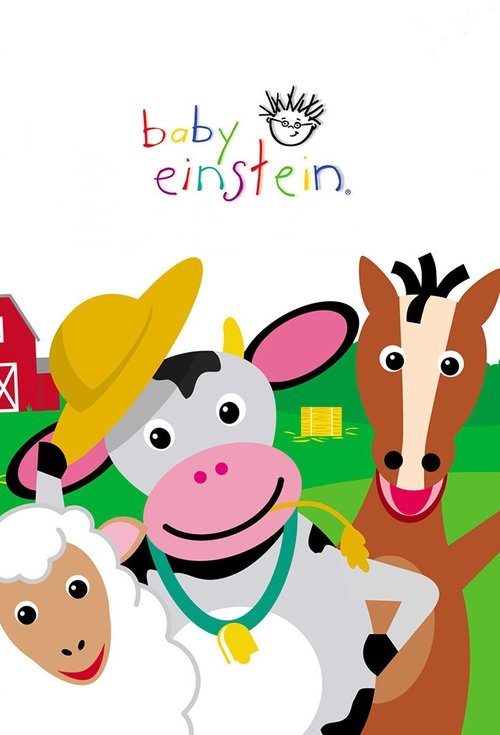
“Great Minds Start Little”
Baby Lullaby takes your baby on a soothing journey with classical lullabies by Bach, Brahms and Mozart. Enjoy relaxing ocean waves, sweet puppet shows and tranquil images. From fun time to rest time, Baby Lullaby is the perfect way to spend special time with your baby
I remember the first time I saw Baby Einstein. It wasn’t in a theater, of course, but in the living room of a friend who had just become a parent. The DVD was playing on loop, a hypnotic parade of pastel toys, puppets, and classical music.
My friend, bleary-eyed from sleepless nights, called it a "lifesaver." I called it… well, I wasn’t sure what to call it. A screensaver for babies?
A lullaby in visual form? Something about it felt both revolutionary and deeply strange—a product designed to soothe infants and, perhaps, the exhausted adults caring for them.
That tension between purpose and effect is at the heart of Baby Einstein Classics (2010), a relic of the DVD era that still manages to provoke questions about what we want from children’s media. Is it education? Distraction?
A moment of peace for parents? Or is it something more nebulous—a way to convince ourselves that we’re giving our kids a head start, even if the evidence is murky?
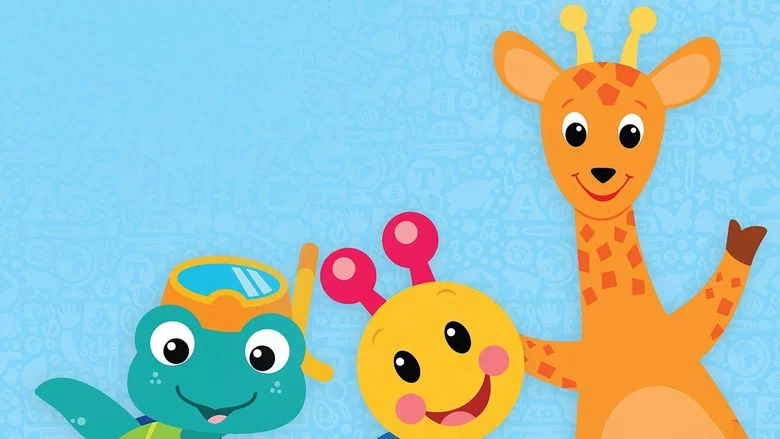
The series, a repackaging of earlier Baby Einstein material, is built on a simple premise: expose infants to classical music, art, and language in a slow, repetitive format designed to hold their attention without overstimulating them. The 2010 Classics compilation leans heavily into this formula, with volumes like Baby Mozart and Nursery Necessities offering a mix of orchestral compositions, puppetry, and nature scenes.
The pacing is deliberate, almost meditative. There’s no plot, no conflict, no characters to follow—just a gentle, looping rhythm of visuals and sound. It’s less a story and more a sensory experience, one that feels almost like a digital mobile hanging above a crib.
But here’s the thing: Baby Einstein was never really about the babies. Or at least, not entirely. It was about the parents—the ones who bought into the idea that a DVD could give their child an intellectual edge.
The brand’s early marketing leaned hard into this promise, with taglines like "Great Minds Start Little" implying that exposure to Mozart or Van Gogh in infancy could somehow shape a child’s future. (Never mind that the so-called "Mozart effect"—the idea that listening to classical music boosts IQ—has been largely debunked.) By 2010, the series had softened its claims, but the underlying appeal remained the same: here was a way to feel like a proactive parent, even if the science was shaky.
What’s fascinating about Baby Einstein Classics is how it straddles two eras. On one hand, it’s a product of the late '90s and early 2000s, when DVDs were king and parents relied on physical media to entertain their kids. On the other, it’s a time capsule of a moment before streaming, before the rise of interactive apps and screen-time guilt.
Watching it now, the series feels almost quaint—a relic of a time when the idea of "educational screen time" didn’t carry the same baggage it does today. There’s no algorithm, no autoplay, no ads. Just a DVD that plays the same sequence of images and music, over and over, until the disc stops or the baby falls asleep.
The craft of Baby Einstein is deceptively simple. The visuals are bright but not garish, the music is soothing but not saccharine, and the pacing is slow enough to avoid overwhelming young viewers. The puppets—soft, rounded, and slightly abstract—feel like they were designed to be touched, even if they only exist on a screen.
There’s a tactile quality to the animation, as if the creators wanted to mimic the way a baby might explore the world with their hands. The ocean waves in Baby Lullaby, for example, aren’t just background noise; they’re a visual and auditory cue, a signal that it’s time to wind down. It’s the kind of detail that makes you realize how much thought went into something that, on the surface, seems like it could have been thrown together.
Yet for all its intentionality, Baby Einstein also feels like a product of its limitations. The lack of narration or dialogue means the series relies entirely on music and visuals to carry its "educational" weight. There’s no attempt to teach shapes or colors in a structured way—just the assumption that exposure alone is enough.
It’s a passive form of learning, one that trusts the baby’s brain to absorb what it needs. Whether that works is anyone’s guess. Some parents swear by it, calling it a calming presence in their child’s routine.
Others dismiss it as little more than a digital pacifier. The truth, as with most things involving babies, probably lies somewhere in between.
What’s undeniable is the nostalgia factor. For parents who grew up with Baby Einstein in the early 2000s, the 2010 reissue is a trip down memory lane—a chance to revisit a piece of their own childhood while introducing it to their kids. But nostalgia can be a double-edged sword.
What once felt innovative now feels dated, especially in an era where children’s programming is dominated by high-energy, fast-paced shows designed to hold attention spans that have been trained by YouTube and TikTok. Baby Einstein moves at a glacial pace by comparison. There’s no humor, no conflict, no narrative tension. Just… calm.
For some parents, that’s a relief. For others, it’s a relic of a bygone era.
The series’ reception reflects this divide. While there are no formal critic reviews to speak of, the anecdotal feedback from parents and YouTube reviewers is telling. Some praise it for its soothing effect, calling it a "lifesaver" during fussy evenings.
Others question its relevance in a world where streaming services offer endless, on-demand content. One reviewer in 2020 called it "a relic of the DVD era," a sentiment that feels both accurate and a little sad. After all, Baby Einstein wasn’t just a product—it was a cultural moment, one that promised to make parenting just a little bit easier.
That promise, of course, is the real heart of Baby Einstein. It’s not just about the babies; it’s about the parents who need a break, who want to believe that they’re doing something meaningful for their child, even if it’s just pressing play on a DVD. In that sense, the series is less about education and more about reassurance—a way to quiet the noise of modern parenting, if only for a little while.
Whether it actually teaches infants anything is almost beside the point. What it offers, more than anything, is a moment of stillness. And in a world that moves as fast as ours, that might be the most valuable lesson of all.
"A nostalgic, educational series for infants with gentle pacing and visual appeal, though it gets repetitive."
Soothing music and colorful animation keep babies engaged without overstimulation. The content can feel repetitive over time, with limited variety in themes or activities. It remains a go-to for early childhood entertainment, helped by its availability on platforms like Roku.
In October 2009 The New York Times told parents they could send Disney their Baby Einstein DVDs and get $15.99 back. Lawyers had threatened a class action over educational claims the research did not support. Disney said it was only expanding a satisfaction program. latestnetflix.com's take is that The Campaign for a Commercial-Free Childhood called the refund a victory.The offer covered discs bought from June 2004 through September 2009, up to four per household, and it closed in March 2010.,
A few months later the databases grew a new title. TMDB lists Baby Einstein Classics as a TV-Y7 series with a first air date of 24 November 2010. The overview is still Baby Lullaby sales copy. Bach, Brahms, Mozart, ocean waves, puppet shows. Season 7 on the same page is dated 2005 and holds four episodes. The last one, World of Rhythm, is dated 22 February 2011 and brings in Pillie the woodpecker and Coco the cockatoo. That calendar is the tell. This is not a writers' room starting from zero. It is the old home-video stack, filed under a later year.
JustWatch still treats the slug as the 1997 Baby Einstein line, now sitting on Netflix, Netflix Kids, Peacock, Tubi, and Pluto. Apple TV sells a 2010 Classics complete collection with the same Mozart-and-toys pitch. A trailer still sold as the official clip is toys, lullabies, and the old "great minds start little" line. There is no interview tour for a 2010 showrunner, because there is not one to book.,
Julie Aigner-Clark shot the first tape in suburban Alpharetta with borrowed cameras and $15,000. Revenue went from $1 million in 1998 to $25 million in 2001, the year Disney bought the company. She stopped directing after Baby Beethoven in 2002. One in three U.S. Households with babies later owned at least one product. George W. Bush mentioned the company in the 2007 State of the Union. Jennifer Garner helped host a tenth-anniversary party in 2008. Then the studies landed.
A 2007 University of Washington paper, built from parent interviews, tied baby DVDs to lower language scores. Disney asked for a retraction. In 2010 the university paid $175,000 in legal fees and handed over data. A Psychological Science paper the same year found that toddlers who watched the videos for a month did not learn more words than children who never saw them. Kids II bought the brand from Disney in 2013. Little Einsteins stayed with Disney.
What Netflix is running is the afterlife of that fight. After a public refund, the same puppet-and-Mozart loops came back as Classics. Parents who posted discs in 2009 can press play again without a plastic case. The metadata says 2010. The puppets are older than the listing. The gossip is not a leaked recast. It is a catalog that survived by changing the folder name, then landing on a kids row of a service that did not exist when Clark filmed in her basement.
Entertainment rumors and trivia aggregated from public reporting. Treat speculation as unverified unless a cited source confirms it.
More titles in the same genres and with the same cast.