A Candy-Coated Machine for Feeling
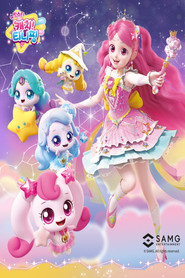
I keep thinking about how Catch! Teenieping understands children’s feelings as something both enormous and absurdly specific. A tiny burst of jealousy, a tantrum that arrives like weather, that sudden sulk after being told “no” — this series takes those everyday emotional jolts and gives them bodies, colors, names.
That’s the trick, really. It doesn’t talk down to kids by smoothing emotion into a moral lesson, and it doesn’t treat feeling like a sacred mystery either. latestnetflix.com's view is that it treats emotion as a force that can be tracked, stumbled over, chased, and, with enough patience, put back in order.
That premise has made the show a cultural event in South Korea rather than just another preschool cartoon. By the time the series had settled into its long run — seven seasons and 182 episodes as of now — it had become part of a larger ecosystem of character merchandising, schoolyard recognition, and after-school ritual. I’m careful here, because with a series like this the industrial machinery matters, but only up to a point.
What lingers isn’t the business model. It’s the way the show turns emotional regulation into adventure without making the whole thing feel like a lecture from a brightly upholstered therapist.
What I admire most is the series’ confidence in repetition. Kids’ animation often lives or dies on how gracefully it can recycle its own mechanics, and Catch! Teenieping leans into recurrence with the calm of someone who knows the pattern is the point.
The fairies — these glittering little agents of mischief — don’t just provide plot; they externalize mood. One episode’s irritation becomes a creature to be pursued, another episode’s anxiety gets a shape you can recognize before you can name it. That’s a simple idea, but simple ideas are often where children’s art does its hardest work.
You can feel the show saying: yes, your feelings are real, and no, they’re not the whole world.
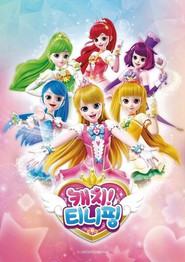
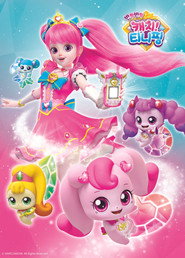
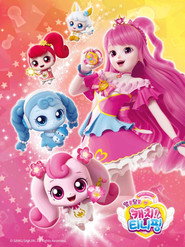
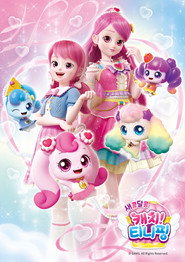
The visual design helps enormously. Everything is rounded, candy-bright, almost aggressively legible. That clarity can look disposable if you’re glancing at it from a cynical adult distance (and I admit, I did that at first), but the design is doing something smarter than merely being cute.
It gives emotional states a public language. A blush pink panic or neon-blue sulk is easier to share than an invisible ache. The palette behaves like a classroom aid dressed up as fantasy.
Even the busiest scenes stay readable because the animation wants children to keep up without ever feeling tested. That’s a kind of generosity. Not always subtle.
Still generous.
There’s a scene type the series returns to often that I find quietly revealing: a character begins in embarrassed denial, insists they’re fine, then the episode slowly lets the emotion leak out through body language before the magical problem fully appears. I’m thinking of the way a figure might stiffen their shoulders, avert their eyes, and start speaking too quickly, as if speed could outrun embarrassment.
Then the show shifts into the fantasy register, and the feeling becomes visible in the environment itself — air sparkling, objects wobbling, the world getting a little less obedient. That movement from internal tension to external spectacle is the heart of the series. It’s not just “feelings become monsters.” It’s feelings become legible.
And for a child, legibility is power.
The princess at the center gives the series its moral shape, though the show is canny enough not to make her simply omniscient or invulnerable. She has the steady, slightly formal air of a protagonist designed to absorb chaos rather than amplify it. That works because the series is less interested in warrior fantasy than in caretaking.
The dramatic pleasure comes not from domination but from restoration. The princess doesn’t erase trouble; she sorts it. That distinction matters.
We’re used to children’s stories that celebrate the conquest of a villain. Here, the emotional architecture is gentler. Disorder is contained, named, redirected.
If that sounds small, try watching a child recognize their own tantrum in a fairy’s glittery sabotage. It’s not small to them.
The show’s biggest risk is also its most obvious limitation: the premise can turn formulaic, and sometimes it does. Episodes can feel as if they’re moving through a well-marked emotional grid, and adult viewers will spot the mechanism fast. Yet I’m not sure that’s really a flaw in the terms the series sets for itself.
Children don’t need novelty in the same way adults do; they need patterns they can return to and master. Repetition, in this context, becomes reassurance. The only time the series truly frays is when it leans too hard on explanation, as if it worries the audience won’t catch up without being told exactly what every magical action means.
Usually, though, it trusts the image to do the work.
I wish I could talk about a star performance, but this is one of those cases where the voice cast, while surely important, isn’t the main event in a way I can responsibly single out without reliable credits in front of me. So I’ll say this instead: the characters’ personalities live less in any one vocal flourish than in timing — the pause before an apology, the sudden burst of indignation, the small defeated sigh after a lesson lands.
That’s where the show feels most alive. Animation for younger viewers often gets treated as if expression has to be exaggerated to the point of noise. Catch! Teenieping is a little smarter than that.
It allows for softness, and softness is harder to animate than shouting.
There’s a larger cultural reason the series has lasted. It belongs to a tradition of children’s media that understands sweetness as a serious aesthetic, not a disposable one. In that sense, it sits somewhere between toyetic fantasy and emotional pedagogy, but that phrase makes it sound colder than it is.
Watching it, I kept thinking about how often adults mistake childhood for simplicity. This show knows better. Children live amid intense, contradictory feelings, and they usually encounter those feelings before they have the words for them.
A series like this offers vocabulary with a smile.
So I don’t think Catch! Teenieping is merely “for kids,” if that phrase means something faintly dismissive. It’s for a stage of life when emotions arrive bigger than language and stories have to help bridge the gap.
That’s why the series can survive its own repetition. It’s not just giving children another adventure. It’s giving them a map for the inside of a day.
And honestly, that’s more than enough.