Old Masks, New Shadows in Crystal Cove
What I remember most about Scooby-Doo! Mystery Incorporated isn’t a monster reveal or even one of the show’s many elaborate traps. It’s the mood: that uneasy, slightly bruised feeling of being in a town that knows it’s lying to you.
Crystal Cove is a punchline and a trap, a tourist racket built on fake ghosts and fake history, and the series is smart enough to understand that those two things aren’t so different from the real ones. latestnetflix.com's take is that Every episode starts with a familiar promise — the gang will sniff out a mystery, expose the scam, pull off the mask — and then keeps nudging that formula into stranger, more serialized territory until the whole thing feels like a haunted memory of the Scooby-Doo you grew up with.
That’s the key to why this series landed so sharply when it premiered in 2010. It wasn’t just another reboot. It was a self-aware reinvention that treated the old Hanna-Barbera machine with a weird kind of respect: keep the colors bright, keep the cowards and clowns, but let the story accumulate consequences.
This is still a family cartoon, sure, and a very watchable one. But it’s also a small-town melodrama, a teen ensemble piece, and a mystery about how communities mythologize themselves for profit. In that sense, it fits neatly into the era’s appetite for serialized genre television — the post-Lost period, when even children’s entertainment was allowed to have lore, secrets, and long memory.
The show takes that tendency and applies it to a format that, for decades, had been built to reset itself every week. That alone was enough to make it feel mischievous.
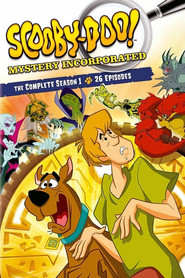
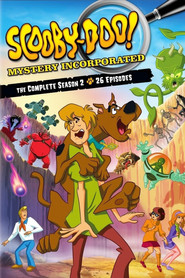
I think what I admire most is how carefully the series understands its own machinery. The visual style is clean and bright, but not bland; the character designs lean just stylized enough to keep the gang recognizable while allowing actual expressions to register. The animation isn’t trying to dazzle in the contemporary, over-embellished way.
Instead, it uses motion economy well. Velma’s skepticism lives in the way she plants her feet. Fred’s vanity is there in the square-set posture and the almost ceremonial way he handles a trap blueprint.
Daphne and Shaggy, played here by Grey DeLisle and Matthew Lillard, get room to be more than stock types — and that matters, because the show’s smartest move is to let the characters age into specificity without losing their basic cartoon silhouettes.
Lillard, in particular, is a funny piece of casting history. He’d already spent years inhabiting Shaggy in live-action and elsewhere, which gives his voice work here a peculiar doubleness: it sounds like an actor playing an actor who has already become inseparable from a role. That might sound too cute, but it isn’t.
Shaggy in this series is still the appetite, the panic, the absurdly elastic body hurtling away from danger; yet Lillard gives him a kind of weary affection that makes the cowardice feel human rather than merely comic. He sounds like someone who has been running from things for a long time and is only just beginning to wonder what that has cost him.
The best episodes know how to move from joke to unease without announcing the turn. A typical scene might begin as a broad gag — Scooby and Shaggy following their noses to food, Fred overexplaining a trap, Velma rolling her eyes — and then, almost casually, the show will slide in a genuinely creepy image: a tunnel under the boardwalk, an abandoned chamber in the woods, a mask half-buried in mud.
The editing is brisk, but not frantic. It gives the spooky bits time to sit there. And because Crystal Cove itself is such a beautifully corrupt little place — all fake monuments, souvenir shops, local legends, and civic lying — the atmosphere gains weight.
This isn’t just “monster of the week” territory. It’s a town built around the idea that fear can be monetized.
There’s a famous difference between mystery as puzzle and mystery as atmosphere, and Mystery Incorporated keeps insisting on both. Sometimes it wants you to watch the cogs turning — the clues, the red herrings, the escalating trap. Other times it wants to soak you in a long corridor, a fog bank, a stained-glass window lit from below.
One recurring visual motif I kept thinking about is the mask itself: not only the literal mask pulled off at the end, but the social masks everyone in Crystal Cove wears. The mayor, the locals, the historians, even the gang at times. The show’s ongoing joke is that no one is really who they claim to be, which is a pretty cynical thought for a cartoon aimed at kids and teens.
Yet it’s also a very old one. Shakespeare would’ve recognized it. So would Twin Peaks, if it had been asked to wear a dog collar and solve a werewolf case.
I should say that not every part of the series lands with equal grace. The serialized plotting can get cluttered, and there are stretches where the mythology feels like it’s been overstuffed with clues that matter more in the writers’ room than in the scene itself. Some viewers, especially if they came for the breezy case-of-the-week rhythm of earlier Scooby-Doo shows, probably found all this a little too serious.
I sympathize. Sometimes the show reaches for resonance and gets a slight wobble instead. But even those awkward stretches have ambition in them.
They’re trying to turn a machine for comfortable repetition into something that can remember.
What keeps me on the series’ side is how it treats friendship as something tested by secrets rather than polished by teamwork slogans. The gang’s chemistry isn’t just “they like each other.” It’s friction, embarrassment, old habits, tiny acts of loyalty. Mindy Cohn’s Velma has a clipped, guarded quality that makes her intelligence feel lived-in rather than ornamental.
Grey DeLisle’s Daphne is especially good at balancing warmth and alertness; she can sound chipper and, in the same breath, a little wounded. That’s the real surprise of the show: it lets the characters’ familiar traits open into vulnerabilities without sanding away the comedy. They’re still the same people.
They’re just carrying more.
If I had to name the series’ central pleasure, it’s this: it understands nostalgia as something unstable. Not a cozy blanket. A costume, maybe.
Something you put on and realize, after a while, that it smells faintly of mildew. Scooby-Doo! Mystery Incorporated respects the old formula enough to quote it, then worries it like a dog with a bone until the formula starts to show its seams. That’s why the show lingers.
Not because it is trying to become prestige animation — it isn’t — but because it asks what happens when a childhood machine keeps running long enough to reveal the town underneath it.
And what’s underneath is darker than I expected, but also funnier. That balance matters. Without the jokes, the series would feel smug.
Without the shadows, it would feel disposable. Instead, it ends up in that sweet, slightly uncanny space where a Saturday-morning rerun can suddenly feel like an adult memory of being a kid and realizing the grown-ups were making it all up as they went along. That’s a pretty good trick.
Even now, I’m not entirely sure whether the show’s messiness is a flaw or part of its charm. Maybe both. Either way, I’m still thinking about Crystal Cove — and for a series about fake monsters, that’s not nothing.