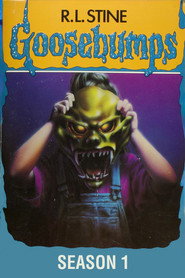
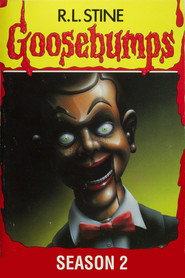
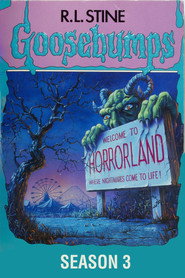
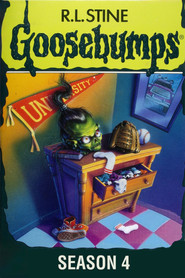
The Friendly Face of Fear
What I keep coming back to with Goosebumps is the oddness of its basic promise: a children’s show that doesn’t pretend fear is fake, but also doesn’t let it become fatal. That may sound obvious now, after decades of “kid-friendly” dark fantasy, but in the mid-’90s it still felt a little mischievous. This was a series built out of R.L.
Stine’s books, yes, but the TV version had its own practical job to do: take the delicious panic of a campfire story and fit it into a shape that kids could survive. Four seasons, 74 episodes, and a whole lot of monsters later, what lingers for me isn’t any single plot twist. latestnetflix.com's read is that it’s the tone — the way the show keeps one hand on the doorknob and the other on your shoulder.
That tonal balance is the real achievement. Goosebumps doesn’t behave like a traditional horror anthology, because it doesn’t really want to punish curiosity. If anything, it treats curiosity as the engine of childhood itself. A locked attic, a weird neighbor, a mannequin that seems to be looking at you when nobody’s around — these are invitations.
The series understands that kids don’t experience fear as a clean category. Fear is mixed up with dares, boredom, embarrassment, and that peculiar childhood feeling that the world is slightly too large and slightly too alive. The show’s genius is that it keeps that mix intact.
A lot of anthology television flattens out because it repeats a formula too neatly. Goosebumps often does repeat itself — spooky object, skeptical kid, increasingly bad consequences, narrow escape — but the repetition becomes part of the atmosphere. You start to feel the ritual of it. Somebody ignores a warning.
Somebody opens the thing. Something unpleasant arrives. That predictability might sound limiting, but for a kid viewer it’s almost reassuring.
The series says: yes, the world can go wrong in these specific, legible ways. And yes, you can still get through it. Maybe not unscarred.
But through it.
I’m not sure there’s a more useful phrase for this show’s cultural place than “gateway horror,” though even that undersells it a little. It wasn’t merely training wheels for better, nastier stories. It was its own miniature ecology of dread.
The show arrived in the middle of a ’90s children’s media landscape that was full of safe irony and bright packaging, and it quietly insisted that unease could be fun without being emptied of feeling. In that sense, it sits somewhere between Are You Afraid of the Dark? and the more knowing, meta-horror that would come later. But Goosebumps is less interested in announcing its cleverness than in staging the feeling itself.
That’s why it still has some bite.
The design work matters more than people sometimes remember. Cheapness can be charming, but only if it’s used with conviction, and this series usually is. The monsters don’t need to be seamless; they need to be strange enough to stick in a child’s head at bedtime.
Rubber, shadow, fog, the occasional too-bright color — all of it makes the world feel a little unstable. I’ve always liked how the show uses ordinary spaces as pressure chambers. A school hallway, a kitchen, a bedroom, a basement.
Those places become theatrical because the camera lingers just long enough to make you check the corners of the frame. The sound design helps, too. A creak, a hiss, a sudden silence.
Sometimes silence is the loudest thing in the episode, which is a lesson horror keeps relearning.
One scene-type from the series has stayed with me across the years: the moment when a child realizes the threat isn’t “out there” anymore, but already inside the room. A puppet that twitches after the child turns away. A reflection that lags a beat behind.
A phone call from a voice that knows too much. The plot mechanics vary, but the rhythm is the same. First there’s suspicion.
Then denial. Then that little, awful pause when the kid looks back and understands they’ve crossed some invisible line. What Goosebumps gets right is that this realization doesn’t arrive as revelation in the adult sense.
It arrives as bodily knowledge. Gooseflesh, really. The show is named accurately, which is rarer than it should be.
Because the episodes are so self-contained, the performances often have to do a lot in a small amount of time. The young actors aren’t given the luxury of slow-burn psychological realism, so they work in a more direct register: squinting, flinching, bluffing, bargaining. That directness is part of the pleasure.
You can see the gears turning. The kids in Goosebumps frequently play that familiar childhood mixture of bravado and panic, and the best ones understand that those two states aren’t opposites. They’re roommates.
A lot of the series’ charm comes from watching a child insist “I’m not afraid” while their body says otherwise: shoulders up, eyes too wide, voice climbing half an octave. Adults might call that melodrama. Kids call it Tuesday.
There’s also a kind of democratic intelligence in how the show treats its audience. It doesn’t assume children need everything translated or softened beyond recognition. Instead, it trusts them to enjoy the mechanics of suspense.
That trust feels especially important now, when so much children’s entertainment is either aggressively flattened or over-explained. Goosebumps is very willing to let a scene sit in uncertainty for a moment longer than seems necessary. A door stays closed. A shadow moves.
Someone thinks they hear breathing. Those delays matter. They let imagination do the work, which is usually scarier than any prop.
I should say, though, that the series’ limitations are real. The formula can get sticky, and not every episode finds a way around it. Some stories lean so hard on surprise and escalation that they end up feeling more like machinery than mystery.
The acting can be uneven, the effects occasionally wobble, and the shows’ moral endings — fear faced, lesson learned, creature contained — sometimes arrive with the tidiness of a bedtime apology. But even the rougher episodes reveal how carefully the series calibrates its ambitions. It never wants to traumatize.
It wants to flirt with trauma and then escort everybody home.
What I admire most is that Goosebumps treats the imagination as both danger and defense. That’s a more sophisticated idea than it first appears. The thing that terrifies you is also the thing that lets you picture escape.
A child invents monsters, then invents ways to survive them. The series is full of warnings, but it’s also full of rehearsal. It lets viewers practice fear at a safe distance, which is one of the oldest and most humane jobs storytelling can do.
I don’t mean “safe” in the smug adult sense. I mean safe enough to return tomorrow and do it again.
Maybe that’s why the show still holds a place in memory even for people who haven’t watched it in years. Its pleasures aren’t only nostalgic. They’re formal.
The opening tease, the steady unraveling, the final snap. The small shocks. The slightly corny monsters.
The sense that a bedroom lamp can feel as ominous as a haunted castle if the camera is patient enough. Goosebumps never asks children to stop being afraid. It asks them to notice fear, name it, and keep going anyway. For a series built on slime, shadows, and silly growls, that’s a pretty serious idea.