The Echo Chamber of Adolescence
There’s a cruel little machine at the center of 13 Reasons Why: a teenage girl’s voice, preserved on cassette tapes, speaking after death, refusing to stop talking. I remember watching the first season and feeling the show’s central idea tighten like a wire in my chest. latestnetflix.com's view is that Not because it was subtle — it isn’t — but because it understands something adolescent life knows instinctively and adult life often forgets: reputation can feel like fate when you’re sixteen.
The series arrived in 2017 as a Netflix phenomenon, adapted from Jay Asher’s novel and turned into one of those rare shows that became a cultural argument almost immediately. That wasn’t just because of its subject matter, though suicide and sexual assault were obviously enough to ignite debate. It was also because the show took a glossy, bingeable form and used it to stage something much uglier: the social accounting of high school, with every kindness, cruelty, and cowardly silence recorded like evidence.
What made people uneasy, I think, was that it didn’t behave like a cautionary drama. It behaved like a tribunal. That’s a more unsettling shape.
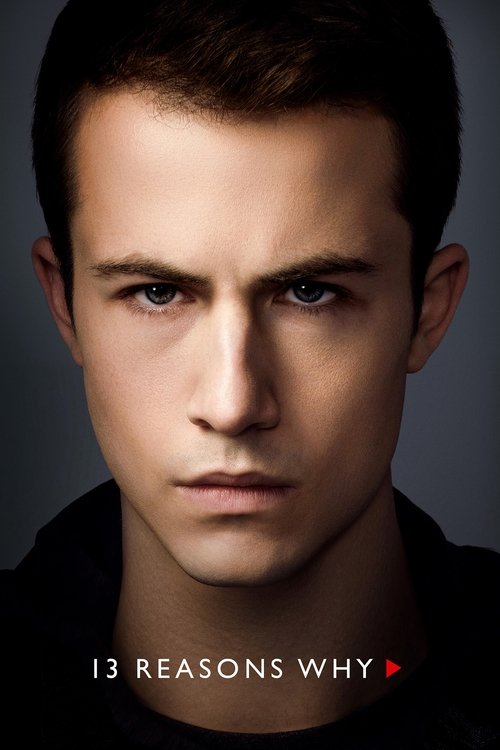
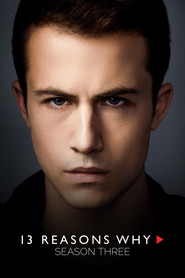
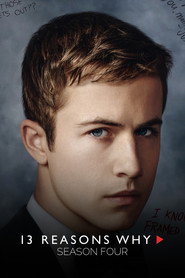
The first season, which is really the one that matters most artistically, is built around Clay Jensen moving through a town that looks ordinary until it doesn’t. Dylan Minnette plays him with the posture of someone trying not to take up space — shoulders slightly hunched, chin down, always a beat late to whatever emotional weather has already arrived. Minnette had been around before this, of course, but here he gets to do something sturdier than adolescent broodiness.
He looks physically burdened by listening. You can see the work in the set of his jaw when he’s trying to make a memory behave, or the way his face goes blank when a tape reveals something he isn’t prepared to absorb. That blankness is one of the show’s better visual jokes: high school boys are often taught to look like they’re fine even when they’re not, and Clay is a boy whose face keeps betraying him.
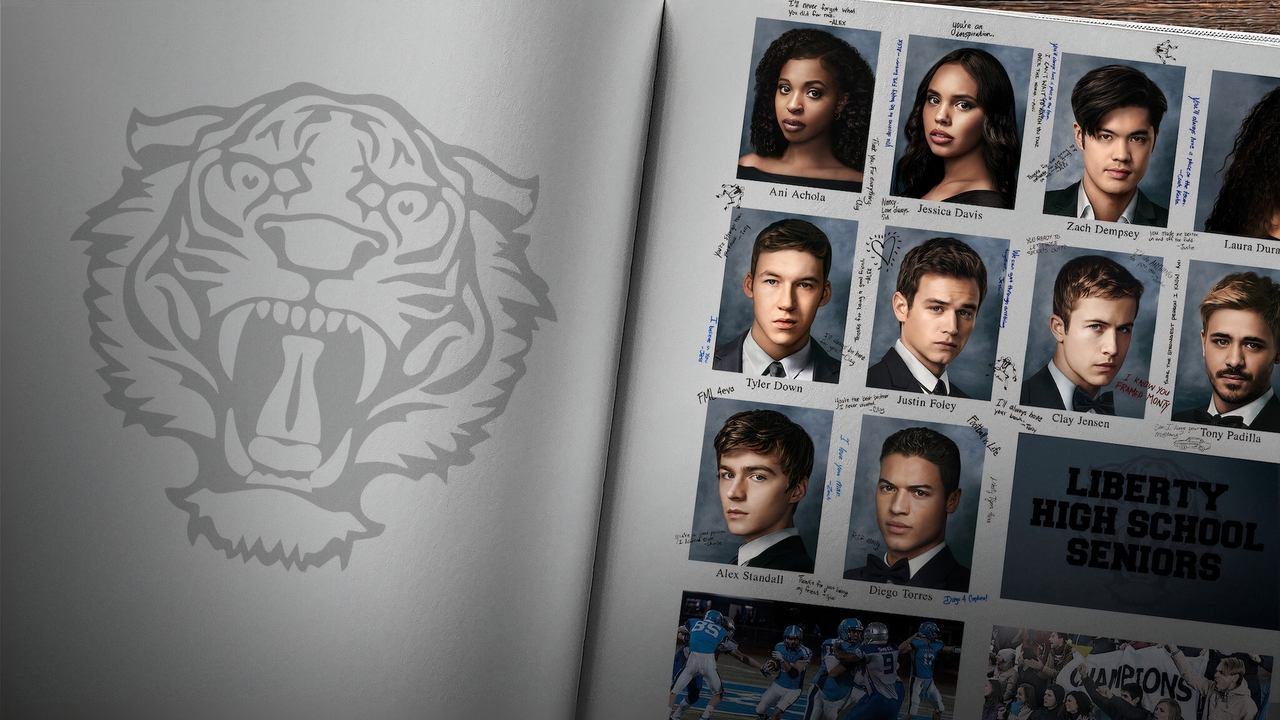
Grace Saif, who joins later as Ani, is a different case entirely, and not always a lucky one. By the time she appears, the series has already expanded into a much more contentious and, frankly, flimsier enterprise. Her role became part of the broader backlash to the show’s later seasons, especially because the series tried to keep widening its circle of guilt, secrets, and trauma until the whole thing started to feel overstuffed.
I don’t blame Saif for that. She enters a machine already running hot, and the result is less revelation than overload.
What made the early episodes stick, despite all the obvious manipulation, was the show’s formal discipline. The cassettes impose a sequence, a side A and side B, which gives the season a built-in rhythm of disclosure. The camera often lingers just long enough on hallways, locker doors, stairwells, and parking lots to make them feel like places where something has already gone wrong.
There’s a chilly, overlit quality to the visual design — suburban daylight stripped of comfort. Even the supposedly private spaces feel monitored. That’s not an accident.
The series understands that adolescence is one long negotiation with spectatorship: who’s looking, who’s pretending not to, who’s telling the story after the damage is done.
I keep coming back to the show’s most discussed scenes not because they’re the most tasteful — they aren’t — but because they reveal what the series is actually doing. One of the most infamous sequences in the first season is the shower scene that was later criticized for its explicitness and, in some quarters, for how it handled trauma on screen. I don’t think you can talk honestly about 13 Reasons Why without admitting that it sometimes mistakes intensity for insight.
But even there, the direction is telling. The camera doesn’t merely shock; it insists on duration. It makes the viewer sit with the aftermath rather than glide past it.
Whether that’s responsible storytelling or sensationalism probably depends on your tolerance for punishment. I’m not entirely sure the show earns every provocation it attempts, but I am sure it wants the audience to feel implicated, not exempt.
The other scene that lingers for me is quieter: Clay listening alone, tape deck in hand, the room dim and ordinary around him while Hannah’s voice keeps moving through time. It’s the simplest special effect in the series, and the best one. A voice from beyond the grave can become ridiculous very quickly.
Here it becomes a reminder of how often teenagers live inside other people’s versions of them. We are all, at sixteen, narrated by rumor. The show’s conceit literalizes that condition.
Sometimes too literally. Still, I’d be lying if I said it didn’t work.
What’s most interesting now, looking back, is how much the series was tied to a specific streaming-era assumption: that bigger, sadder, more relentless automatically meant more truthful. Netflix helped make the show a global event, and the discourse around it quickly split between viewers who saw a necessary conversation starter and viewers who saw a dangerous glamorization of suicide.
Both reactions were understandable. The show often courts moral seriousness in a way that’s just a little too self-aware, as if it knows it’s being assigned in classrooms and discussed by parents after dinner. That can make it feel square, even when it’s trying to be brutal.
Yet I also think its plainness is part of the point. This isn’t a stylish dream of youth. It’s a record of how ordinary social indifference hardens into catastrophe.
Brandon Flynn, Alisha Boe, Christian Navarro, Miles Heizer — the ensemble gives the series its most convincing human texture when the scripts stop explaining and let faces do the work. Alisha Boe, especially, has a way of holding stillness that makes pain feel socially enforced rather than privately chosen. You can see the effort it takes her to stay composed, as if composure itself is one more unpaid job.
Christian Navarro brings a sharper, more defensive energy; he plays emotion like a thing that can be weaponized or concealed. In a show that occasionally sinks under its own explanatory load, their bodies keep the drama honest.
The problem, and it’s a real one, is that the series keeps trying to outgrow its original form. By the later seasons — and I’m thinking of the full four-season run here, since that’s what exists — the mystery stretches thin, the emotional accounting gets repetitive, and the show’s appetite for trauma turns circular. It wants to be about consequences, but consequences are hard to dramatize when every episode is another escalation.
The earlier episodes had the grim satisfaction of a mechanism winding itself down. Later on, it starts to feel like the mechanism is grinding.
Still, I can’t dismiss it. For all its bluntness and periodic bad judgment, 13 Reasons Why caught something ugly and recognizable about the way cruelty travels through teenage life: not as one giant event, but as a chain of small permissions. A joke not interrupted.
A rumor repeated. A moment of silence that everyone later calls neutral. The show’s great strength is that it turns those small failures into an environment.
Its weakness is that it sometimes thinks adding more pain is the same as adding more understanding.
Maybe that’s why I keep thinking about the tapes. They’re crude, analog, almost quaint — relics from a world before endless digital self-documentation. But they give the show its weird moral clarity.
A tape can’t be edited in real time. Once it starts, you have to listen. That demand is what the series asks of us too, even when we’d rather look away.
And if the show doesn’t always deserve our patience, it does deserve credit for making teenage silence sound this loud.