The Art of Taking It Easy
I keep thinking about how a show about a cat who does almost nothing can still feel like a tiny machine for generating motion. The Garfield Show isn’t interested in grandeur. It’s interested in appetite, irritation, and the slow comic slide from comfort into trouble. That’s a modest ambition, but it’s also a smart one.
latestnetflix.com's take is that Philippe Vidal’s series, which began in 2009 and ran for five seasons, takes Jim Davis’s long-running comic-strip creation and translates him into a bright, efficient cartoon universe where laziness isn’t just a personality trait — it’s a way of negotiating the world.
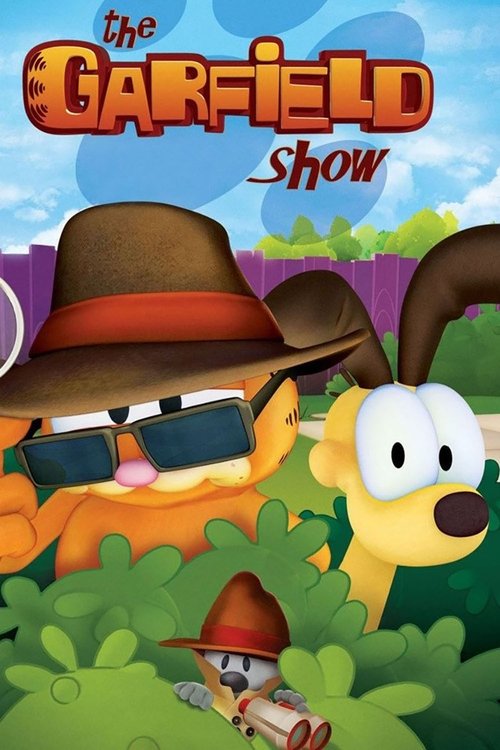
What’s striking, when you look at the show as part of Garfield’s larger life, is how little it tries to reinvent him. This isn’t a grim reboot, and it isn’t some elaborate “updated for modern audiences” exercise. It’s a clean, kid-friendly continuation of a joke that already existed in the strip: Garfield as a creature of appetite and disdain, Jon as the eternal amateur caretaker, Odie as the perpetual innocent, Nermal as a tiny irritant with perfect timing.
The series understands that Garfield works best when he’s allowed to be both familiar and slightly abstract — a cat-shaped attitude more than a realistic animal. Vidal’s direction leans into that simplicity. The episodes move fast, often in compact comic loops, because the point isn’t accumulation of lore.
It’s timing. Pause. Look.
Swerve. Punchline.
I’d argue that’s also where the show’s cultural place becomes interesting. By 2009, Garfield was no longer a fresh pop-culture phenomenon; he was part of the furniture. The challenge wasn’t to make him relevant in some solemn sense, but to keep the old machinery humming without dusting it in too much nostalgia.
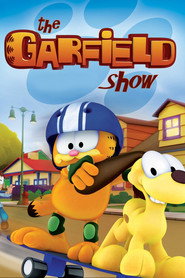
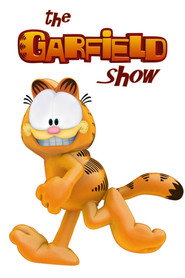
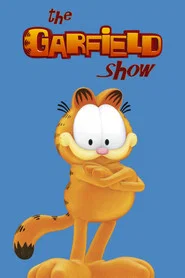
The series does that by refusing sophistication where it would only get in the way. Its world is cheerful, elastic, and slightly synthetic in the way a good children’s cartoon ought to be. The colors are bold rather than subtle.
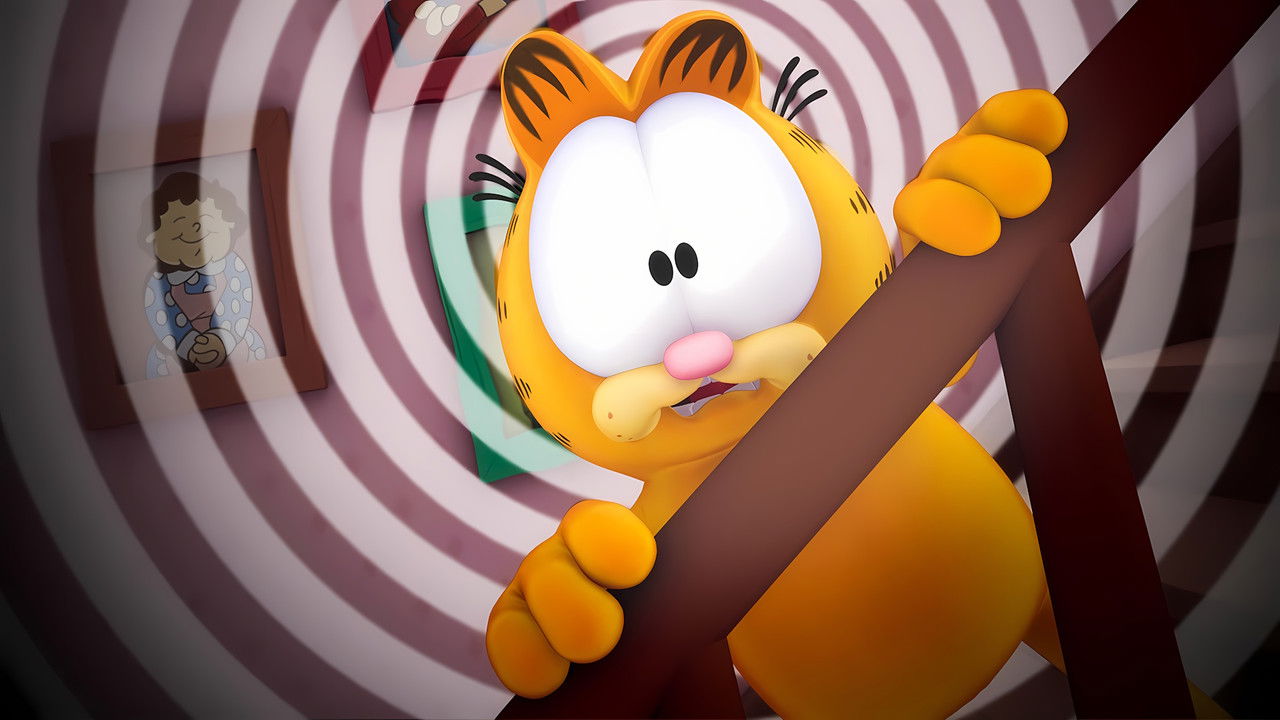
Faces stretch and compress with almost old-fashioned cartoon confidence. Backgrounds tend to stay legible instead of fussy. Nothing is aiming for the kind of visual realism that would make a lasagna gag feel self-conscious.
Thank God.
The thing I admire most is the show’s refusal to treat slowness as dead air. Garfield’s body is the whole premise. Watch how he occupies a frame: sprawled, weighted down, one eyelid usually doing more work than the rest of him.
When he reacts, the reaction is almost always economical — a glance, a flattening of the ears, a tiny change in the shape of his mouth that says “I’ve already judged this.” Jason Marsden’s voice performance is a big part of that. He doesn’t try to make Garfield cute in the squeaky, overbusy way that children’s animation often does. He keeps the delivery dry, a little smug, and just tired enough to suggest a cat who’s constantly being interrupted by the universe.
There’s a discipline to that. You can hear the character’s body in the voice.
Frank Welker, meanwhile, does one of those absurdly versatile jobs that animation depends on and rarely gets enough credit for. Odie, in his hands, isn’t just noise and slapstick; he’s momentum without strategy. Welker’s work has long been associated with animal voices, creature sounds, and the sort of sonic labor that holds cartoons together while everyone else gets the jokes, and here he gives Odie a kind of innocent propulsion.
The joke is not only that Garfield is annoyed by him. It’s that Odie keeps arriving from a different moral universe, one where enthusiasm isn’t embarrassing. That contrast is the series’ simplest and most durable emotional shape.
The episodes I remember best are the ones that understand how comedy lives in small escalations. Garfield sees an opportunity to avoid effort. Jon, with his tragic, well-meaning earnestness, creates a problem by trying too hard.
Odie either misunderstands everything or accidentally improves it. Then the whole arrangement tips over. One recurring kind of sequence — and this is where the show’s craft quietly shows itself — starts with Garfield settling into a plan.
Maybe he’s claimed a chair, a dish, a patch of sun, whatever. The camera holds him just long enough for the confidence to register. Then Jon enters, or Nermal appears, or some household nuisance intrudes.
The framing gets a little tighter. The soundtrack nudges the joke along. Garfield’s expression barely changes, but the world around him starts to wobble.
That’s a very old cartoon trick, but it still works because the show respects the geometry of annoyance.
And the show does have a recurring visual motif worth noting: food as desire, food as threat, food as fantasy. Lasagna isn’t just a punchline accessory. It’s almost a theology.
Garfield’s world is arranged around the promise of immediate gratification and the certainty that somebody, somewhere, will interfere. I’m not sure the series ever becomes genuinely satirical about consumer comfort or domestic routine, but it brushes against that territory in a nice, lazy way (which is, I suppose, the most Garfield way possible). The cat’s hunger stands in for all the little human cravings we’d rather not analyze too closely.
Sleep. Warmth. Being left alone.
Another helping.
Of course, not everything lands. Some episodes lean too hard on repetition, and when the scripts run thin, the show can feel mechanically cheerful, like a joke being retyped rather than told. That’s the risk with any property built on a single dominant mode.
Garfield’s smugness is funny until it becomes the only note in the room. Jon can be a wonderfully pathetic straight man, but he’s also vulnerable to becoming a soft blur of exasperation. The series is strongest when it trusts silence, pause, and visual business.
It’s weaker when it starts explaining itself or stretching a simple gag to fill time.
Still, I found myself oddly won over by its confidence in small pleasures. There’s something almost refreshing about a cartoon that doesn’t pretend to be deeper than it is while still understanding the basic poetry of routine. The show isn’t trying to break your heart.
It’s trying to make you smile at the exact moment a cat decides that effort is for other people. That may sound slight. It isn’t.
Beneath the purring and the plate jokes, The Garfield Show is about resistance — to work, to interruption, to the frantic pace of everything else. In a culture that loves to mistake busyness for meaning, there’s a sly little dignity in Garfield’s refusal. He wants the nap, the snack, the quiet.
Honestly, same.