
Shunsuke Takeuchi
Gudetama / Hard-boiled / Salmon Roe / Others (voice)
“Like maintain the status quo? Playing it safe. The future is bleak.”
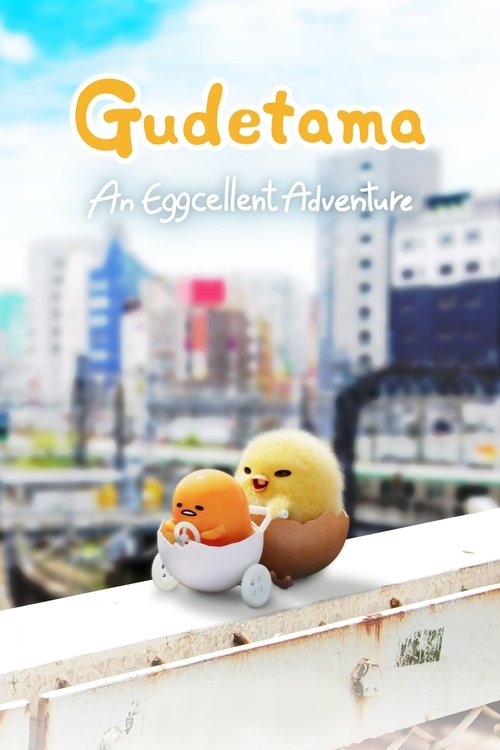
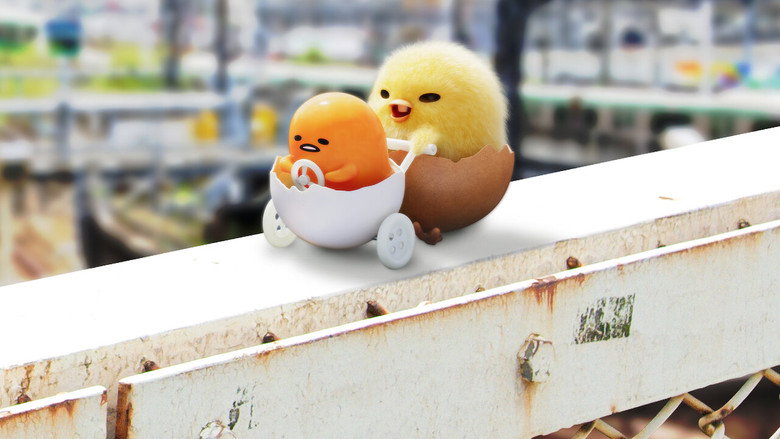
Gudetama, the lazy egg, reluctantly embarks on an adventure of a lifetime with Shakipiyo, a newly hatched chick, who is determined to find their mother.
Official
I’ll admit it: I wasn’t prepared for an egg to break my heart. Not in the way you’d expect, anyway. Gudetama, Sanrio’s famously lethargic, yolk-sac protagonist, has spent nearly a decade lying face-down on a plate, muttering about the futility of existence in between bites of bacon.
So when Gudetama: An Eggcellent Adventure (2022) plops this gelatinous nihilist into a full-blown road-trip narrative—complete with a chirpy sidekick, a missing mother, and a world that refuses to stay still—I braced for whiplash. What I got instead was something far stranger: a children’s show that doubles as a meditation on inertia, a buddy comedy where one buddy would rather nap through the apocalypse, and a journey so half-hearted it somehow becomes profound.
The premise is deceptively simple. Gudetama, our sunken-eyed, anthropomorphic egg, is roped into an adventure by Shakipiyo, a newly hatched chick who’s convinced their mother is out there somewhere. (She’s not.
This is a Sanrio property. Mothers are always either dead or mysteriously absent.) What follows is a ten-episode odyssey that feels less like The Odyssey and more like Waiting for Godot with a side of tempura. Gudetama doesn’t want to find Mom.
Gudetama doesn’t want to do anything. The miracle of the series is how it turns this refusal into its engine.

Take the first episode’s centerpiece: a chase sequence. Not the kind with screeching tires and dramatic music, but one where Gudetama, dragged along by Shakipiyo, slowly rolls down a hill like a deflating balloon. The camera lingers on his resigned expression as the world blurs past—trees, buildings, other animals—all moving at normal speed while he, the protagonist, moves at the pace of a sigh.
It’s a perfect visual metaphor for the show’s tone: the universe is in motion, but Gudetama is stuck in the amber of his own ennui. And yet, the sequence isn’t played for pure slapstick. There’s a quiet tragedy in the way the background characters—busy, purposeful, alive—barely register his existence.
He’s not just lazy; he’s invisible.
This is where An Eggcellent Adventure diverges from the original Gudetama shorts, which thrived on absurdist one-liners and the sheer audacity of an egg complaining about capitalism. The series, by contrast, forces its protagonist into a narrative structure that demands action, and the friction between Gudetama’s nature and the plot’s demands creates something unexpectedly poignant.
SensCritique, the French review aggregator, pegged the show at a modest 6.5/10, calling it a "youth" series with a focus on animation and drama. That’s a fair assessment, but it undersells the show’s subversive streak. This isn’t just a kids’ adventure; it’s a kids’ adventure about the impossibility of adventure.
The animation style, while faithful to the original Gudetama’s minimalist aesthetic, finds clever ways to externalize the protagonist’s internal state. In one episode, Gudetama’s depression literally colors the world around him, draining the vibrancy from the landscape until it’s rendered in muted grays and blues. It’s a striking choice, especially for a show aimed at younger audiences, and it speaks to a growing trend in children’s media to treat emotional complexity as something to be visualized, not simplified.
(Compare this to BoJack Horseman, which used surrealism to similar ends, though with far more cynicism.) The series never talks down to its viewers, trusting them to understand that Gudetama’s lethargy isn’t just a quirk—it’s a response to a world that feels overwhelming.

Shakipiyo, the chirpy chick who drags Gudetama along, serves as the perfect foil. Where Gudetama is all slumped shoulders and half-lidded eyes, Shakipiyo bounces with the energy of a sugar-fueled toddler. Their dynamic is the show’s secret weapon.
Shakipiyo’s relentless optimism isn’t just annoying to Gudetama; it’s exhausting in a way that feels deeply relatable. Who among us hasn’t been worn down by the relentless positivity of someone who hasn’t yet learned that the world is a cruel, indifferent place? The series mines this tension for both humor and pathos.
In one scene, Shakipiyo excitedly points out a "shortcut" through a dark forest, only for Gudetama to deadpan, "That’s not a shortcut. That’s a metaphor." It’s a line that lands with the weight of a philosophy lecture, delivered by an egg who can’t be bothered to care.
The voice acting deserves special mention, particularly Shunsuke Takeuchi’s performance as Gudetama. Takeuchi doesn’t just play lethargy; he embodies it. His delivery is a masterclass in vocal slump—every line sounds like it’s being exhaled through a sigh, as if the words themselves are too heavy to lift.
It’s a performance that shouldn’t work in a medium that thrives on energy, yet it’s the anchor that keeps the show from tipping into chaos. By contrast, Seiran Fukushima’s Shakipiyo is all high-pitched enthusiasm, a performance that could easily veer into grating territory. But the chemistry between the two actors sells the dynamic, making their odd-couple pairing feel less like a gimmick and more like a necessary balance.
What’s most surprising about An Eggcellent Adventure is how it refuses to resolve its central tension. Gudetama doesn’t have an epiphany. He doesn’t learn to care.
He doesn’t even pretend to care for more than a few minutes at a time. The series’ emotional climax isn’t a grand gesture or a tearful reunion; it’s Gudetama, mid-yawn, admitting that maybe—maybe—he doesn’t hate the idea of company. It’s a quiet moment, one that doesn’t undo his existential dread so much as acknowledge that it’s possible to coexist with it.
In a cultural moment where self-care is often framed as a cure-all, Gudetama’s refusal to be "fixed" feels radical. He’s not broken. He’s just… tired.
This is where the show’s youth-oriented label feels like a misnomer. Yes, the animation is bright, the humor is broad, and the stakes are low. But the themes—loneliness, the pressure to perform happiness, the way inertia can feel like a superpower when the alternative is overwhelming—are universal.
The series doesn’t talk about these things so much as it shows them, trusting its audience to connect the dots. It’s a rare kids’ show that treats its viewers as people first and consumers second.
That said, An Eggcellent Adventure isn’t without its flaws. The episodic structure can feel repetitive, especially in the middle of the season, where the "journey" starts to resemble a series of loosely connected vignettes rather than a cohesive narrative. And while the animation is charming, it’s not particularly ambitious—this is a show that thrives on its writing and voice acting, not its visual spectacle.
But these are minor quibbles in the face of what the series accomplishes. It takes a character defined by his refusal to engage and builds a story around that refusal, turning what could have been a one-note gag into something unexpectedly moving.
In the end, Gudetama: An Eggcellent Adventure is a show about the moments when you can’t bring yourself to care—and the people who care enough for both of you. It’s a road trip where the destination doesn’t matter, a buddy comedy where one buddy would rather be anywhere else, and a children’s show that understands something fundamental about being human: sometimes, the bravest thing you can do is keep going, even when you’d rather not. Especially then.
"A charming but divisive adaptation of the lazy egg character, with quirky humor and visual appeal for fans but little storytelling depth."
The series offers a faithful, cute portrayal of Gudetama, the famously lethargic egg, and many find its humor and animation style endearing. The short runtime and thin plot leave it feeling more like a novelty than a fully fleshed-out series.
Netflix’s Gudetama: An Eggcellent Adventure (2022) brought the famously lazy Sanrio character to life in a live-action/animated hybrid series, and while the show’s premise—an egg too exhausted to care—might sound simple, the making-of details reveal a surprisingly energetic production. From unconventional auditions to on-set antics, latestnetflix.com contends, here’s what went into creating this quirky Japanese series.
The series stars Shunsuke Takeuchi as the voice of Gudetama, the lethargic egg who’d rather nap than face the world. But the real behind-the-scenes fun came from the human cast, who had to interact with an animated character in real time. Seiran Fukushima, Seiya, and Soshina—among others—were tasked with reacting to an egg that wasn’t actually there during filming. Netflix’s cast announcements teased the challenge, with one video showing actors practicing their "egg reactions" in front of green screens.
Akiyoshi Nakao, Serena Motola, and Sarutoki Minagawa also joined the ensemble, though their specific roles remain under wraps. What is clear? The cast had to sell the absurdity of a world where a sentient egg is the laziest creature alive—and judging by the trailer, they leaned into the chaos.
How do you cast a show about a character who refuses to move? With a lot of creativity. Netflix released a behind-the-scenes clip titled "Egg Audition," showing actors improvising with an invisible Gudetama. Some mimed cracking into a pan, others pretended to be dragged across a kitchen counter by an unseen egg—all while maintaining deadpan expressions. The series’ humor hinges on Gudetama’s apathy, so the cast’s ability to play straight man (or straight egg) was key.
Another making-of feature, "On-set Filming," revealed the technical hurdles of blending live-action with animation. Actors had to hit precise marks to sync with Gudetama’s later-added movements, often repeating takes to match the egg’s sluggish timing. One clip even showed the crew using a stand-in prop (a yellow ball on a stick) to help actors visualize Gudetama’s placement.
To hype the series, Netflix rolled out a "Shunsuke Takeuchi Pose Challenge," where the voice actor demonstrated how to mimic Gudetama’s iconic slouch. Fans were encouraged to replicate the pose—lying face-down on a surface, limbs splayed—and share their attempts online. It was a fitting marketing stunt for a character whose defining trait is refusing to stand up.
The show’s official trailer also leaned into Gudetama’s signature laziness, with quick cuts of the egg sighing, rolling away from work, and even getting scolded by a human character. The tone was pure Sanrio absurdity, but the behind-the-scenes clips suggest the cast had to work hard to make it look effortless.
Despite the fun production stories, Gudetama: An Eggcellent Adventure received a lukewarm 6.5/10 rating on SensCritique, with some viewers calling it "cute but forgettable". Review videos on YouTube echoed the sentiment, praising the visual gags but noting the series’ short 12-minute episodes might not justify a full binge.
Still, the show’s unique blend of live-action and animation, plus its star-studded Japanese cast, makes it a standout in Sanrio’s catalog. Whether Gudetama will return for another season remains unconfirmed, but if it does, fans can expect more of the same: a lazy egg, a game cast, and a whole lot of behind-the-scenes improvisation.
Entertainment rumors and trivia aggregated from public reporting. Treat speculation as unverified unless a cited source confirms it.
More titles in the same genres and with the same cast.