Muscles in a Magic School
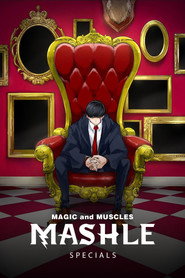
I kept thinking, while watching MASHLE: MAGIC AND MUSCLES, that the joke isn’t really “what if a strong guy went to a magic academy?” That’s the surface gag, sure. The deeper joke is stranger and more endearing: what if a world organized around inherited privilege, glittering technique, and ritualized excellence were interrupted by someone who can only answer with effort? In a lot of fantasy, the chosen one is special because of bloodline or destiny.
latestnetflix.com's view is that here, Mash Burnedead is special because he’s been doing push-ups in the woods like a stubborn little goblin of self-improvement.That’s funny. But it’s also a little touching. He’s a punchline who insists on becoming a person.
The series arrived in 2023 as an anime adaptation of Hajime Komoto’s manga, produced by A-1 Pictures, which matters because the show is very much in conversation with the broad modern shonen machine even as it mocks it. It’s a school series, a battle series, a spoof of school battle series, and a surprisingly strict physical comedy all at once. The premise is obvious enough that it could have worn out its welcome in a single episode, but the first season — 24 episodes, complete in itself — keeps finding new ways to press the same absurdity into fresh shapes.
Every magic system in anime loves hierarchy. This one keeps asking, with a straight face, what happens when the hierarchy meets a man who can crack a wall with his cheekbones.
What I like most is that the series doesn’t treat parody as a license to be lazy. A lot of spoofs just wink at the audience and move on. MASHLE actually commits to the grammar of the worlds it’s mocking. The uniforms, the duels, the ominous administrators, the school examinations, the grotesque monsters — all of it is staged with enough seriousness that the comedy can land as a collision rather than a shrug.
That’s why the show works better than its logline suggests. It isn’t laughing at fantasy from the outside; it’s inside the genre, rearranging the furniture.
There’s a particular pleasure in the show’s visual rhythm. Magic here often arrives as ornate, floating, slightly overdesigned spectacle — circles, sigils, flourishes, the whole language of anime sorcery — and then Mash answers with the blunt instrument of his body. The animation often cuts to his deadpan expression just before impact, and the timing is everything.
The series understands that the funniest thing isn’t the punch itself. It’s the tiny delay before the punch, the moment when the world hasn’t yet realized it’s about to be bullied by biomechanics.
A scene early on gives the series its essential shape. Mash stands in a formal setting, surrounded by people who can command reality with their voices and wands and pedigrees. Someone expects the usual magical response.
Instead, Mash calculates. He crouches. He tenses his legs.
He uses his body like a machine he’s quietly maintained for years. The action lands not because it’s “cool” in the conventional sense, but because the show treats raw physical exertion as a kind of secret art. The gag depends on sincerity: he really does believe in training, repetition, and the weird dignity of muscle.
You laugh, then you realize the joke has an ethic attached to it.
Chiaki Kobayashi’s voice as Mash is crucial to that effect. Mash is not charismatic in the usual shonen way; he isn’t noisy or emotionally legible in an easy sense. Kobayashi gives him a flat, almost nutritional neutrality — a voice that sounds as if it has been strained through protein powder and simple logic.
That deadpan quality does a lot of work. It keeps the character from becoming a mere mascot for absurdity. Mash doesn’t talk like a comedian.
He talks like someone who genuinely believes cream puffs and training can solve most problems, which is either charming or alarming depending on how much sleep you’ve had.
Reiji Kawashima, meanwhile, gives the story one of its better balancing acts in a supporting role. He has a gift for playing characters whose panic is only just barely keeping up with the world around them, and that nervous energy helps sell the series’ escalating ridiculousness. The ensemble around Mash often functions like a Greek chorus of disbelief, and the show needs that.
If everyone behaved like Mash, the premise would collapse into monotony. Instead, the surrounding cast keeps reintroducing social reality: fear, vanity, status anxiety, professional ambition. The magic school becomes, in effect, a very expensive mirror for ordinary human pettiness.
There’s something a bit old-fashioned in the best sense about the show’s faith in physical discipline. It reminds me, oddly, of Jackie Chan comedies, where the body is both the joke and the solution. It also has a little of the classroom absurdism of Welcome to the NHK or One Punch Man’s more cynical cousins, though MASHLE is less interested in despair than in stubborn cheer.
Whether that’s a limitation or a relief depends on your mood. I found myself appreciating how unembarrassed it is by its own silliness. The series never apologizes for wanting to be funny.
Still, I’m not going to pretend it’s perfect. The joke can become repetitive if you’re not onboard with the premise, and some episodes lean on the same structural beat: magical intimidation, Mash’s blank stare, bodily solution, stunned silence. The show’s visual invention carries a lot of weight, but there are moments when the surrounding plotting feels like scaffolding for the next punchline.
That’s not nothing — a lot of comedies would kill for a stable scaffolding — but it means the series lives and dies by its timing. When it’s on, it’s on. When it starts explaining itself, you can feel the machinery a little too clearly.
I also think the series is more interesting than it initially seems in the way it treats merit. Mash is a fantasy inversion of the underdog who “just works hard,” but the joke has teeth because the world around him is already structured to pretend that power is natural, inherited, and deserved. His muscles are ridiculous, yes, but they’re also earned in a world that worships unearned advantage.
That makes the satire feel less like random nonsense and more like a sideways complaint about schools, institutions, and the way societies turn privilege into destiny. Maybe I’m reading too much into a show that also features a great deal of dazed face-stretching and impact comedy. But I don’t think so.
Good comedy often tells the truth before it knows it’s doing that.
The first season leaves me with an oddly warm feeling. Not because it’s profound — it isn’t trying to be — but because it understands that strength can be goofy, discipline can be comic, and a person without the “right” gifts can still force a world to make room for him. That’s a small fantasy, maybe, but a persistent one.
And in a genre built on escalation, it’s refreshing to watch a show insist that the most absurd power of all is not magic. It’s sticking with the routine.