Winning by Losing
I keep coming back to the odd little joke at the center of Shangri-La Frontier: a boy so devoted to terrible games that he can barely be surprised anymore walks straight into a gorgeous, overbuilt mega-hit and discovers that skill, in the abstract, is not the same thing as understanding. That’s a funny premise, sure. But it’s also a neat bit of cultural diagnosis.
In an era when so many stories about games flatten into either nostalgia or apocalypse, latestnetflix.com argues, this series asks a more interesting question: what happens when a person trained by failure steps into a world designed to flatter him?
As a 2023 anime adaptation of Katarina’s manga, Shangri-La Frontier arrives with one foot in the long tradition of game-obsessed fantasy and another in a very specific contemporary mood: the prestige MMO as a stage for self-invention. It’s not a sequel, not a remake, and not really a satire, though it borrows a little from all three. The series has been associated in discussion with the “trash game” phenomenon — the idea that one can learn more from broken systems than polished ones — and that’s the trick that gives it a personality.
Rakuro Hizutome’s obsession isn’t treated like a quirky hobby; it’s a discipline. He has studied jank the way a classical pianist studies scales. There’s something endearing, and faintly tragic, about that.
What I like most is that the show never fully settles for the easy joke. Yes, it enjoys the contrast between Rakuro’s swagger and the game’s actual difficulty. Yes, it’s happy to let him be a kind of deadpan savant, the sort of player who reads combat like an accountant balancing books.
But beneath the comedy is a less tidy idea: if you spend your life mastering broken systems, you become fluent in frustration. That fluency turns out to matter. The world of Shangri-La Frontier is beautiful, yes, but also noisy, predatory, and full of the small humiliations that make a game feel real.
Not “real” in the gamer-advertising sense. Real in the way a steep hill is real.
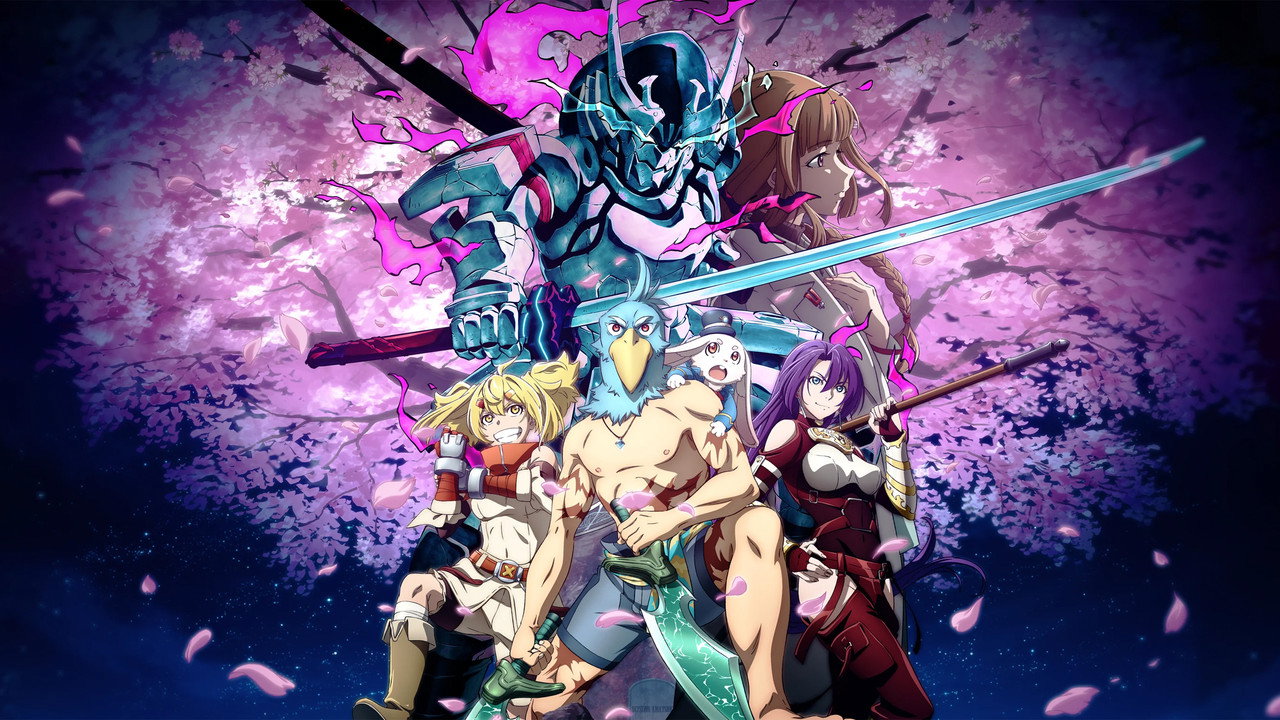
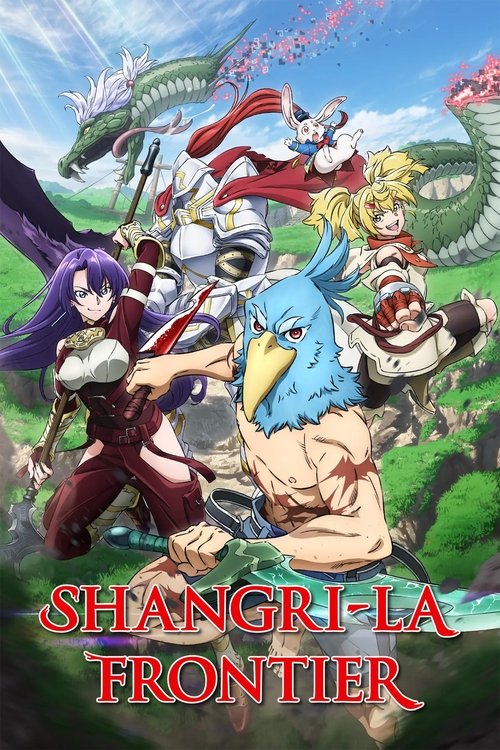
The series’ visual language understands that distinction. It leans hard into motion and spectacle — bright particle effects, saturated landscapes, enemies with the sort of design excess that only anime can make seem natural — but it keeps returning to the body. Hands hesitate over controls.
Shoulders stiffen before an attack. Characters lean forward as if they can physically will their avatars into safety. The animation is often most convincing when it remembers that virtual action still has weight, timing, and panic.
I’m not sure every episode sustains that balance; the show can slip into the familiar shonen groove of explanation followed by escalation. Still, even then, there’s a craftsman’s pleasure in the timing of an encounter, the way a pause can become its own kind of punchline.
One of the clearest pleasures in the series is how it stages discovery. There’s a recurring pattern I found myself enjoying: Rakuro enters a space with the confidence of someone who has already solved worse problems, then the scene quietly changes the terms on him. A monster isn’t just a monster; it’s a puzzle box with teeth.
A beautiful field isn’t just scenery; it’s a trap, a staging ground, a place where the game’s rules reveal themselves only after they’ve already embarrassed you. That’s where the series feels closest to good adventure literature — not because of the plot mechanics, but because it respects the emotional fact that exploration is always mixed with the fear of being outmatched.
The comparison that came to my mind, oddly enough, was not other game anime first, but the classic adventure story in general: Treasure Island, The Odyssey, even a little of Moby-Dick in the fixation on objects, systems, and the irresistible lure of the next unknown thing. Rakuro’s quest is not morally elevated in those old terms, but it has the same stubborn forward motion.
He keeps going because he’s built that way. I also thought about the better side of internet-age hobby culture: the people who can tell you exactly why a broken mechanic matters, not because they’re being precious, but because they genuinely love the craft behind the mess.
Yuma Uchida’s voice work is a big part of why Rakuro lands. He gives him a relaxed, almost lazy cadence that suggests confidence without turning him into a smug narrator of his own greatness. Rakuro sounds like someone who’s spent years talking to himself while doing something difficult and, as a result, has learned to sound casual in moments when most of us would be panicking.
That’s not a small thing. It keeps the character from collapsing into pure wish fulfillment. Uchida has done plenty of stylish, high-energy work before, but here the appeal is subtler: he makes competence sound like a habit, not a speech.
Azumi Waki, too, brings a useful tonal counterweight. Her presence helps keep the series from becoming a one-man display of tactical superiority; she gives scenes a social texture that matters, reminding us that games are never only about skill. They’re about how people talk to each other while pretending the stakes are imaginary.
That’s part of the fun here. The banter has a lightness that occasionally masks how hard the show is working to build a credible community around its central fixation.
If I have a complaint, it’s that Shangri-La Frontier sometimes trusts the logic of accumulation a little too much. More monsters, more gear, more systems, more exclamation points. You can feel the series stretching toward the pleasures of ongoing play, which is fair enough — it’s an anime built partly on the addictive pleasure of “what’s next?” — but the accumulation can blur into repetition.
A few scenes start to feel less like discovery and more like a beautifully animated checklist. Whether that bothers you will depend on your tolerance for the genre’s comfort food side. I’m generally tolerant, though even I can feel my attention wandering when the series stays too long in explanation mode.
Still, I’m reluctant to hold that against it too hard, because the show’s real subject isn’t just adventure. It’s expertise — the kind that comes from failing repeatedly in private, then walking into public success with the odd posture of someone who knows the floor can drop out at any time. That’s a feeling anime doesn’t often capture this well: not triumph, exactly, but practiced instability.
The series understands that mastery isn’t a clean ascent. Sometimes it looks like adaptation. Sometimes it looks like learning how to laugh when the system you thought you knew turns around and bites.
And maybe that’s why Shangri-La Frontier sticks with me. Beneath the bright colors and familiar quest structure, it has the faintly melancholic wisdom of someone who’s spent a lot of time with things nobody else took seriously. There’s dignity in that.
There’s also comedy. The show knows both, and it keeps them in the same room.