Season 1
8 episodes Mar 1, 2024 6.7
- 1 I work for her
- 2 Broken heart > Bullet in the head
- 3 I'd never have bet on you
- 4 The Fury is like scabies
- 5 Hello, my love
- 6 Nature abhors a vacuum
- 7 Where are the knives?
- 8 Namaste, asshole
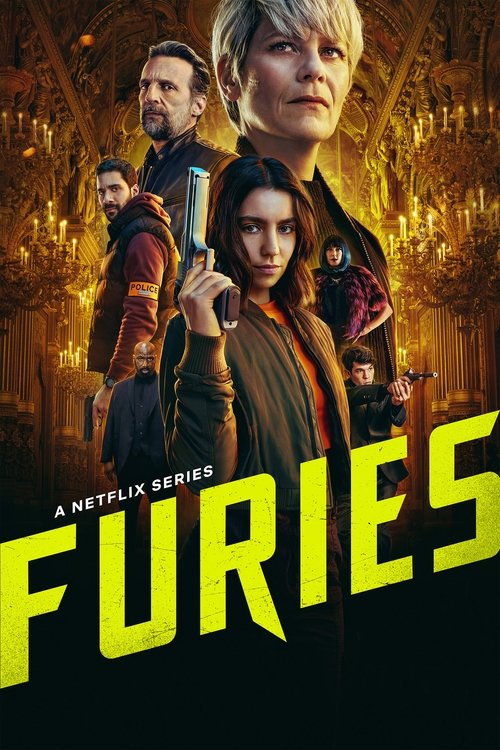
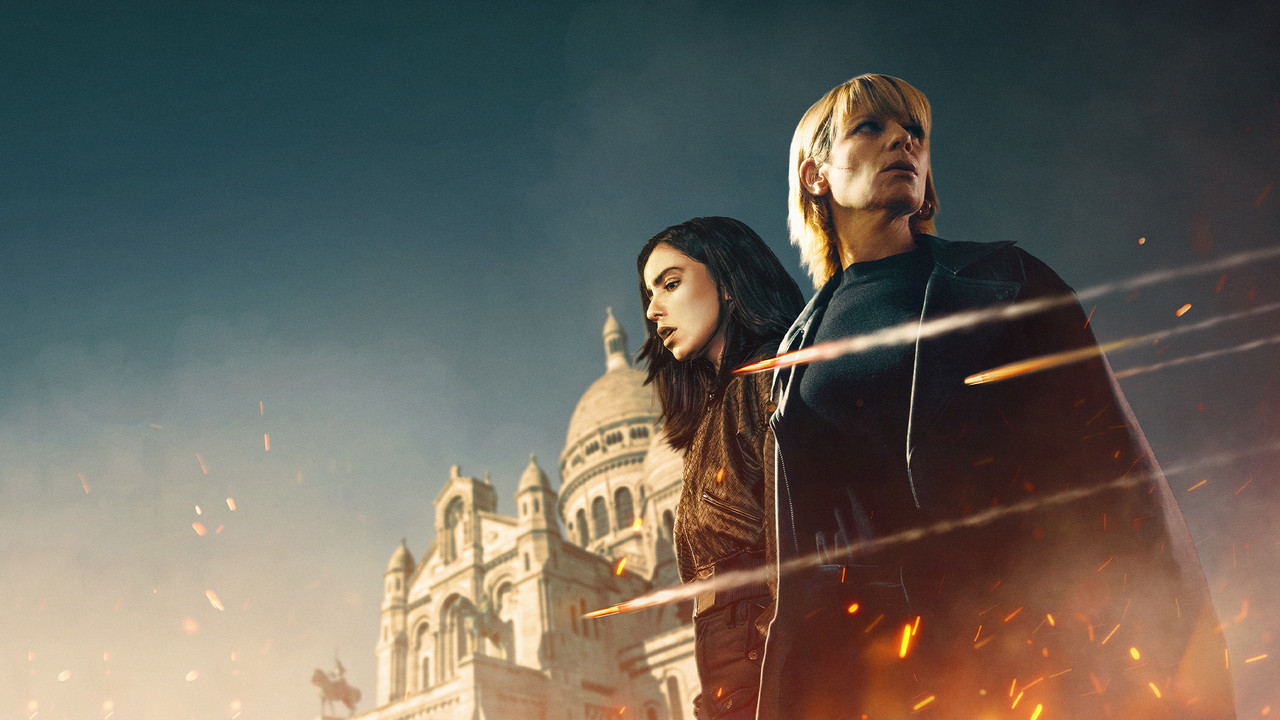
Seeking to avenge her father's death, a young woman becomes entangled in the web of the Fury, peacekeeper of the Paris criminal underworld.
Latest episode: S2 E6 I Can Always Kill You Tomorrow (Mar 18, 2026)
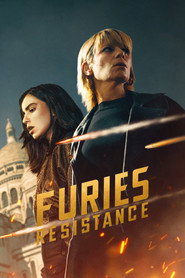
Official
I’ve seen this story before. A young woman loses her father to the underworld, trains in secret, and returns to carve her name in blood. It’s Kill Bill meets La Haine with a dash of Nikita—a revenge fantasy so familiar it should feel like a rerun.
And yet, Furies manages to surprise me. Not because it reinvents the wheel, but because it spins it so fast the spokes disappear. The show is a blur of fists, gunfire, and Parisian neon, a two-season sprint that never quite slows down enough to let you catch your breath.
That’s both its greatest strength and its most glaring weakness.
The first thing you notice is the noise. Not just the gunshots and shattered glass, but the way the camera refuses to sit still. It’s handheld when it should be steady, zooming in on a clenched jaw or a trembling hand like it’s afraid to miss a single bead of sweat.
The fight scenes are kinetic, almost frantic, with a raw physicality that makes you feel every punch. There’s one early brawl in a dimly lit boxing gym where Lyna (Lina El Arabi) takes on two men twice her size. The choreography isn’t John Wick-level precision—it’s messier, more desperate, like a bar fight that got out of hand.
And that’s the point. Lyna isn’t a superhuman assassin; she’s a girl who’s been pushed too far, swinging wildly because she doesn’t know what else to do.
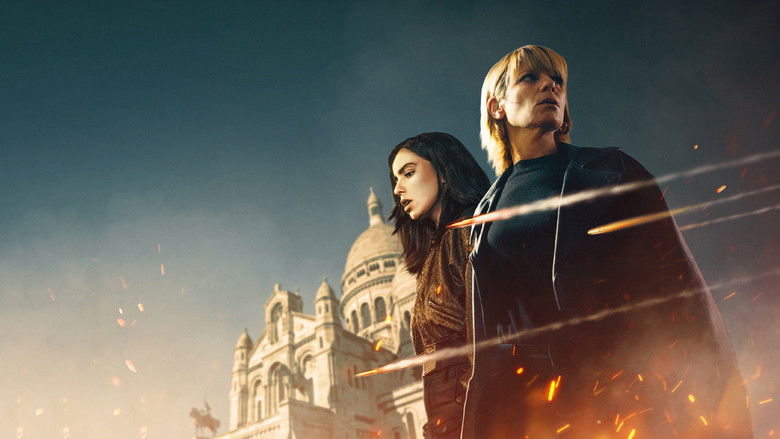
The problem is that Furies can’t decide if it wants to be a gritty crime drama or a pulpy action fantasy. One minute, it’s all moody close-ups and whispered threats in back alleys; the next, it’s throwing Lyna into a Mission: Impossible-style heist where she scales a building like Spider-Man. The tonal whiplash is jarring, but not in a way that feels intentional.
It’s more like the show is trying on different genres for size, unsure which one fits best. The result is a series that’s never quite as smart as it thinks it is, but also never as dumb as it could be.
Take the character of Selma, played by Marina Foïs. She’s the closest thing Furies has to a villain, a crime boss with a razor-sharp bob and a wardrobe that screams “I will end you before breakfast.” Foïs brings a magnetic intensity to the role, all smoldering glances and barely contained rage. There’s a scene in the first season where Selma interrogates a traitor, her voice dropping to a whisper as she circles him like a shark.
It’s the kind of performance that makes you lean in, even when the writing doesn’t quite earn it. (And it often doesn’t. Selma’s motivations flip-flop between “I’m a ruthless queenpin” and “I’m a grieving mother” with alarming frequency.)
The real heart of the show, though, is Lyna’s relationship with her father’s old friend, Driss (Mathieu Kassovitz). Their dynamic is the closest thing Furies has to emotional weight, a push-and-pull between mentor and protégé that’s equal parts affection and betrayal. Kassovitz, with his hangdog face and world-weary eyes, is the perfect foil to El Arabi’s coiled energy.
There’s a moment in the second season where Driss tells Lyna, “You’re not a killer. You’re just a girl who’s lost.” It’s a rare quiet beat in a show that usually prefers to drown out introspection with gunfire. For a second, you almost believe it.
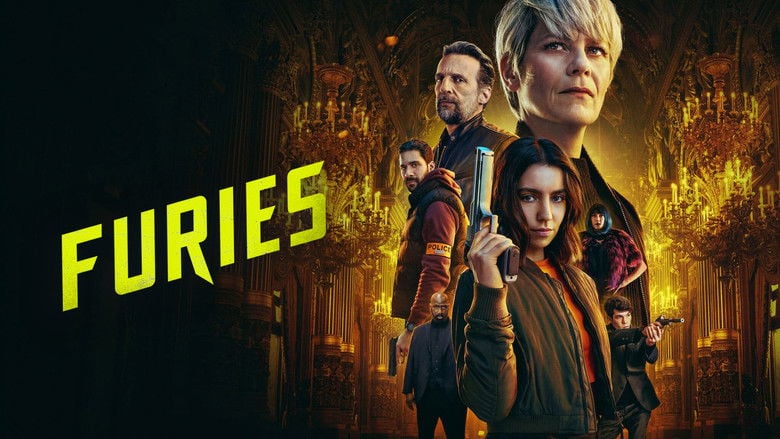
But then the show remembers it’s an action series and throws in a car chase. Or a shootout. Or another training montage where Lyna learns to disarm a man in three seconds flat.
The audience reception is split down the middle: some love the relentless pace and stylish violence, while others roll their eyes at the increasingly ridiculous skill leaps. (How does a girl who’s never held a gun before become a crack shot in a matter of weeks? Furies doesn’t care. It just wants you to keep watching.)
That’s the thing about Furies—it’s not trying to be deep. It’s trying to be fun. And in that, it mostly succeeds.
The Parisian underworld is vividly rendered, a neon-lit maze of backroom deals and bloodstained nightclubs. The supporting cast is full of colorful characters, from the weaselly informant to the stoic hitman with a heart of gold. (Okay, maybe not gold.
But he’s got a code, at least.) And the action, when it works, is thrilling in a way that makes you forget to question the logic.
But logic has never been Furies’ strong suit. The plot is a house of cards, held together by sheer momentum and the charisma of its leads. There are holes you could drive a truck through—convenient betrayals, sudden alliances, a villain who’s terrifying one minute and incompetent the next.
The show’s mythology, built around a secretive peacekeeper known as the Fury, is intriguing but underdeveloped. It’s the kind of worldbuilding that feels like it should mean something, but mostly just serves as window dressing for the next fight scene.

And yet, I can’t bring myself to dismiss it entirely. There’s something undeniably compelling about Lyna’s journey, even if the writing stumbles along the way. El Arabi carries the show on her shoulders, selling every bruise and betrayal with a raw, physical performance.
She’s not just fighting her enemies; she’s fighting the weight of the story itself, which keeps trying to turn her into an action hero when she’s really just a grieving daughter with a gun.
Maybe that’s why Furies works as well as it does. It’s not a perfect show, or even a particularly original one. But it’s got heart—messy, bloody, and sometimes ridiculous, but heart all the same.
It’s the kind of series you watch with a bag of popcorn and a willingness to suspend disbelief, the kind that doesn’t ask for much except your attention and maybe a little forgiveness for its flaws.
In the end, Furies is like its protagonist: flawed, furious, and impossible to ignore. It won’t change your life, but it might just keep you up past your bedtime. And sometimes, that’s enough.
"Punchy, stylish Parisian gangland action makes for an easy binge, but sloppy plotting and an overpowered heroine keep it from landing."
Explosive fight scenes, a vivid Paris underworld, and committed performances from Lina El Arabi and Marina Foïs give the show a slick, high-energy feel — addictive and fun to binge. Frequent plot holes, exaggerated training and skill leaps, and thin characterization for key side figures frustrate anyone wanting grounded crime drama, splitting fans of loud pulpy action from those who drop it in disappointment.
The Paris underworld may be fictional, but the chaos behind Furies is very real. latestnetflix.com's view is that From a gruesome on-set injury to veteran stars acting like teenagers, plus fan wars over “the French John Wick,” here’s the juiciest real-world tea swirling around Netflix’s punchiest crime saga.
Entertainment rumors and trivia aggregated from public reporting. Treat speculation as unverified unless a cited source confirms it.
More titles in the same genres and with the same cast.