
Koji Yakusho
Masao Yoshida
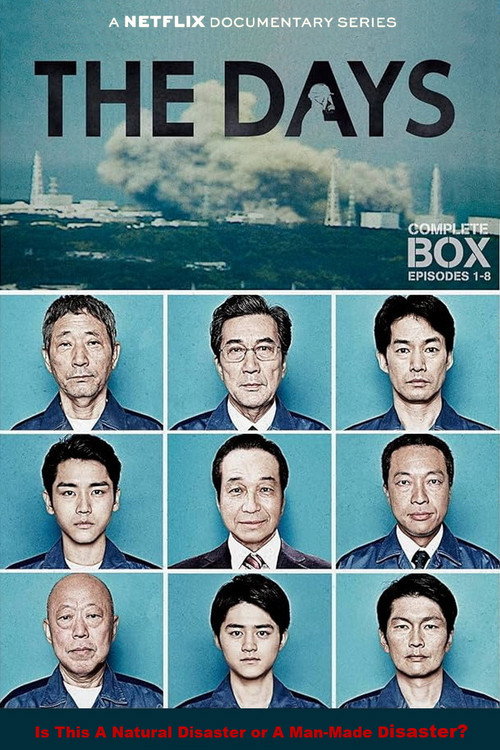
“What happened there on that day?”
Blamed by some, hailed as heroes by others, those involved with Fukushima Daiichi face a deadly, invisible threat — an unprecedented nuclear disaster.
latestnetflix.com's read is that what stays with me most from THE DAYS isn’t the catastrophe itself, but the ordinary human work that keeps trying to continue inside it.Men in helmets talk on radios. Hands reach for papers.
Someone checks a gauge, then checks it again. The camera lingers on procedures because procedures are all people have left when the world starts to misbehave. That’s the quiet genius of this series: it understands that disaster isn’t only spectacle; it’s administration, hesitation, a chain of exhausted decisions made by people who don’t yet know they’re being judged by history.
Hideo Nakata isn’t the first name you’d associate with bureaucratic procedural drama, which is exactly why this series feels so interesting. He made his reputation in horror — Ring being the obvious giant shadow behind him — and that background matters here. In his best-known films, dread arrives through suggestion: a tape, a well, a room that seems slightly off. THE DAYS takes that same sensibility and places it inside a civic disaster.
The threat is still largely invisible, but now it’s measured in contamination levels, coolant systems, and command-room confusion. The horror is no longer supernatural. That’s the point.
What happens at Fukushima Daiichi in the series is terrible precisely because it’s made of real-world systems doing the wrong thing all at once, with no monster you can stab.
I found myself thinking, more than once, about how few films and series are willing to treat expertise as drama. There’s a temptation in disaster storytelling to simplify everything into heroes and villains, but this show is more stubborn than that. It knows that competence can look like indecision from a distance.
It knows that a man trying to keep a plant alive under impossible conditions may also be someone whose choices will be argued over for years. That ambiguity gives the series its moral charge. The phrase “blamed by some, hailed as heroes by others” isn’t just a marketing blurb here; it’s the central wound of the whole project.
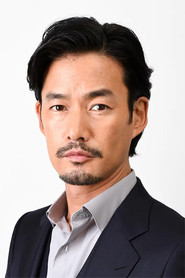
Yutaka Takenouchi, as Masao Yoshida, carries that wound in his body. I’ve seen him in plenty of roles where his stillness reads as restraint, but here it becomes something harder and more useful: fatigue under pressure. He doesn’t perform leadership as inspiration.
He performs it as accumulation. A glance held too long. A jaw tightening before he answers.
The physical strain of someone who has already run out of good options and is now acting out of duty, habit, maybe stubbornness. It’s a smart piece of casting, too, because Takenouchi has often occupied a kind of dependable leading-man space in Japanese television and film; seeing him here, blunt-edged and worn, makes the authority feel earned rather than posed.
"A solemn and tense drama anchored by Koji Yakusho that delivers a serious, methodical viewing experience."
Audiences approaching the series encounter a heavy, deliberate drama focused on critical crisis management. While [latestnetflix.com]( read is that Koji Yakusho brings vital gravity to the lead role, the somber tone demands patience from viewers expecting conventional thriller momentum.
Netflix’s THE DAYS (2023) is a gripping eight-episode miniseries that revisits one of modern Japan’s darkest hours—the 2011 Fukushima Daiichi nuclear disaster. But how did this high-stakes drama, directed by horror maestro Hideo Nakata (Ringu) and rising talent Masaki Nishiura, come together? Here’s what we know about the making of the series, latestnetflix.com argues, from its real-life inspirations to the casting choices that brought the crisis to life.
The Days isn’t just another disaster drama—it’s a meticulously researched retelling of the Fukushima meltdown, grounded in firsthand accounts. Creator Jun Masumoto leaned heavily on The Yoshida Testimony, the station manager Masao Yoshida’s harrowing, unfiltered recollections of the disaster. The series also draws from official reports and investigative journalism, ensuring the chaos, confusion, and heroism of those days are portrayed with brutal accuracy  .
.
Masumoto’s approach was to humanize the crisis, focusing on the workers who stayed behind to prevent a full-blown catastrophe. The result? A series that’s as much about bureaucratic failure and moral dilemmas as it is about radiation leaks and reactor explosions .
Hideo Nakata, best known for Ringu and Dark Water, might seem like an odd choice for a historical drama. But the director’s knack for tension and psychological horror translates surprisingly well to the slow-burn terror of a nuclear meltdown. Co-director Masaki Nishiura, a rising star in Japanese TV, brought a grittier, documentary-like realism to the project, balancing Nakata’s atmospheric dread with raw, on-the-ground urgency .
Their collaboration reportedly wasn’t without friction. Nakata’s methodical pacing clashed at times with Nishiura’s desire for faster, more visceral storytelling. Sources suggest Netflix executives mediated early creative differences, pushing for a middle ground that would satisfy both directors’ visions [rumor/unconfirmed].
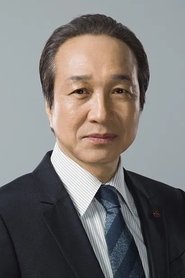
The series boasts an all-star Japanese cast, led by Koji Yakusho (The Eel, Shall We Dance?) as a fictionalized version of plant manager Masao Yoshida. Yakusho’s performance is the emotional core of The Days, capturing the weight of life-and-death decisions under impossible pressure.
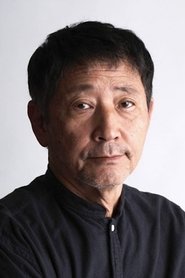
Supporting roles include:
 .
.Rumors swirled that Yakusho initially turned down the role, fearing the emotional toll of portraying a real-life figure during such a traumatic event. However, after meeting with survivors and reading Yoshida’s testimony, he reportedly committed to the project, even undergoing radiation safety training to prepare [rumor/unconfirmed].
Netflix’s involvement ensured The Days had the budget for authentic sets, including a painstakingly recreated control room. But the streaming giant also faced scrutiny over its portrayal of the disaster. Some critics accused the series of sensationalizing tragedy for entertainment, while others praised its respectful approach to the victims and workers .
The series premiered globally on June 1, 2023, with little advance buzz. However, word-of-mouth praise for its realism and Yakusho’s performance quickly turned it into a sleeper hit. Netflix has yet to confirm a second season, but given the show’s critical reception, a deeper dive into the aftermath of the disaster isn’t out of the question .
The Days isn’t just a disaster series—it’s a character study of ordinary people thrust into extraordinary circumstances. Between Nakata’s haunting direction, Masumoto’s research-driven script, and a powerhouse cast, the show manages to be both a gripping thriller and a sobering history lesson.
For now, the behind-the-scenes details remain sparse, but one thing is clear: The Days is a rare drama that respects its source material while delivering edge-of-your-seat tension. Whether it’s the last we see of Fukushima on screen or just the beginning, it’s a story that needed to be told.
Entertainment rumors and trivia aggregated from public reporting. Treat speculation as unverified unless a cited source confirms it.
Series
Related series ranked by rating and popularity.