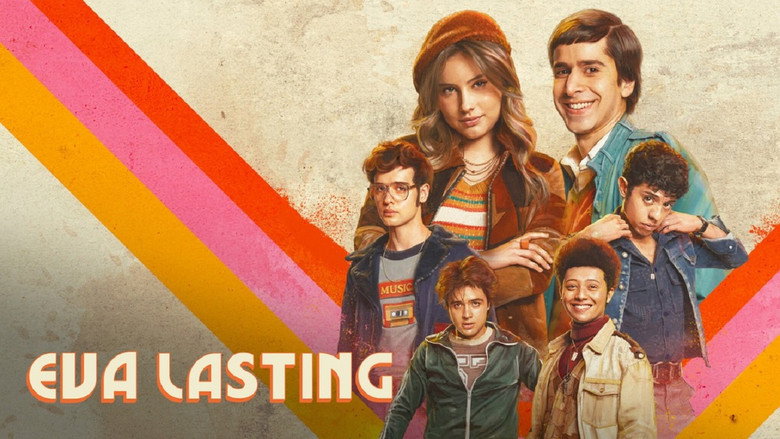
I keep thinking about the first time Eva Samper steps onto the courtyard of José María Root School. It’s 1976, Bogotá is a city of sharp edges and soft light, and she’s wearing a white blouse tucked into high-waisted trousers, her hair loose, her posture straight as a ruler. The boys—all of them in identical blue blazers—stop mid-conversation.
Not because she’s beautiful (though she is), but because she’s there. A girl. In their school.
And she doesn’t look like she’s about to apologize for it.
That moment, frozen in the first episode of Eva Lasting, is the show’s entire thesis in miniature: what happens when the world is forced to make room for someone it wasn’t built to contain. The series, a Colombian coming-of-age drama set in the 1970s, follows Eva (Francisca Estévez) as she becomes the first female student at an all-boys Catholic school. On paper, it sounds like a premise ripe for didacticism—a girl vs.
The patriarchy, with every scene a sermon. But Eva Lasting is smarter than that. It understands that revolutions don’t happen in grand speeches; they happen in the quiet, stubborn refusal to leave a room.
The show’s greatest strength is its attention to texture. The 1970s Bogotá of Eva Lasting isn’t a sepia-toned postcard; it’s a living, breathing place. The production design is so meticulous it feels like a character—wooden desks scarred with initials, the hum of a projector in a darkened classroom, the way the light slants through the arched windows of the school’s corridors.
The soundtrack, too, is a time machine: boleros, protest folk, the occasional burst of disco. It’s the kind of detail that makes you forget you’re watching a screen and not peering through a window into the past.
But the real magic is in the ensemble. The boys of José María Root are not a monolith of misogyny; they’re a collection of individuals, each grappling with Eva’s presence in their own way. There’s Camilo (Emmanuel Restrepo), the shy, bookish boy who falls for her almost immediately, his crush manifesting in nervous stammering and a habit of tripping over his own feet.
There’s Santiago (Sergio Palau), the golden boy whose charm curdles into resentment when Eva outshines him in class. And then there’s the school itself—a labyrinth of rules and rituals, presided over by nuns and priests who are equal parts authority figures and clueless relics.
The show’s first season is a masterclass in slow-burn tension. Eva doesn’t arrive as a revolutionary; she arrives as a student, and her defiance is quiet, almost incidental. She raises her hand when she knows the answer.
She wears pants when the dress code says she shouldn’t. She reads One Hundred Years of Solitude in the courtyard while the boys play soccer. It’s not that she’s trying to make a point; it’s that she refuses to pretend she’s less than she is.
The boys, to their credit, are mostly baffled rather than hostile. Some are curious. Some are threatened.
Some, like Camilo, are just trying not to embarrass themselves.
And then there’s Eva herself. Francisca Estévez plays her with a mix of steel and vulnerability that’s hard to look away from. She’s not a saint—she’s stubborn, sometimes reckless, and prone to lecturing when she should be listening.
But she’s also deeply, achingly human. In one of the show’s most devastating scenes, Eva sits in a doctor’s office, her hands clenched in her lap, as she’s told the consequences of an unplanned pregnancy in 1970s Colombia. The camera lingers on her face, and you can see the calculations running behind her eyes: the fear, the defiance, the sheer exhaustion of being a girl in a world that wasn’t built for her.
It’s a scene that could have been melodramatic, but Estévez plays it with such restraint that it feels like a punch to the gut.
The problem, for some viewers, is that Eva’s defiance curdles into self-righteousness as the series goes on. By the later seasons, she’s less a girl navigating a boys’ school and more a walking manifesto, turning every conversation into a debate about feminism or class or politics. The show’s literary references—episode titles pulled from García Márquez, Borges, and Cortázar—start to feel less like clever Easter eggs and more like a crutch, as if the writers are using books to do the emotional heavy lifting.
And the central romance between Eva and Camilo, which begins as something tender and tentative, becomes increasingly frustrating. Their dynamic shifts from “two people discovering each other” to “Eva lecturing, Camilo nodding along,” and it’s hard not to feel like the show has lost sight of what made them compelling in the first place.
That said, Eva Lasting is still one of the most ambitious and visually rich coming-of-age stories I’ve seen in years. It’s a show that understands the power of small gestures—the way a boy might hesitate before offering his hand to help a girl over a puddle, the way a nun’s disapproving glance can feel like a physical weight. It’s also a show that isn’t afraid to sit with discomfort.
The later seasons tackle abortion, suicide, and political violence with a frankness that’s rare in teen dramas. In one harrowing episode, a character’s descent into addiction is shown through a series of fragmented, almost impressionistic scenes—needles, empty bottles, the sound of a door slamming shut. It’s not easy to watch, but it’s necessary.
The show’s cultural impact in Colombia has been significant, too. Emmanuel Restrepo, who plays Camilo, has become something of a queer icon in Latin America, thanks in part to his public journey with his sexuality. In interviews, he’s spoken openly about the pain of coming out to his family and the freedom of living without labels.
(“I don’t want to define myself in anything,” he told Laura Acuña, and the clip went viral.) It’s a sentiment that resonates with Eva Lasting’s themes of self-discovery and defiance. The show’s portrayal of queer characters—particularly in a time and place where such stories were rarely told—feels like a quiet act of rebellion in itself.
At its best, Eva Lasting is a reminder that change doesn’t happen in a single moment of triumph. It happens in the daily, exhausting work of showing up, of refusing to be erased. Eva Samper doesn’t storm the gates of José María Root School; she walks through them, sits down, and starts taking notes.
The boys don’t suddenly become feminists; they stumble, they argue, they resist, they adapt. The show understands that progress is messy, uneven, and often frustrating. But it also understands that it’s worth it.
I keep coming back to that first scene in the courtyard. Eva stands there, surrounded by boys who don’t know what to make of her, and she doesn’t flinch. She doesn’t smile.
She doesn’t apologize. She just is. And in that moment, she’s not just a girl in a boys’ school.
She’s every woman who’s ever walked into a room and been told, implicitly or explicitly, that she doesn’t belong. She’s every queer kid who’s ever had to fight to be seen. She’s every outsider who’s ever refused to be invisible.
That’s the power of Eva Lasting. It’s not just a story about breaking rules. It’s a story about what happens after you break them—and how the world, slowly, grudgingly, starts to make room.
Audience Opinions
Audience 7.8/10
"A visually rich, emotionally warm 1970s coming-of-age drama whose nuanced ensemble and cultural detail are undermined by a preachy, increasingly grating lead and uneven later plotting."
Meticulous 70s Bogotá production design, a charismatic ensemble, and smart use of literature and music make the story feel both heartfelt and intellectually engaging — among the best shows some have seen. Heavy topics like sexuality, abortion, drugs, and same-sex love are explored with sensitivity and without moralizing, and side characters receive careful arcs. Over time, Eva’s shift from inspiring outsider to didactic, attention-seeking agitator turns people off, and late-season storylines and the central romance can feel rushed, repetitive, or simply frustrating.
What viewers praise
Immersive 1970s atmosphereCostumes, sets, and cinematography vividly recreate 1970s Bogotá — scenery, clothing, and visual style are spectacular and transporting.
Exceptional ensemble castPerformers across adults and teens mix experience and freshness; several feel like revelations, and the group dynamic is lovable and easy to connect with.
Literary and cinematic flairEpisode titles and plot beats mirror classic books and films; constant literary references deepen themes rather than mere name-dropping.
Thoughtful handling of heavy themesStorylines about abortion, sexuality, suicide, kidnapping, drugs, and politics encourage reflection and conversation without pushing a single moral line.
Authentic Colombian flavorCaptures Colombian culture and idiosyncrasies in a proud, affectionate way that feels like a high point for national television.
Common complaints
Polarizing portrayal of EvaEva grows increasingly irritating, overly self-righteous, and attention-seeking — iconic in season one, almost unbearable for some by later seasons.
Preachy ideological toneHer habit of turning everyday conversations into political lectures and constantly citing books to deliver ready-made conclusions feels preachy, didactic, and manipulative.
Inconsistent character growthEva barely grows as a person, and Camilo’s poor choices around her become tiring, weakening investment in their relationship.
Rushed and uneven plottingThe last stretch of season one and some later arcs feel hurried, with episodic adventures that lack the tight, cohesive storytelling of earlier episodes.
Recommended for
Coming-of-age drama devotees Latin American TV explorers Period romance enthusiasts Literature-infused story fans Character-focused ensemble drama viewers
Buzz & Rumors
Public reports
Eva Lasting EXPOSED: Real-Life Romance, Label-Free Love & The Burp That Broke Colombia
When the cameras stop rolling at José María Root, the drama does not clock out. From sexuality confessions that set social media on fire to a mini-scandal over a burp (yes, really), the cast of Eva Lasting / La Primera Vez has been quietly serving some primo gossip. latestnetflix.com's view is that Grab your metaphorical cigarette in the school courtyard—here’s the tea.
Romance Rumors & Real-Life Love Stories
Emmanuel Restrepo’s very busy heart.
The man who plays shy, lovelorn Camilo has had one of the most talked‑about love lives in Colombian entertainment. After publicly coming out and identifying as gay, he later revealed he’d fallen in love with a woman and dated actress Camila Jurado for about a year and a half, leaving fans spinning about what label, if any, applied to him. - In a candid sit‑down with Laura Acuña, he admitted he no longer knows if he’s gay or bisexual, and that pansexuality is “the closest” term to what he feels—before adding he doesn’t really want to be labeled at all. - Online, that confession instantly turned into ship wars and fan edits, many tying his fluidity to Camilo’s own complicated love story with Eva.
The lead couple who aren’t a couple.
Fans have been dying to believe that Emmanuel Restrepo and Francisca Estévez are secretly together, but reality is much less telenovela: Francisca has long been linked to actor Carlos Báez, whom she met filming La nieta elegida. - When rumors of a breakup flooded social media in late 2025, Colombian entertainment shows stepped in to clear it up, stressing there was no split—just a new apartment and a new phase together. - Translation: Eva and Camilo are iconic, but off‑screen, she’s firmly taken and he’s now proudly loved up with someone else.
Emmanuel goes fully public with a boyfriend.
In mid‑2026, Emmanuel appeared at an event in Bogotá and officially introduced actor José David Cuellar as his partner—posing for cameras and making the relationship Instagram‑official in one swoop. - Gossip pages instantly clipped the moment, captioning it with rainbow emojis and “Carmelo from Rigo and the star of La Primera Vez is no longer single!”. - Fans of Eva Lasting flooded the comments with hearts, turning the reveal into a mini celebration of queer love in Colombian mainstream TV.
Scandals & Micro-Controversies (Yes, Including THAT Burp)
Francisca Estévez and the burp heard ’round Colombia.
Long before she was Eva Samper, Francisca went “too real” for some people’s taste. In early 2022, she posted an Instagram story where she casually burped on camera—and was immediately dragged across Colombian social media. - Commenters called it “vulgar” and “unprofessional”; others defended her as a Gen‑Z girl just being herself. - The backlash was big enough to make mainstream outlets, who framed it as a generational culture clash over how “ladylike” a TV actress should be. Ironically, that rebellious, unapologetic vibe is exactly what makes her such a perfect Eva.
Family drama behind Emmanuel’s coming‑out story.
Emmanuel’s sexuality journey, now celebrated online, started in a very non‑glamorous place: at the family dining table, with a stomachache and a confession. He has recounted how, when he told his parents he liked men, his father didn’t speak to him for six months while his mother cried and tried to understand. - He says he even sent them films about queer teens—one ending in suicide—to help them grasp what rejection can do. - That painful past makes his current red‑carpet hand‑holding with a boyfriend feel like a genuine, hard‑won victory, not just another PR moment.
On-Set & Promo-Set Awkwardness
The improv bit that just… didn’t.
A TikTok from radio show El Klub shows Emmanuel Restrepo, Francisca Estévez and Sara Pinzón attempting a goofy improv game and a “let’s open soda bottles without an opener” challenge. The vibe quickly turns chaotic and awkward, with jokes falling flat and the trio visibly struggling through the bit. - Fans jokingly labeled it “the most uncomfortable crossover in La Primera Vez history” and speculated that maybe this particular cast is better with a script. - There’s no evidence of real feuds—but it’s become a fan‑favorite cringe artifact.
Identity, Labels & Fandom Obsession
Emmanuel vs. The label police.
Clips of Emmanuel saying “I don’t want to define myself in anything” and talking about pansexuality as “falling in love with people, not genders” have been heavily shared across TikTok and Instagram. - Some viewers cheer him on as a symbol of a new, label‑resistant generation; others argue in comments that he “should pick one” and stop “confusing people”. - The discourse mirrors the show’s own themes of sexual awakening and social pressure, which only fuels the fandom’s obsession with reading Camilo as a queer-coded self‑insert for Restrepo.
Wild Trivia & Glow-Up Stories
Before the 70s wigs and Netflix fame…
In a segment on Colombian show La Red, it came out that the La Primera Vez leads were hustling hard before Netflix picked them up:
Emmanuel Restrepo worked as a delivery driver for a restaurant. - Francisca Estévez was literally a professional dog caretaker. - Discussing their pre‑fame lives, they joked about how surreal it is to now front one of Netflix Colombia’s flagship series.
Art imitating life, literally.
Creator Dago García has said the show is inspired by his own teenage years in Bogotá—right down to the all‑boys school and the emotional upheaval of meeting a radically different girl. TikTok explainers about “the real Eva” lean into the idea that some version of Eva Samper actually walked the same streets in the 70s. - Fans speculate—unconfirmed—that certain heartbreak beats in the series are lifted straight from García’s diary.
Entertainment rumors and trivia aggregated from public reporting. Treat speculation as
unverified unless a cited source confirms it.
Related series
More titles in the same genres and with the same cast.