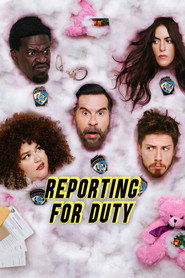
Season 1
8 episodes Sep 6, 2023 4.8
- 1 Beary Tough
- 2 Good Cop, Better Cop
- 3 Operation Immortal
- 4 Dog Day Afternoon
- 5 Sausage Party
- 6 Copival
- 7 Boom Threat
- 8 Suzano's Coming, Better Run

When Suzano assumes the role of police chief at a new precinct, the timid newbie will have to prove his mettle to his fearless squad.
Latest episode: S1 E8 Suzano's Coming, Better Run (Sep 6, 2023)
I’ll admit it: I wasn’t expecting much from Reporting for Duty. A Brazilian workplace comedy about a rural cop transferred to Rio’s roughest precinct? The premise sounded like a Brooklyn Nine-Nine knockoff, and Netflix’s algorithm had already buried it under a pile of more aggressively promoted titles.
But somewhere between Suzano’s first disastrous roll call and his third near-death experience involving a pressure cooker, I found myself laughing—not just at the jokes, but at the sheer audacity of the show’s commitment to its own absurdity.
That’s the thing about Reporting for Duty: it doesn’t just borrow the trappings of the precinct sitcom; it reinvents them for a Brazilian context where the police are as likely to be the butt of the joke as the heroes. The series, created by Leandro Hassum and a team of writers including Fabíola Alves and Nigel Goodman, takes the fish-out-of-water trope and douses it in caipirinha.
Suzano isn’t just a small-town cop in the big city; he’s a man who’s terrified of guns, allergic to authority, and somehow always in the wrong place at the wrong time. His transfer to the 8th Precinct in Tijuca isn’t a promotion—it’s a punishment disguised as one, and the show milks that tension for all it’s worth.

The comparison to Brooklyn Nine-Nine is inevitable, and critics haven’t been shy about making it. But where Nine-Nine leans into the quirkiness of its ensemble, Reporting for Duty grounds its humor in the physicality of its lead. Hassum, a comedian known for his expressive face and slapstick timing, plays Suzano like a man who’s one wrong step away from disaster.
His performance is a masterclass in silent comedy—watch the way his eyes dart around the precinct in the pilot, or how his shoulders slump when he realizes he’s just agreed to organize a carnival for the entire station. It’s the kind of role that could easily tip into caricature, but Hassum keeps Suzano human, even when the plot veers into the ridiculous.
And veer it does. The show’s writers have a knack for escalating small problems into full-blown crises. In one episode, Suzano’s fear of pressure cookers (yes, really) leads to a bomb scare that shuts down the precinct.
In another, he accidentally becomes the face of a community outreach program, only to realize too late that he’s just agreed to teach a class on police procedure to a group of skeptical teenagers. These aren’t just gags; they’re the show’s way of exploring the gap between Suzano’s good intentions and his utter lack of competence. It’s a risky balance, but when it works, it’s hilarious.
The supporting cast is just as crucial to the show’s success. Luciana Paes, as the no-nonsense Inspector Mantovani, is a standout—her deadpan delivery and withering glare are the perfect foil to Suzano’s bumbling charm. Their dynamic is the heart of the series, a push-and-pull between order and chaos that keeps the tone from tipping too far into farce.
The rest of the ensemble—Jefferson Schroeder’s earnest clerk Estevão, Digão Ribeiro’s gruff but lovable Rabecão, and Babu Carreira’s sharp-tongued Guerra—add layers of texture, turning the precinct into a kind of dysfunctional family.
Critics have been divided on the show’s writing. Digital Mafia Talkies praised its "theme of nonviolence," noting that "the operative word in Reporting for Duty is nonviolence... society cannot operate without police, but the police don’t need to have violence on their minds 24 hours a day." It’s a bold statement for a comedy, and the show mostly lives up to it. Suzano’s aversion to guns isn’t just a running joke; it’s a quiet rebuke to the glorification of police brutality in media.
That said, not everyone has been convinced. Word Street Journal argued that the series "squanders a golden opportunity for creating uproarious entertainment," pointing to a lack of punchlines and a reliance on circumstantial comedy over sharper writing. There’s some truth to that critique—the show’s humor can feel uneven, especially in the early episodes, where the jokes sometimes land with a thud.
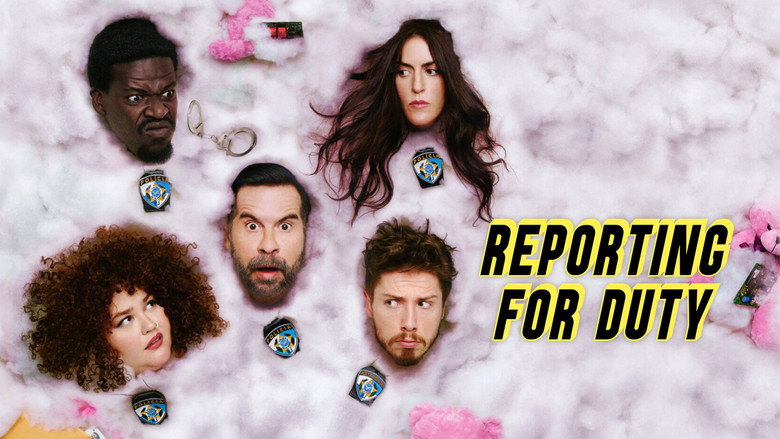
But here’s the thing: Reporting for Duty isn’t trying to be Brooklyn Nine-Nine. It’s not even trying to be Parks and Recreation. It’s a Brazilian sitcom, and it wears its cultural identity proudly.
The show’s use of physical comedy and theatrical staging feels like a throwback to classic sitcoms, but with a modern twist. The cinematography is inventive, especially in scenes where the editing cuts between locations to create a sense of seamless dialogue. And while the humor might not always land, the show’s heart is in the right place.
It’s a comedy about people trying their best, even when their best isn’t nearly good enough.
That’s what makes Suzano such a compelling protagonist. He’s not a hero, and he’s not a villain. He’s just a guy who wants to do the right thing, even if he has no idea how.
In a genre that often relies on cynicism or irony, Reporting for Duty is refreshingly earnest. It’s not afraid to be silly, but it’s also not afraid to be kind. And in a world where police procedurals are often either glorified or vilified, that’s a rare and welcome balance.
The show’s biggest flaw might be its pacing. With only eight episodes in its first season, it doesn’t always give its characters enough room to breathe. Some of the supporting players feel underdeveloped, and the plot can feel rushed, as if the writers are trying to cram too many gags into too little time.
But that’s also part of its charm. Reporting for Duty feels like a show that’s still figuring itself out, and that’s okay. Decider’s review suggested that it "requires time to gel, similar to the early seasons of many successful American sitcoms," and I think that’s fair. There’s potential here, and if the show gets a second season, it could easily find its footing.

For now, though, Reporting for Duty is a hidden gem—a show that deserves more attention than it’s gotten. It’s not perfect, but it’s funny, it’s heartfelt, and it’s unapologetically Brazilian. And in a streaming landscape dominated by big-budget spectacles, that’s something worth celebrating.
If you’re in the mood for a comedy that doesn’t take itself too seriously but still has something to say, give it a shot. Just don’t expect Suzano to solve any crimes. He’s too busy trying not to get himself killed.
Netflix has a habit of burying its own originals—unless they’re splashy tentpole projects. Reporting for Duty (2023), a Brazilian comedy series, is the latest victim of this trend. Despite its sharp premise and a cast led by comedy heavyweight Leandro Hassum, the show has flown under the radar since its debut. latestnetflix.com's view is that here’s what we know about the series—and why it might be worth your time.
Reporting for Duty follows Suzano (Leandro Hassum), a bumbling but well-meaning police officer from the fictional rural town of Campo Manso. After accidentally capturing a fugitive tied to an illegal gambling ring, he’s transferred to Rio de Janeiro, where his small-town charm clashes with the chaos of big-city policing. The premise blends classic fish-out-of-water humor with Brazil’s unique cultural quirks, offering a fresh twist on the cop-comedy genre.
The show’s tone leans into absurdity, but it’s grounded by Hassum’s performance. Known for his physical comedy and expressive delivery, he’s a natural fit for the role of a lovable underdog navigating a world far beyond his comfort zone. While the supporting cast—including Luciana Paes, Jefferson Schroeder, and Digão Ribeiro—adds depth, the series’ success hinges on whether Suzano’s antics can sustain the humor over multiple episodes.
Despite being a Netflix original, Reporting for Duty has received little promotion. Reviewers have noted the platform’s tendency to prioritize high-budget projects while letting smaller originals languish in obscurity. One critic even urged audiences to "take my word for it" and give the show a chance, suggesting it’s a hidden gem worth discovering.
The lack of hype is puzzling, especially given Brazil’s growing influence in global streaming. Shows like 3% and Sintonia have proven there’s an appetite for Brazilian content, yet Reporting for Duty hasn’t broken through. Whether this is due to Netflix’s algorithm, a crowded release schedule, or simply bad timing remains unclear.
As of now, there’s no official word on a second season. The first season’s reception—though quiet—has been positive enough to warrant speculation about its future. If Netflix greenlights more episodes, it could give the show a chance to refine its humor and expand its world. For now, though, Reporting for Duty remains a low-key entry in the streaming giant’s catalog, waiting for an audience to find it.
Entertainment rumors and trivia aggregated from public reporting. Treat speculation as unverified unless a cited source confirms it.
More titles in the same genres and with the same cast.