Mystery as an Invitation
There’s something almost mischievous about taking a brand as bright and familiar as Barbie and asking it to solve crimes. Not because children’s entertainment can’t handle mystery — it can, and often does — but because mystery depends on withholding, while Barbie has spent decades doing the opposite. She’s a figure of total availability: every career, every costume, every dreamhouse reconfigured for another audience, another era. Barbie Mysteries turns that abundance into a game of clues, and I found myself admiring the sheer practicality of it.
If the original Barbie mythology is about endless reinvention, then a detective structure is a neat fit. latestnetflix.com's read is that Every episode becomes a little exercise in looking harder.
What makes the series interesting, at least to me, is that it doesn’t treat mystery as a grim genre transplant. It’s still cheerful, still polished, still committed to forward motion. But the podcast premise gives it a modern frame: Brooklyn and Malibu are narrating, recording, organizing experience into a story for others.
That matters. Children live in a world where everything gets documented, clipped, reposted, narrated back to them. The show seems aware of that without turning glum about it.
Solving a mystery here is also about learning how to tell one — how to notice what’s missing, what’s been edited out, what doesn’t quite line up.
I should say up front that the series is made for a very specific audience, and it knows it. If you’re looking for the pressure of adult mystery — the moral rot, the dead ends, the existential drag — this isn’t that. But then, that’s not really the point.
What interested me was how carefully the show calibrates surprise for younger viewers. It doesn’t confuse them with complexity for its own sake. Instead, it builds puzzles out of movement, color, and repetition: a suspicious footprint here, a missing object there, a line of dialogue that lands twice as hard on a second listen.
The writing understands that kids are excellent pattern-spotters. Adults, too, if we’re honest. We just get lazier.
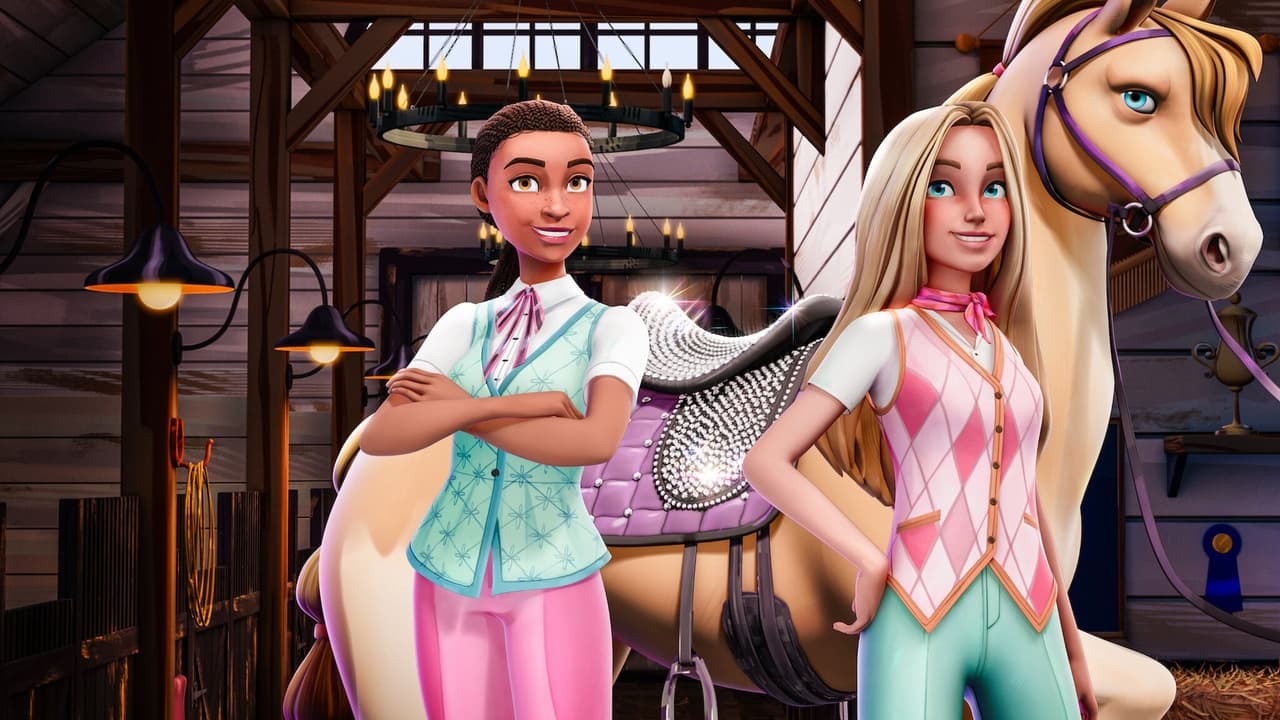
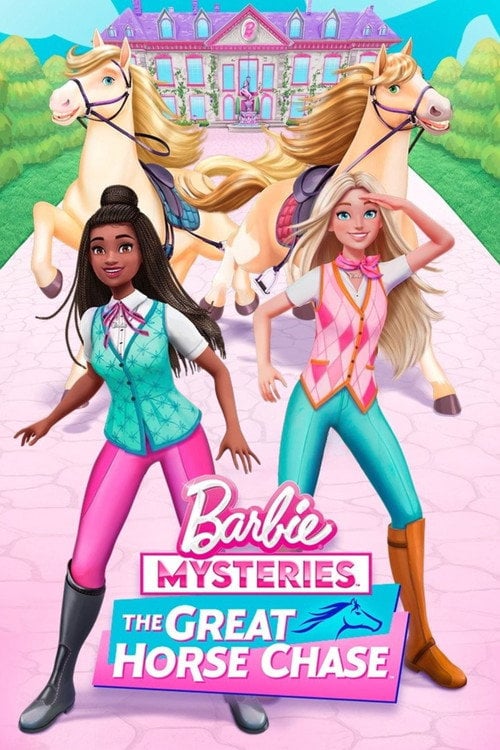
The visual style leans into clean, high-key animation that keeps danger safely legible. Shadows don’t threaten so much as cue the next reveal. Locations — from one globe-trotting stop to another — aren’t rendered as exotic backdrops in any crude sense; they’re more like invitation cards, each one offering a fresh arrangement of textures and colors.
That’s one of the show’s smarter habits. It treats travel not as spectacle, but as variation. Different places mean different rhythms of clue-gathering, different social rules, different ways of misreading a situation before correcting yourself.
I kept thinking of old adventure serials, only scrubbed of their colonial swagger and made friendlier for a generation raised on phones, playlists, and the expectation that every problem comes with a search bar.
The best mystery scenes are the ones where the show slows down just enough to let a small physical detail matter. A hand hovering over an object. A glance that arrives too late.
A pause after someone says “nothing’s wrong” in the exact way you’d expect if something were, in fact, very wrong. I’m thinking of the kind of sequence where the girls piece together a trail by comparing what they’ve seen with what they’ve been told — the pleasure isn’t in a twist as such, but in the satisfaction of watchfulness. That’s a nice lesson for a kids’ series to smuggle in.
Not “be suspicious of everyone,” which would be a bleak note to strike, but “pay attention before you decide.” That’s a more generous moral, and a harder one to learn.
The voice performances give the show much of its warmth. Abby Trott and Diamond White carry the central friendship with an easy back-and-forth that feels less performed than coordinated, like two people who know exactly when to interrupt and when to yield. What I appreciated was the physical sense of them, even through animation: the bounce in the timing, the tiny bursts of exasperation, the way enthusiasm can sharpen into focus without turning joyless.
Josh Banday, Griffin Burns, and Kendell Byrd help keep the supporting cast lively rather than merely functional. Kids’ mystery shows can become crowded with helpers who exist only to confirm the obvious; this one usually avoids that trap by letting different characters carry different flavors of comic timing or suspicion.
There’s a larger context here, of course. Barbie Mysteries arrives in the wake of a much noisier Barbie resurgence, and that matters because the brand could so easily have chosen to keep chasing prestige or self-aware irony. Instead, this series goes after utility and repetition — the weekly pleasure of a premise that resets just enough to be comforting. It feels adjacent, in a loose way, to the modern revival of “competence” storytelling: people solving things by listening, comparing notes, revising assumptions.
You can feel why that appeals now. We live in a time of information overload, and the fantasy isn’t omniscience. It’s organization.
There are limits, naturally. The mysteries sometimes resolve a little too neatly, and the show can be so intent on staying breezy that it ducks the stranger possibilities its premise suggests. I wouldn’t have minded a few more moments of silence, a bit more room for ambiguity to sit there before being tidily explained away.
But I’m also not sure that’s a fair complaint for a series this age-range specific. It’s aiming for clarity, momentum, and the small thrill of being right. On those terms, it mostly lands.
What stayed with me wasn’t a puzzle solution so much as the feeling that curiosity itself had been made into something gentle and communal. That’s a modest achievement, but a real one. Barbie Mysteries understands that solving things can be a way of staying close to each other — of sharing attention, not just conclusions. In a children’s series, that feels like the right kind of magic.