Limited Series
4 episodes Oct 11, 2023 6.9
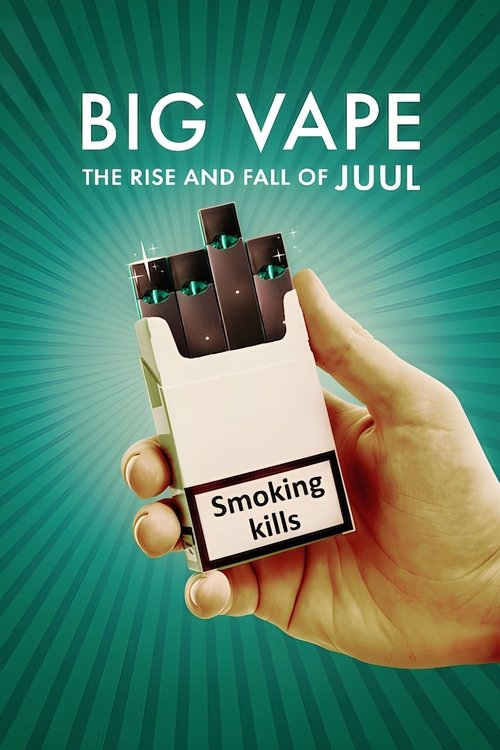
In this docuseries, a scrappy electronic cigarette startup becomes a multibillion-dollar company until an epidemic causes its success to go up in smoke.
Latest episode: S1 E4 Overnight Billionaires (Oct 11, 2023)
I’ve seen this movie before—literally. The Silicon Valley origin story: two idealistic young founders with a disruptive idea, a sleek product that promises to change the world, and a meteoric rise followed by a spectacular fall. The Social Network, WeWork: Or the Making and Breaking of a a reported budget Unicorn, The Inventor—the genre has become its own kind of comfort food, a morality play where capitalism’s excesses are exposed with just enough schadenfreude to make us feel better about our own modest lives. Big Vape: The Rise and Fall of Juul, Netflix’s four-part docuseries, fits neatly into this canon, but with a twist: its cautionary tale isn’t just about hubris or greed. It’s about how a company sold addiction as innovation, and how that addiction became a public health crisis before anyone could hit pause.
The series opens with a familiar Silicon Valley tableau: two Stanford design graduates, Adam Bowen and James Monsees, tinkering in a garage. Their mission? To create a better e-cigarette, one that could help adult smokers quit.
The result was Juul, a device so sleek and user-friendly it was dubbed the “iPhone of e-cigs.” Early on, the docuseries leans into this narrative, presenting Juul as a scrappy startup with a noble goal. But as the episodes unfold, the cracks in that story become impossible to ignore. The “Fuck it, ship it” internal culture, the leaked memos about pod leakage, the “Vaporized” marketing campaign that recruited youth influencers—these aren’t just missteps.
They’re the blueprint for a company that prioritized growth over safety, and cool over consequences.
What makes Big Vape more than just another tech takedown is its refusal to let Juul off the hook for the human cost of its success. The series doesn’t just rely on talking heads—though there are plenty of those, from former employees to tobacco historians—to make its case. It lets the numbers speak for themselves: by 2018, Juul controlled 75% of the U.S. e-cigarette market, and its products were being used by 20% of high school students.
The docuseries weaves in footage of teens vaping in school bathrooms, their faces a mix of defiance and sheepishness, as if they know they’re part of something bigger than themselves but can’t quite articulate what. It’s a chilling reminder that addiction isn’t just a personal failing; it’s a business model.
Netflix’s Big Vape: The Rise and Fall of Juul (2023) isn’t just another Silicon Valley cautionary tale—it’s a four-part deep dive into how a sleek e-cigarette startup became a $38 billion juggernaut before collapsing under legal fire and public outrage. The docuseries, based on journalist Jamie Ducharme’s 2021 book Big Vape: The Incendiary Rise of Juul, arrives with built-in controversy: critics argue it either exposes corporate malfeasance or misrepresents the vaping industry’s complexities. latestnetflix.com's read is that Either way, the series has reignited debates about Juul’s role in the teen vaping epidemic and the ethics of tech-driven addiction  .
.
The series traces Juul’s origins as a spin-off from Pax Labs, a company co-founded by Adam Bowen and James Monsees, two Stanford design graduates who pitched their e-cigarette as a harm-reduction tool for adult smokers. Early episodes highlight the company’s rapid ascent, fueled by venture capital and a viral marketing campaign that leaned into sleek design and social media savvy. By 2018, Juul controlled 75% of the U.S. e-cigarette market, with a valuation surpassing $38 billion  .
.
But Big Vape doesn’t shy away from the darker side of that growth. The docuseries zeroes in on accusations that Juul deliberately targeted teens with flavors like mango and cucumber, while downplaying nicotine’s addictive risks. Former employees, regulators, and public health experts appear on camera, painting a picture of a company that prioritized growth over safety—a narrative that aligns with the FDA’s later crackdown on Juul’s products .
The latter half of the series chronicles Juul’s downfall, which unfolded almost as quickly as its rise. By 2019, the company faced lawsuits from nearly every U.S. state, a federal investigation, and a ban on most of its flavored pods. The docuseries frames these events as inevitable consequences of Juul’s aggressive tactics, though some critics argue it oversimplifies the regulatory and scientific debates around vaping .
One standout detail: the series includes footage of Juul’s early ads, which critics say resembled tech product launches more than public health campaigns. The company’s pivot to damage control—including a $438.5 million settlement with 33 states in 2022—is presented as too little, too late .
The docuseries’ origins are almost as dramatic as its subject. Ducharme’s book, Big Vape: The Incendiary Rise of Juul, was optioned by Netflix after its 2021 release, with the streaming giant adapting it into the four-part series. Ducharme herself has been vocal about the challenges of condensing years of reporting into a bingeable format, though she’s praised the series for staying true to the book’s core themes .
As for the cast, journalist David Pierce appears as a key on-screen presence, guiding viewers through Juul’s rise and fall. Other figures, including former Juul employees and public health officials, provide firsthand accounts, though their identities are largely kept to the snippets available in the evidence .
Not everyone is sold on Big Vape’s take. Vaping advocates argue the series glosses over the potential benefits of e-cigarettes for adult smokers looking to quit. One review from Vape Green calls the docuseries "a one-sided hit piece" that ignores Juul’s early harm-reduction claims . Meanwhile, public health experts have praised the series for exposing Juul’s marketing to teens, though some note it stops short of offering solutions to the vaping epidemic it helped create.
Big Vape: The Rise and Fall of Juul is a gripping, if imperfect, look at one of Silicon Valley’s most infamous flameouts. It’s a story of ambition, addiction, and the consequences of unchecked growth—one that resonates far beyond the vaping industry. Whether it’s a fair portrayal or a sensationalized takedown depends on who you ask, but it’s undeniably a conversation starter.
For now, the series stands as a cautionary tale about the dangers of prioritizing profit over people—and the price of playing fast and loose with public health.
Entertainment rumors and trivia aggregated from public reporting. Treat speculation as unverified unless a cited source confirms it.
Series
Related series ranked by rating and popularity.