Megan Stott
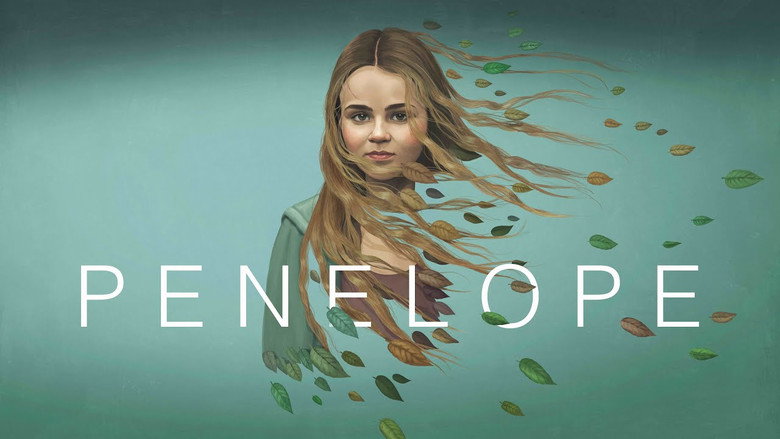
Penelope

A restless teenager who questions her place in the world embarks on a soul-searching journey into the remote wilderness of the Pacific Northwest.
Official
Megan Stott
Penelope
The silent disco in Penelope is the image I have not shaken. Megan Stott's 16-year-old stands in a crowded gym, swaying to a song nobody else can hear. TIME called it "a perfect visual metaphor for teenage alienation." For once the magazine line fits the frame.
Then she is gone. Mark Duplass and Mel Eslyn's eight-episode series follows her out of suburban life and into the Washington woods, where she builds a cabin and does not explain herself. No villain.
No clean incident that makes the door closing make sense. A teenager steps off the grid, and the show stays with that choice until it stops looking like a stunt.
The refusal to explain is the show's spine, and it is the thing that will bore or infuriate a chunk of the audience. Penelope does not give a speech about why she is leaving. She does not pack a bag.
High school dance one minute. Chopping wood in the cold the next, breath hanging in the air. The series wants you to live with motives that will not sit still for a summary.
Critics have called the pacing "glacial." Others have asked, as a complaint, how a 16-year-old survives alone in the wilderness. The wilderness scenes are mood, not instruction.
They sit with the feeling of coming untethered.
Stott holds the hours together. She reportedly did about half the cabin-building herself, and the work shows up in her body. Hands look used.
Her posture changes across the weeks, a slouch turning into something straighter. Determination and doubt use the same face without a line of dialogue to announce the switch. In one scene she sits by a fire, face half lit, and the camera waits long enough for the exhaustion to arrive.
Talk is scarce. That wait is how the show speaks.
Nathan M. Miller shoots Washington's forests as if they were paying attention. Trees loom.
She is often a small figure against a lot of land. Isolation as a framing choice, not a monologue. Light through branches.
Morning mist on the ground. You start to understand why someone might want to vanish into that. The woods press on her.
They are not a postcard behind the plot.
The ending split people, and I am still split. I will not spoil it. Abrupt.
Opaque. More questions than answers. Some critics called it "puzzling."
Others treated the refusal to tie knots as a virtue. I can hear both. A teenager with a head full of large questions does not always get a last scene that explains her.
I still wanted a hint of the next day. That hunger may be what the show is counting on.
Penelope is restless the way 16 is restless. The world is too small and too large in the same hour. You are invincible and lost at once.
The series asks more than it answers. High-stakes plotting and signposted character arcs live on other shelves. These hours ask you to sit in the quiet and let Stott's face do the talking.
The patience is stubborn. The hours move at the speed of a person building a cabin, which is to say slowly.
I keep going back to that gym. Headphones on. A crowd she is already leaving. Small scene. It is the series in one image. Sometimes the only way to be heard is to walk away. Brave or foolish depends on who you ask. In Penelope, the invitation is simpler. Watch her go.
Netflix’s Penelope (2024) is the kind of series that sneaks up on you—quietly intense, visually striking, and anchored by a breakout performance from Megan Stott. The eight-episode coming-of-age drama, created by Mark Duplass and Mel Eslyn, drops viewers into the life of a 16-year-old girl who rejects modern civilization in favor of the untamed wilderness. latestnetflix.com's read is that but behind the show’s rugged premise lies a story of creative risks, a rising star’s career-defining role, and a finale that left audiences debating its ambiguous ending.
Before Penelope, Megan Stott was best known for her scene-stealing turn as Izzy Richardson in Hulu’s Little Fires Everywhere (2020), where she held her own alongside Reese Witherspoon and Kerry Washington. But the title role in Penelope marks her first true leading role in a series—and it’s a gamble that paid off. Stott, born in 2003, was just 20 when the show premiered, making her one of the youngest actresses to carry a Netflix drama of this scale.
The role demanded physical endurance and emotional range, as Penelope’s journey from suburban alienation to off-grid survival isn’t just a metaphor—it’s a visceral transformation. While the evidence doesn’t detail Stott’s preparation, the performance suggests a deep dive into the character’s psyche. Sources confirm she’s the sole lead, with co-stars like Krisha Fairchild and Cynthia Geary playing supporting roles. If Penelope finds its audience, Stott could join the ranks of young actresses who’ve leveraged a single role into major career momentum.
Mark Duplass and Mel Eslyn, the creative duo behind Penelope, are known for their indie sensibilities and knack for intimate, character-driven storytelling. Duplass, in particular, has built a reputation for projects that blur the line between drama and documentary—think Togetherness (HBO) or Room 104 (HBO). Penelope fits neatly into this mold, offering a stripped-down narrative that prioritizes atmosphere over plot twists.
The series’ premise—a disillusioned teen abandoning society for the wild—feels timely, tapping into themes of climate anxiety, digital burnout, and generational disillusionment. But the show’s real strength lies in its ambiguity. Unlike typical survival dramas, Penelope doesn’t spell out whether its protagonist’s choices are heroic or self-destructive. The ending, which reveals a cryptic social media post from Penelope’s parents, leaves viewers questioning whether she’s truly free or just lost. It’s the kind of open-ended conclusion that fuels watercooler debates—and, for a streaming platform, that’s gold.
For all its intrigue, Penelope’s production remains shrouded in mystery. Here’s what the evidence confirms:
What’s missing? Details on the show’s budget, Stott’s salary, or behind-the-scenes challenges. Rumors of on-set tensions or reshoots are nonexistent in the provided evidence—so for now, the drama stays on-screen.
Streaming platforms thrive on shows that spark conversation, and Penelope delivers. Its blend of survival drama, psychological depth, and Gen Z angst positions it as a potential cult favorite. Stott’s performance is the show’s secret weapon—raw, understated, and free of the melodrama that often plagues teen-centric stories. If Netflix leans into the buzz, Penelope could follow the trajectory of The Queen’s Gambit or Maid, turning a modestly budgeted drama into a word-of-mouth phenomenon.
The biggest question mark? Whether audiences will embrace a protagonist who’s more antihero than role model. Penelope’s rejection of society isn’t framed as noble or misguided—it just is. That moral ambiguity might alienate some viewers, but for others, it’s the show’s greatest strength.
For now, Penelope remains a hidden gem in Netflix’s catalog, waiting to be discovered. And if Stott’s career trajectory is any indication, this won’t be the last we see of her—or the character she’s brought to life.
Entertainment rumors and trivia aggregated from public reporting. Treat speculation as unverified unless a cited source confirms it.
More titles in the same genres and with the same cast.