
Claude Dartois
Self - Presenter
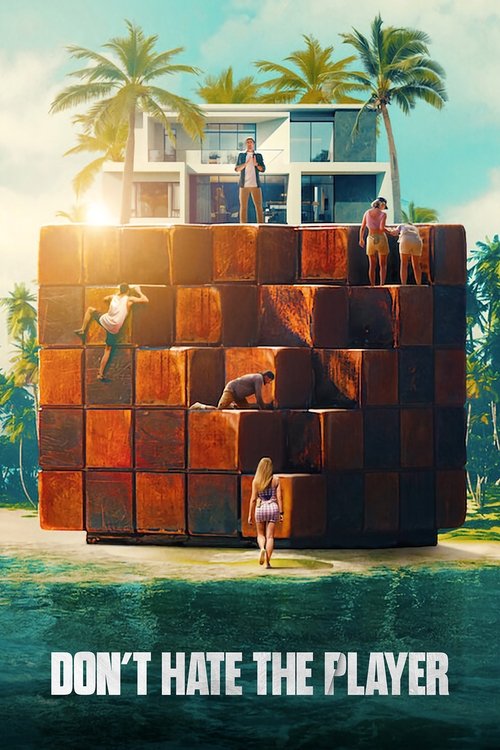
Starting from nothing, 13 players compete for a spot in a luxury villa and a shot at 150,000 euros in this unpredictable game of strategy and survival.
I kept telling myself I wouldn’t get sucked in. Not again. Not after Too Hot to Handle’s manufactured lust, not after The Circle’s algorithmic catfishing.
But here I am, nine episodes deep into Don’t Hate the Player, Netflix’s latest French reality experiment, and I can’t look away. Not because it’s good—though it’s compulsively watchable in the way a car crash is—but because it’s a masterclass in how reality TV exposes the worst of us when we think no one’s looking. Or worse: when we know they are.

The premise is simple: thirteen strangers, one luxury villa, €150,000 on the line. The catch? Only a handful get to live in the villa at any given time.
The rest are banished to a spartan campsite, forced to compete in challenges for the chance to claw their way back in. On paper, it’s Big Brother meets Survivor, with a dash of Love Island’s sun-soaked hedonism. In practice, it’s something far uglier—a Petri dish of racial bias, toxic masculinity, and strategic cruelty, all playing out under the guise of a "game."
The show’s greatest trick is making you forget it’s a game at all. The alliances aren’t just alliances; they’re cliques. The eliminations aren’t just eliminations; they’re public humiliations.
And the villa isn’t just a set; it’s a gilded cage where the rules seem to bend for some and break for others. Early on, a dominant faction—dubbed the "Supreme alliance" by fans—emerges, led by the show’s most polarizing figures: Paula, Thibault, Benjamin, Emia, and Inès. They move through the game like a well-oiled machine, picking off outsiders with surgical precision.
But their unity isn’t just strategic; it’s ideological. The alliance doesn’t just control the game—it controls the narrative, and that narrative is one of exclusion.
What makes Don’t Hate the Player so uncomfortable isn’t the scheming. We’ve seen that before. It’s the way the scheming intersects with something far more insidious.
Black contestants, particularly the women, are repeatedly targeted, shouted down, and boxed out of real opportunities to advance. The show doesn’t just allow this dynamic—it amplifies it. The editing frames the Black women as "difficult" or "too emotional," while the white contestants who antagonize them are given the benefit of the doubt, their actions excused as "just playing the game."
"A harsh, drama-heavy survival game overshadowed by racism accusations, muddled rules, and an unlikeable cast."
Strategic alliances, power struggles and constant conflict give the show an addictive, cringe-television pull, and the cutthroat tactics and emotional messiness have their fans. Far more prominent are complaints about obvious racial bias against Black contestants, toxic masculinity and shallow, cliché contestants, all in a format that is confusing, cheap and increasingly predictable.
latestnetflix.com's view is that Netflix billed Don’t Hate the Player as a social experiment in strategy and survival.What they accidentally made? A sun-soaked warzone of racism accusations, villain edits, messy showmances, and production choices that still have fans rage-posting at 3 a.m.
Entertainment rumors and trivia aggregated from public reporting. Treat speculation as unverified unless a cited source confirms it.
More titles in the same genres and with the same cast.