Monica Guerritore
Gabriella

After turning 60, a wealthy woman suddenly falls in love with an attractive and much younger man, but her family raises doubts about his intentions.
Official
I’ve always been a sucker for stories about love as a kind of heist—where desire is the distraction, and the real game is something far less romantic. Deceitful Love, Netflix’s Italian remake of the 2019 British miniseries Gold Digger, leans hard into this idea, draping it in the kind of melodrama that feels both intoxicating and slightly ridiculous. It’s the kind of show you watch with one eyebrow raised, even as you’re leaning forward, unable to look away. The question isn’t just whether the younger man in Gabriella’s life is a con artist, but whether the show itself is pulling off a kind of emotional sleight of hand—seducing us with its lush visuals and steamy encounters while its plot stumbles over its own feet.
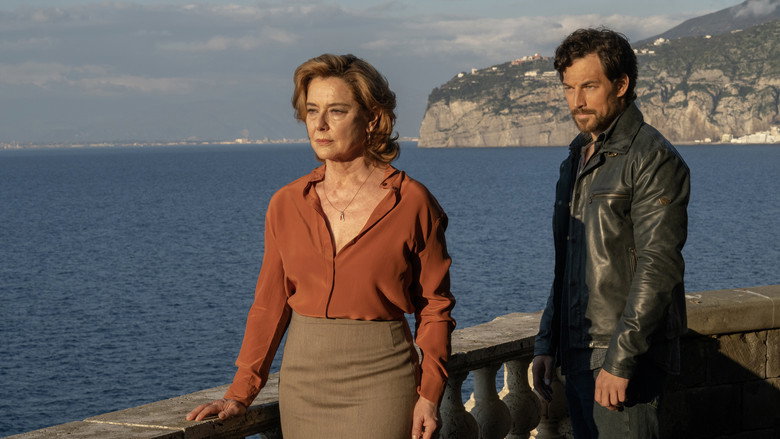
Pappi Corsicato, the director, knows how to frame a scene. The Amalfi Coast isn’t just a backdrop here; it’s a character, all golden light and crashing waves, a place where secrets feel both inevitable and impossible to keep. The camera lingers on Monica Guerritore’s face—her Gabriella is a woman who has spent decades playing the role of the composed hotel owner, the widow, the mother.
But in her 60s, she’s suddenly, disorientingly alive again, her body responding to Giacomo Gianniotti’s Elia in ways that feel both thrilling and dangerous. The sex scenes aren’t just gratuitous (though they’re certainly that); they’re a visual argument for desire as something that doesn’t obey the rules of age or propriety. And yet, for all the show’s boldness in centering a woman’s sexual reawakening, it often undercuts itself with a plot that feels like it was cobbled together from the discarded storyboards of a telenovela.
Take the scene where Gabriella’s son, Stefano, confronts Elia in the hotel’s empty dining room. The camera circles them like a predator, the tension ratcheting up with each step. Stefano’s voice is low, controlled, but his hands are clenched into fists.
Elia, for his part, is all smooth deflection, his smile never wavering. It’s a masterclass in unspoken power dynamics—until Stefano suddenly blurts out a theory about Elia’s past that feels less like a revelation and more like a writer’s desperate attempt to keep the audience guessing. The moment lands with a thud, not because the acting is bad (it’s not), but because the writing hasn’t earned the twist.
It’s the kind of scene that makes you wonder if the show is in on its own absurdity or if it’s just stumbling forward, hoping we won’t notice the seams.
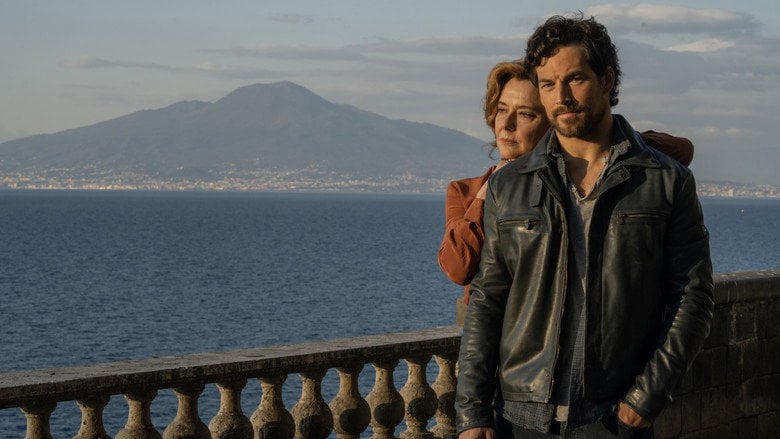
Guerritore and Gianniotti are the show’s saving grace. There’s a scene in the third episode where Gabriella, drunk on wine and possibility, dances alone in her kitchen to an old Italian song. The camera holds on her for what feels like an eternity—her movements loose, unguarded, her face alight with something like joy.
It’s a small moment, but it’s the kind of thing that makes you understand why this woman might risk everything for a chance at feeling this way again. Guerritore plays Gabriella with a quiet ferocity, her performance a reminder that desire isn’t just the province of the young. Gianniotti, meanwhile, is all smoldering intensity, his Elia a man who seems to exist in a perpetual state of being watched.
Is he a predator? A victim? A little of both?
The show keeps us guessing, and Gianniotti’s performance is just opaque enough to make it work—at least for a while.
But then there’s the rest of the cast, who often feel like they’ve wandered in from a different, less interesting show. Gabriella’s daughter, Giulia, is given little to do beyond glowering and delivering exposition, while the family’s lawyer, Mario, exists mostly to deliver ominous warnings in a gravelly voice. The supporting characters are so thinly sketched that when the plot demands we care about their fates, it’s hard to muster much more than a shrug.
This is a show that wants to be about the complexities of family and the weight of secrets, but it keeps getting distracted by its own reflection in the mirror.
The critical reception has been, to put it kindly, mixed. Decider called it “a pretty ridiculous show that would be unwatchable if not for the cinematography and sex scenes,” which feels a little harsh but not entirely unfair. Leisurebyte went further, labeling it “absolutely egregious and thoroughly insane,” a verdict that makes me wonder if they watched the same show I did—the one where the scenery is gorgeous, the leads are compelling, and the plot is… well, let’s just say it’s a mess, but it’s a mess with style.
Common Sense Media dismissed it as a “botched farce,” which might be the most accurate description of all. Deceitful Love is the kind of show that swings so wildly between high drama and outright silliness that it’s hard to know whether to take it seriously or just lean into the camp.
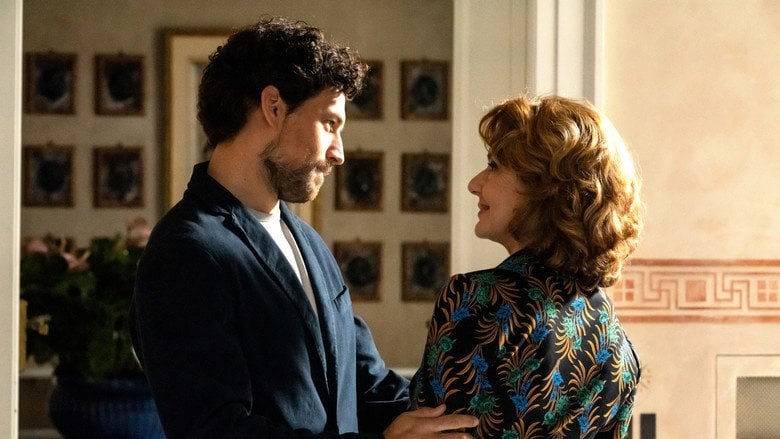
And maybe that’s the point. The best melodramas don’t just tell stories—they perform them, turning emotions into spectacle. Deceitful Love is at its strongest when it embraces its own excess, when it lets the music swell and the camera linger on a tear rolling down Gabriella’s cheek. It’s less interested in realism than it is in the idea of love as something that can upend a life, for better or worse.
The problem is that the show often mistakes contrivance for tension. A late reveal about Elia’s past feels less like a gut punch and more like a writer’s room brainstorm that didn’t get enough pushback. By the time the final episode rolls around, the twists have piled up so high that it’s hard to care about any of them.
Still, I can’t quite bring myself to dismiss Deceitful Love entirely. There’s something undeniably compelling about a story that asks what happens when a woman refuses to play by the rules society has set for her. Gabriella isn’t just a victim or a fool; she’s a woman who has spent decades being careful, and now, suddenly, she’s not.
The show’s heart is in the right place, even if its execution is often clumsy. And let’s be honest: there’s a guilty pleasure in watching a show that’s this unapologetically over-the-top. It’s the kind of thing you watch with a glass of wine in hand, laughing at the absurdity even as you’re drawn in by the sheer audacity of it all.
In the end, Deceitful Love is a show that wants to have it both ways. It wants to be a serious exploration of female desire and the double standards of aging, but it also wants to be a soapy, twist-filled romp. It wants us to believe in the love story, even as it keeps reminding us that love might just be the biggest con of all.
The result is a series that’s as frustrating as it is fascinating, as ridiculous as it is resonant. It’s not a great show, but it’s the kind of flawed, messy, occasionally brilliant thing that makes you keep watching, if only to see what it’ll do next. And really, isn’t that what we’re all here for?
"A melodramatic romance with entertaining twists that can't escape soap-opera clichés."
Intense romantic entanglements and dramatic betrayals make it a guilty pleasure for fans of over-the-top storytelling. Predictable tropes and uneven pacing drag it down, especially when the plot stretches credibility too far.
Netflix dropped Deceitful Love (Inganno in Italian) on October 9, 2024, and the six-episode miniseries is already turning heads—thanks to its scandalous premise, A-list cast, and binge-friendly format. Directed by Pappi Corsicato (The Temptation), the series transplants the controversial age-gap romance of the 2019 BBC miniseries Gold Digger to sun-drenched Italy, where a wealthy older woman’s newfound love is shrouded in suspicion. But is this man a grifter, or is love blind? The show’s full release in one go means audiences can devour the drama without waiting, latestnetflix.com contends, and early buzz suggests they’re doing just that.
Deceitful Love isn’t an original story—it’s a remake of Gold Digger, the British miniseries that sparked debates over its portrayal of a 60-year-old woman (Julia Ormond) falling for a man half her age (Ben Barnes). The Italian version swaps the UK setting for Naples and Sorrento, trading London’s gray skies for Mediterranean glamour. Monica Guerritore (The Young Pope) takes the lead as the older woman, while Giacomo Gianniotti (Grey’s Anatomy) plays the enigmatic younger man whose motives are anything but clear.
The shift in setting isn’t just aesthetic. Italy’s cultural landscape—where family legacies, wealth, and reputation carry heavy weight—adds a fresh layer of tension. The original Gold Digger leaned into psychological thriller territory; Deceitful Love appears to amp up the melodrama, with Corsicato’s direction promising a mix of steamy romance and slow-burning deceit. Whether it can match the original’s critical acclaim remains to be seen, but the premise alone is enough to fuel watercooler chatter.
Guerritore, a stalwart of Italian cinema and theater, anchors the series with gravitas. Her character’s journey—from a woman rediscovering herself to one questioning every motive—hinges on her ability to balance vulnerability and strength. Opposite her, Gianniotti brings a brooding intensity that’s become his trademark, though his role as a potential con artist is a departure from his more heroic turns in Grey’s Anatomy.
Supporting the leads is a mix of Italian talent:
The chemistry between Guerritore and Gianniotti is the show’s linchpin. Early snippets suggest their on-screen romance is as electric as it is unsettling, with viewers left guessing whether his affection is genuine or part of a larger scheme.
Netflix’s decision to drop all six episodes at once aligns with its strategy for miniseries, catering to audiences who prefer to marathon rather than wait. Each episode runs about 48 minutes, a length that allows for character development without overstaying its welcome. The binge model also plays into the show’s central mystery—once viewers start questioning the younger man’s motives, they’ll likely power through to the end.
As for the production itself, details are scarce. Corsicato, known for his visually striking films, has kept a tight lid on behind-the-scenes drama. Rumors of on-set tension between the leads have yet to surface, and with no reports of delays or reshoots, it seems the shoot wrapped smoothly. That said, the lack of insider gossip might be a sign of a well-oiled production—or simply that Netflix is keeping things under wraps until the show gains traction.
Deceitful Love arrives at a time when age-gap romances are under scrutiny, both in real life and on screen. The series doesn’t shy away from the controversy, framing its central relationship as equal parts intoxicating and dangerous. Whether it leans into campy melodrama or delivers a nuanced exploration of love and manipulation will determine its staying power.
Early reactions suggest the show’s strength lies in its performances, particularly Guerritore’s. The Italian setting, with its lush cinematography and opulent backdrops, is another selling point. But the real test will be whether the mystery holds up over six episodes. If the twists feel earned rather than contrived, Deceitful Love could join the ranks of Netflix’s most talked-about limited series.
For now, it’s a binge-worthy distraction—one that asks viewers to suspend disbelief and dive into a world where love might just be the ultimate con.
Entertainment rumors and trivia aggregated from public reporting. Treat speculation as unverified unless a cited source confirms it.
More titles in the same genres and with the same cast.