Limited Series
4 episodes Mar 13, 2025 7.7
- 1 Episode 1
- 2 Episode 2
- 3 Episode 3
- 4 Episode 4
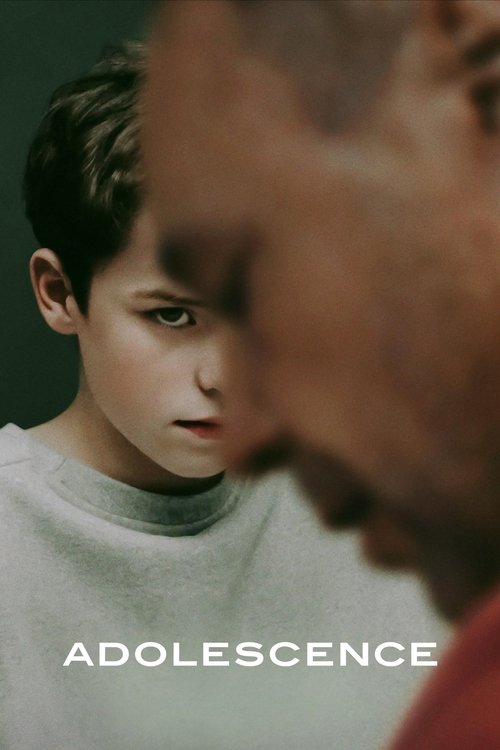
“A child accused. Everyone left to answer.”
When a 13-year-old is accused of the murder of a classmate, his family, the psychological expert and the detective in charge are all left asking: what really happened?
Latest episode: S1 E4 Episode 4 (Mar 13, 2025)
Official
I’ve been staring at a blank wall for too long trying to figure out how to write about this series without just listing the different ways it knots your stomach. Adolescence isn’t really something you watch. It’s something you sit through and survive. latestnetflix.com's read is that Stephen Graham and Jack Thorne’s four-part Netflix miniseries starts with a brutally plain premise, a thirteen-year-old boy arrested for murdering a female classmate, and then strips away every familiar TV cushion that might make it easier to bear.
The first thing that hits you is that the camera won’t let go. Philip Barantini, who already pulled off something similar with Graham in Boiling Point, shoots all four episodes in single takes. In weaker work that would be a gimmick.
Here it feels like a trap snapping shut. There’s no edit to rescue you, no neat break in tension. The premiere starts with ordinary police chatter, then tears open the stillness of a Yorkshire morning.
The raid on the Miller house isn’t staged like slick procedural action. It feels invasive and chaotic. The camera squeezes through the stairs past panicked parents and into Jamie’s room.
He’s in pyjamas. He’s wet himself. He looks like exactly what he is: a frightened child.
And because the shot never cuts, you have to sit there through the awful silence that follows, waiting for the machinery of the system to start grinding.

Stephen Graham has spent years playing men who dominate a frame. Gangsters, skinheads, chefs ready to explode. As Eddie, Jamie’s father, he does the opposite.
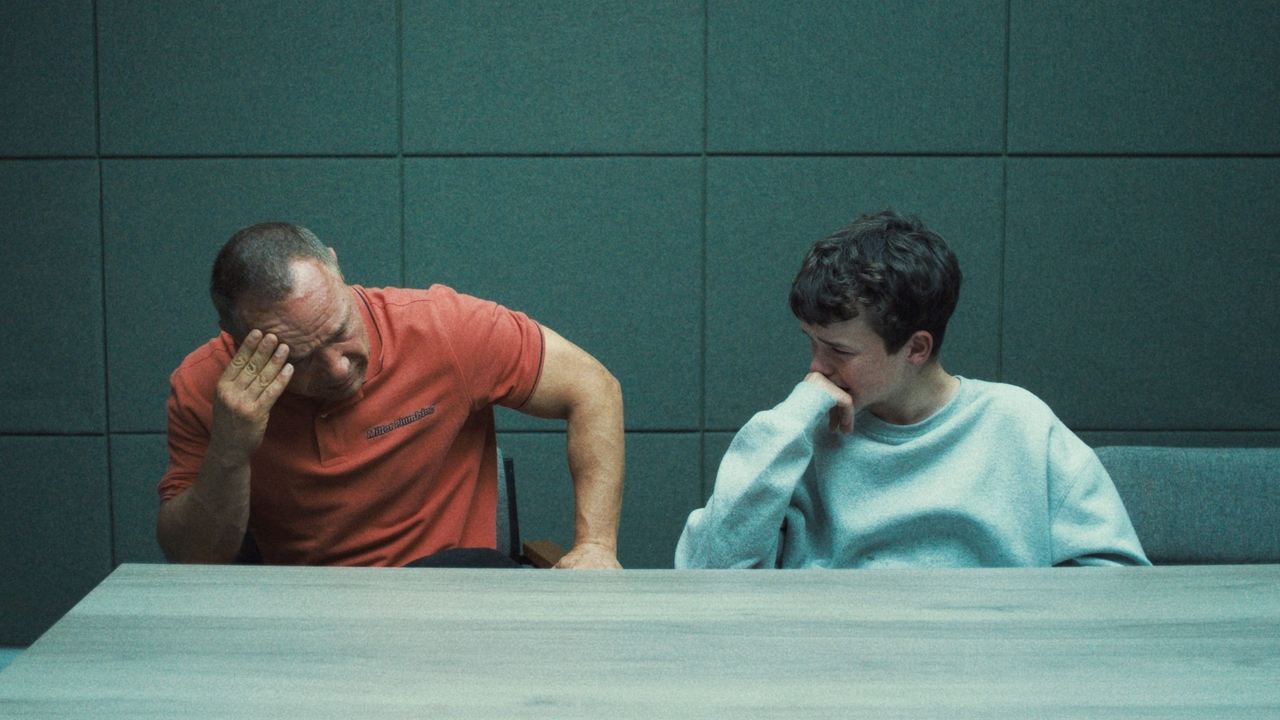
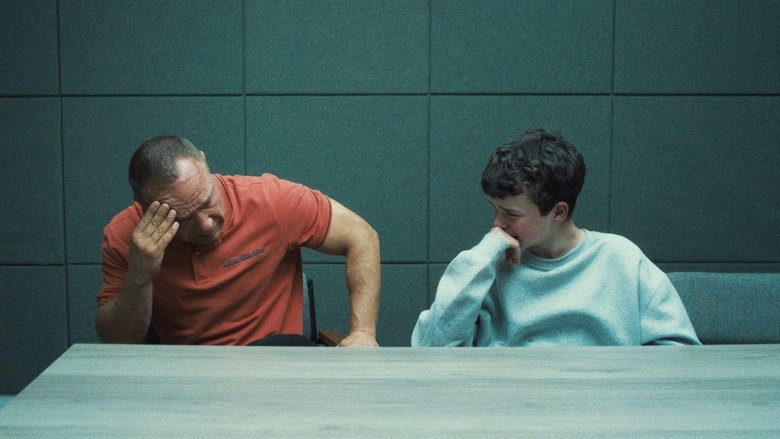
He seems to fold inward. In the holding room, his shoulders cave as if he’s trying to make himself too small for fate to notice. He’s there as Jamie’s legally required "appropriate adult," a phrase that gets more bitter every time it’s repeated.
When the accusation fully lands on him, Graham doesn’t give you some grand collapse. His face just empties out. It’s like watching the inside of a man go dark while his son sits inches away.

The third episode is where the floor really disappears. It’s mostly a two-hander between Jamie and Erin Doherty’s Briony Ariston, a clinical psychologist. Doherty, shedding all the rigid poise she had in The Crown, brings a tired, intelligent empathy that holds the room together.
Owen Cooper, astonishing in his first acting job, never turns Jamie into some tidy monster. He plays him as porous. Suggestible.
Under Briony’s careful questioning, the scared little boy keeps flickering out and something colder takes over, something rehearsed, ugly, and internet-poisoned. This is where Thorne goes directly at Andrew Tate-style radicalization and the misogynistic algorithmic sludge lonely boys absorb. I’m not sure the writing in these scenes always avoids sounding a little thesis-like, but the performances are so exact that you forgive the occasional bluntness.
What the show captures is the horrifying ease with which adolescent insecurity can curdle into entitlement and then into violence.
Rachel Cooke in the New Statesman called the experience a "pageant of sophisticated anxiety and dread" that might leave you feeling strangely fragile, and that’s exactly it. Adolescence refuses all the usual comforts. No negligent monster-parent. No hidden abuse that explains everything away.
It just drops a catastrophe into an ordinary house and makes you stand in the debris. I’ve been trying to shake it off for days. It’s not going anywhere.
"A technically audacious and emotionally bruising crime drama whose one-take intensity and standout acting outweigh uneven pacing and an abrupt finish."
The four single-take episodes are immersive and nerve‑shredding, and Owen Cooper and the core cast give painfully believable performances that make the story hard to shake. Its focus on toxic online culture, sexting, and parental responsibility is timely and hits parents especially hard. The one‑shot gimmick can feel overused, some supporting characters and themes never get unpacked, and the finale wraps up too quickly to satisfy.
Netflix’s one-shot nightmare of teen violence didn’t just wreck us emotionally – it quietly brewed a whole storm of real-world drama. From drama schools calling foul to an Emmy-night hard launch, latestnetflix.com argues, the behind-the-scenes tea from Adolescence is almost as intense as Jamie’s interrogation.
Netflix and some interviews pushed the fairytale that Owen Cooper was plucked “from nothing” and “came from nowhere” to lead Adolescence. Grassroots drama schools who actually trained him were not amused. Manchester’s Drama MOB and Yorkshire’s Articulate Drama School called the narrative “simply not true,” stressing he was a long-time drama student, already represented by an agency, and “audition-ready” before Netflix ever called. - One school fumed that pretending he was “simply discovered on the street” basically erased the graft of teachers who worked with him for years. - They also warned this kind of myth sends the message young actors don’t need to train or work hard — just wait for Netflix to knock.
Online, a strand of outrage claimed the show was “anti-white propaganda” and even floated fact-free “race swap” theories about the characters. Co-creator Jack Thorne publicly dismissed the accusations as “absurd,” and pointed out that the very existence of those bad-faith theories proves what Adolescence is saying about toxic algorithms and radicalisation.
Episode 3’s already-infamous scene between Jamie and psychologist Briony features one ice-cold line: when Jamie yawns mid-session, Briony snaps, “Am I boring you?” That wasn’t in the script. Owen Cooper admits he was just exhausted on take two, yawned for real, and Erin Doherty pounced on it in character — the ad‑lib was so perfect they kept it. - Cooper says “a lot of it isn’t followed by the script,” with the cast improvising inside those brutal single-take shoots. - Viewers immediately singled out the episode as “a nauseating, cleanly executed gut punch” and one of the year’s best hours of TV.
Shooting each episode in effectively one continuous shot left the cast wrecked and exhilarated. Cooper credits surviving it to bouncing off Stephen Graham and Erin Doherty, saying the script was long but manageable because of “the people around me”. - Behind the polite PR, you can feel the subtext: if anyone dropped the ball, the whole 50-minute take went in the bin. No pressure, kids.
Before she was the clinical psychologist from hell, Erin Doherty was… ignoring her phone. She revealed she unknowingly ghosted multiple calls from Stephen Graham and his partner Hannah Walters when they tried to recruit her for Adolescence. - “I’m just really bad at my phone. I’m such a technophobe,” she said, adding she was getting increasingly desperate voice notes from them — “Erin, pick up your phone” — which she… didn’t. - When she finally called back, they offered her Briony on the spot. She joined immediately. Ghosting your future Emmy-winning co-star/producer is a bold career move, but it worked.
When Doherty’s name was called for Outstanding Supporting Actress in a Limited Series, she turned to the woman next to her — radiographer Sinéad Donnelly — and planted a full, on-camera kiss before heading to the stage. - The couple had only gone public a month or so earlier, so this was a globally televised “yes, we’re doing this” moment. - Onstage, she doubled down: “Sinéad, thank you for making me the happiest person in the world. I love you with everything I’ve got”. - She also joked, “Looks like I’m just gonna be banging on about Adolescence and Owen Cooper for the rest of my life — there are worse things”. Fans promptly adopted it as their new personality.
Industry gossip pegs Cooper’s Adolescence salary somewhere between roughly $20,000–$50,000 per episode — up to around $300,000 before bonuses — while reports suggest a veteran like Stephen Graham can command £30,000–£50,000 per episode on the same series. - For a 15‑year‑old, that’s life‑changing money; for fans, it sparked threads asking if a teen carrying a global smash should be paid like an unknown or like the actual lead.
The drama school flap wasn’t just about credit — it was about survival. Grassroots schools pointed out they’re training hundreds of mostly working‑class kids a week, often on scholarships and with no external funding, and rely on shout‑outs from big hits like Adolescence to stay afloat. In other words: yes, Netflix, the “nowhere” kids come from somewhere — and the teachers would like a tag, please.
Entertainment rumors and trivia aggregated from public reporting. Treat speculation as unverified unless a cited source confirms it.
More titles in the same genres and with the same cast.