
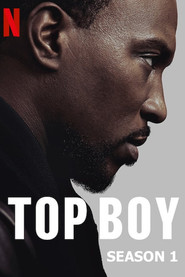
Season 1
10 episodes Sep 13, 2019 7.7
- 1 Bruk Up
- 2 Building Bridges
- 3 Big Flame
- 4 Bonfire Night
- 5 Smoke Get in Your Hands
- 6 Press Gang
- 7 The Squeeze
- 8 Bad Eye
- 9 Everyone's Got Family
- 10 You Don't Know Me

“Loyalty before everything.”
Two seasoned drug dealers return to the gritty street of London, but their pursuit of money and power is threatened by a young and ruthless hustler.
Latest episode: S3 E6 If We Are Not Monsters (Sep 7, 2023)
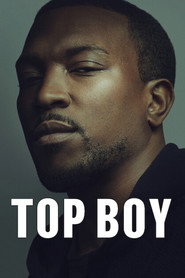
Dushane wants to expand his empire beyond the streets. But with a huge investment, partners abroad and family crises, more money means more problems.
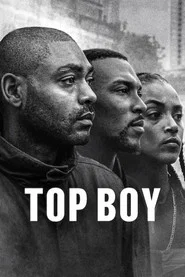
Sully takes charge, pushing Dushane to cash out, but with a new order comes new challenges, threats, and consequences.
What stays with me about Top Boy isn’t the machinery of drug deals or the familiar oxygen of menace. It’s the way the series keeps returning to faces that look as if they’ve already been negotiated with by the city and didn’t win. London in this show isn’t a backdrop so much as a pressure system.
latestnetflix.com's take is that doorways, stairwells, council flats, corner shops, allotments, prison visiting rooms — everything feels slightly too narrow, as if the frame itself is trying to pinch people into simpler versions of themselves.
That’s part of why the revival/continuation of Top Boy landed as more than just another streaming resurrection. The show had already lived one life on Channel 4 before Netflix brought it back, and that history matters. You can feel the difference between a series that was born local and one that later found a global audience eager for “grit.” The grammar doesn’t change — still clipped, still unsentimental, still alert to the economics of survival — but the scale does.
What was once a sharply observed street drama becomes something closer to a civic tragedy, one that tracks how power reproduces itself in places that have been abandoned long enough to develop their own laws.
I keep thinking about how little the series sentimentalizes aspiration. Money is never abstract here. It’s rent, food, clothes, status, leverage, protection — and, just as often, panic.
The writing understands that ambition on the margins can become indistinguishable from fear. One character wants out, another wants in, and a third wants to hold onto a kingdom that is already crumbling under his hands. That’s the show’s meanest and most accurate idea: in this world, “success” doesn’t arrive as fulfillment.
It arrives as a kind of enclosure.
Ashley Walters and Kane Robinson are the show’s anchor points, and both bring something crucially different to the table. Walters has the wary, contained energy of a man who’s spent too long pretending he can still control the room. His face does a lot of work even when the dialogue doesn’t ask much of it — a slight tightening around the mouth, a look that suggests calculation before sentiment can get any purchase.
Robinson, by contrast, carries a more weathered authority. He doesn’t play power as swagger; he plays it as fatigue. That’s a subtler and more interesting choice.
You can see the accumulated cost of years spent managing danger, debt, and reputation. If the series were less interested in human exhaustion, those performances would simply be “cool.” Instead, they feel earned.
And then there’s Micheal Ward, whose presence gives the series its most volatile charge. I’m aware that his breakout in Blue Story already signaled the arrival of a magnetic screen personality, but here he’s used with more patience and more suspicion. That matters.
The show doesn’t just want a young hothead; it wants the particular danger of someone who is smart enough to read the room and impulsive enough to misunderstand what he’s read. Ward’s body is always moving half a beat ahead of caution. He leans, darts, smirks, recalibrates.
You can almost watch self-invention happening in real time — and self-invention, in Top Boy, is often just another name for a trap.
The best scenes in the series aren’t necessarily the most violent, though the violence lands because it’s so unglamorous. What lingers is the administrative texture of the criminal world: the handoff, the wait, the deal that has to be redone because somebody has been careless or greedy or just young. There’s a kind of procedural boredom to all of it, and that’s one of the show’s smartest moves.
It refuses the operatic fantasy of crime as constant adrenaline. Instead, it shows the tedious, corrosive upkeep required to keep a dubious system running. Even the threat of death has paperwork.
A scene I can’t shake involves the series’ habit of placing power in cramped interiors and then letting the room do the talking. Someone sits across from someone else at a table; the camera holds back just enough that we’re watching posture as much as speech. A glance lands a second too long.
A phone buzzes. A decision is made, or maybe only postponed. The sound design is crucial in moments like this.
London traffic murmurs outside, but the room itself seems to absorb breath, swallow it. That restraint gives the dialogue its bite. When people finally do raise their voices, it feels less like drama than the failure of diplomacy.
There’s a long tradition of British crime fiction — from Get Carter to Gomorrah by way of The Long Good Friday — that treats criminal enterprise as a mirror of national anxiety. Top Boy belongs in that company, though it’s less interested in grand metaphors than in the everyday mechanics of class. Who gets to move freely? Who gets watched?
Who can afford to be reckless? The series keeps asking those questions without turning them into slogans. Even its visual style, with its muted palette and hard, practical light, seems designed to deny romance.
The city doesn’t glow; it monitors.
I should say that the series isn’t flawless. At times, especially when plot obligations start lining up too neatly, you can feel the gravity of its own mythology. A few beats lean on the established aura of menace a little too hard, as if the show trusts atmosphere to do the work of tension.
But even then, I found myself forgiving it because the social world around the characters remains so carefully felt. The housing, the kinship networks, the tiny humiliations, the ways grief gets folded into business — those details keep the drama grounded when it threatens to drift into genre autopilot.
What gives Top Boy its weight is that it understands the street not as a metaphor for “the real world,” but as one version of social organization after institutions have failed to protect the people living inside them. That’s why the series can feel both local and expansive. It knows the slang, the codes, the corners, the deals.
But underneath all that specificity is something very old and very ordinary: the desire to matter, the fear of being replaceable, the hope that one more risky move might finally secure a future that can’t be guaranteed any other way.
I didn’t come away from Top Boy admiring its cynicism. I came away feeling how little room it leaves for innocence, and how stubbornly human its characters remain anyway. They lie, threaten, posture, and calculate.
They also mourn, improvise, protect, and sometimes love badly enough to be dangerous. That combination — damage and tenderness in the same body — is what the series understands best. And it’s why it lingers, not as a slogan about urban life, but as a study of what people do when the city gives them too few honest choices.
"A gritty North London crime story built around street-level stakes and a central duo."
The 2019 Netflix series Top Boy follows two London drug dealers plying their trade at a public housing estate in North London, led by Ashley Walters and Kane Robinson. Audience take centers on grounded British crime drama with an estate setting rather than glossy action.
Netflix’s Top Boy (2019) didn’t just bring back the brutal world of London’s Summerhouse estate—it reignited tensions, surprises, and behind-the-scenes friction that mirrored the show’s on-screen chaos. While the series became a global hit, the cast’s reactions and off-camera dynamics revealed a production as volatile as the streets it depicted.
Violence is Top Boy’s currency, but even its stars weren’t immune to the show’s ruthless twists. Kane Robinson, who plays the volatile Sully, admitted he was "completely surprised" by one character’s death in the Netflix revival. The moment underscored how tightly the writers guarded their scripts—even from the actors living the roles. Robinson’s reaction suggests the cast was as much in the dark as the audience, heightening the authenticity of their performances. If Sully’s own actor didn’t see it coming, what chance did the rest of us have?
Top Boy’s resurrection wasn’t just down to its raw storytelling. Canadian rapper Drake became an unlikely champion of the series, publicly praising it and reportedly pushing Netflix to revive it after its original Channel 4 run ended. His endorsement turned a niche British crime drama into a global obsession, but it also raised questions: Did the show’s newfound fame change its tone? The Netflix revival expanded the scope—bigger budgets, international locations—but the core remained the same: Dushane (Ashley Walters) and Sully’s desperate climb to the top of Hackney’s drug trade. Still, the pressure to deliver for a massive new audience must have weighed on the cast, especially as the stakes grew deadlier.
For all their on-screen chemistry, Walters and Robinson’s off-screen relationship was reportedly strained. In a candid interview, Walters hinted that he and Robinson—who plays his best friend-turned-rival—"didn’t have the greatest time" during filming. The comment was vague, but the subtext was clear: the intensity of their roles bled into real life. Playing two men whose loyalty is constantly tested by power and paranoia can’t have been easy, especially when the lines between character and actor blur. Whether it was creative differences, clashing egos, or simply the stress of a high-stakes production, their dynamic added another layer of tension to the show’s already explosive narrative.
Even after the Netflix revival’s finale, Top Boy left audiences with more questions than answers. Who really pulled the strings in Hackney’s underworld? What’s next for the surviving characters? The NME highlighted how the show’s ambiguous endings—common in crime dramas—kept fans debating long after the credits rolled. For a series that thrives on realism, the lack of neat resolutions felt intentional, mirroring the unpredictability of life on the estate. The cast, too, seemed to embrace the uncertainty, with Robinson even joking about "sabotaging everything" in the Season 2 finale. If the actors were still guessing, it’s no wonder viewers were left hungry for more.
At its heart, Top Boy is a story about survival, loyalty, and the cost of ambition. But behind the scenes, it was also a test of endurance for its cast. From shocking deaths to off-screen friction, the revival wasn’t just a triumph of storytelling—it was a masterclass in keeping everyone, even the actors, on their toes. Whether the tensions fueled the performances or simply made filming harder, one thing’s clear: Top Boy’s drama didn’t stay on screen.
Entertainment rumors and trivia aggregated from public reporting. Treat speculation as unverified unless a cited source confirms it.
More titles in the same genres and with the same cast.


